
Decoding the dense and intricate language of international climate agreements can feel like cracking a secret code.
International climate governance texts, such as the United Nations Framework Convention on Climate Change (UNFCCC), the Kyoto Protocol, the Paris Agreement, and annual Conference of Parties (COP) statements, are pivotal for understanding global climate politics. These documents are detailed and complex, but with a systematic approach, they can become more accessible to students new to global climate governance.
This article provides a step-by-step guide to navigating their structural features and content elements, helping students to interpret these essential texts effectively.
I developed this guide as a learning activity for my subject International Politics of Climate Change, a fully online third-year undergraduate course within the International Relations program, which I taught at La Trobe University from 2011 to 2023.
The complex language of UNFCCC can confound even the most dedicated students, but with the right approach, deconstructing these texts offer a roadmap to understanding global climate governance.
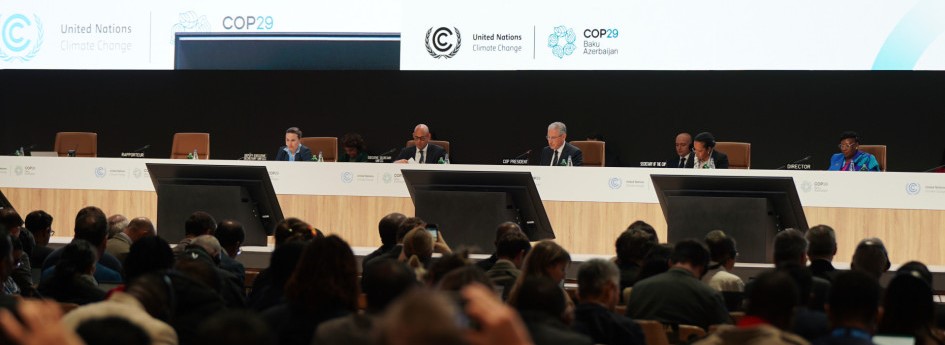
How to read and interpret international climate governance texts
Each climate governance text has its unique purpose and role within the broader framework of international efforts to address climate change.
The UNFCCC, adopted in 1992, established a foundational framework for cooperation among nations and introduced the principle of “common but differentiated responsibilities.” As its name suggests, it was established as a “framework convention” to provide a soft law shell in which member states could iteratively negotiate increasingly detailed binding commitments over time.
The Kyoto Protocol, negotiated in 1997, built upon this by setting binding emissions reduction targets for developed countries for the first time. The Paris Agreement, adopted in 2015, marked a shift towards inclusive global participation by encouraging all nations to submit their own nationally determined contributions (NDCs) to limit global warming.
Conference of Parties (COP) statements, which are issued annually, summarise the progress toward additional binding commitments, articulate key decisions, and highlight evolving priorities of the UNFCCC member states.
It is important to grasp the historical context of these texts. The UNFCCC emphasised equity and sustainable development, the Kyoto Protocol operationalised legally binding commitments, and the Paris Agreement embraced flexibility and inclusivity to commit all member states to binding obligations under one agreement.
Exploring structural features
Climate governance documents follow a structured format that aids in their interpretation.
The preamble within UNFCCC texts articulate the issues at hand and how members states have chosen to frame those issues. The preamble provides a normative framework (norms) for the substantive detail of the text and marshal the authority of previous UNFCCC decisions as the foundation on which the new obligations. The preamble can also be used as a dumping ground for proposals for which there is no consensus for inclusion in the operative paragraphs.
Following the preamble, the main body of the resolution’s text consists of individual articles that articulate the objectives, obligations and operationalising mechanisms of the text. These operative paragraphs contain the actionable commitments and are effectively the heart of the document
Understanding the content
As note above, the content of these texts can be broken down into three main elements: norms, objectives, and obligations.
Norms represent the principles guiding the agreement and are articulated in articles outlining the goals of the text, relating to the specific actions and changes in behaviour that the text desires from member states.
Objectives define the overarching goals of the document. For example, the Paris Agreement focuses on limiting global warming to well below 2°C and pursuing efforts to cap it at 1.5°C.
The obligations outline the specific responsibilities of parties, which often vary between developed and developing nations. Developed nations are frequently tasked with greater responsibilities, such as providing financial assistance or transferring technology to support developing countries.
Articles related to implementation, compliance and enforcement provide details regarding the operationalisation of those obligations.
UNFCCC texts often contain annexes, which detail the procedural guidelines and technical underpinnings of the obligations and compliance measures. The annexes provide supplementary details such as technical definitions, lists of countries, or additional protocols.
In Conference of Parties decisions since the Paris Agreement (2015), the eight key areas related to the implementation of the Paris Agreement, each covered in a numbered section of its full text:
- I. Science and urgency
- II. Adaptation
- III. Adaptation finance
- IV. Mitigation
- V. Finance, technology transfer and capacity-building for mitigation and adaptation
- VI. Loss and damage
- VII. Implementation
- VIII. Collaboration
Each of these eight sections will contain its own statements of norms, objectives and obligations.

Interpreting legal and technical language
The tone of the language used in the operative statements of the articles is an important indication of their relative strength. UNFCCC texts contain dense legal and technical jargon. For newcomers to these texts, the most important entry point is to understand the operative verbs highlighted in italics at the beginning of each article.
The language contained in these articles is based on operative verbs that vary in strength, from relatively mild phrases such as ‘call upon’, ‘decide’ and ‘request’, to more robust words such as ‘demand’. Below is a list of operative verbs that are used in UNFCCC documents and how to interpret them:
- Adopt: To formally agree to a resolution, decision, or protocol during a negotiation. Signals a binding or official commitment to the terms or policies outlined in the text.
- Reaffirm: To restate and confirm support for a previously agreed principle or decision. Emphasises continuity and sustained relevance of prior commitments without adding new obligations.
- Recognise: To acknowledge a fact, principle, or situation without necessarily endorsing specific actions. Demonstrates consensus on an issue without creating direct obligations.
- Call Upon: To make a non-binding request for action or compliance. Encourages voluntary actions from parties rather than imposing legal obligations.
- Decide: To establish a formal outcome or determination as part of a negotiation process. Denotes a binding or authoritative action taken by the parties.
- Request: To ask for an action or report, often addressed to parties, observers, or institutions. Indicates a non-mandatory appeal for cooperation or information.
- Urge: To strongly encourage or advocate for specific actions by parties or stakeholders. Highlights priority actions but lacks legally binding authority.
- Invite: To ask parties or stakeholders to consider or take certain actions. Suggests voluntary participation or compliance.
- Mandate: To issue an authoritative order for action or compliance. Imposes a binding requirement on designated parties.
- Encourage: To promote or support actions without imposing an obligation. Serves as a motivational statement to inspire voluntary compliance.
- Acknowledge: To recognise or accept the existence of a fact or condition. Demonstrates awareness but does not establish commitments.
- Recommend: To propose specific actions or policies for consideration. Suggests non-binding guidance to parties or stakeholders.
- Welcome: To express approval or support for actions, decisions, or reports. Signals positive reinforcement without creating obligations.
- Emphasise: To highlight the importance of a specific issue, principle, or action. Draws attention to key priorities without mandating action.
- Underscore: To stress the importance or necessity of a particular point or action. Strengthens focus on an issue without creating direct obligations.
- Note: To acknowledge or observe information presented. Demonstrates awareness without commitment to further action.
- Determine: To establish a specific course of action or decision through deliberation. Indicates a binding or conclusive resolution.
- Agree: To mutually accept or approve a resolution or decision. Reflects consensus among parties, often leading to binding commitments.
- Highlight: To bring attention to an important point or issue. Serves as a call for focus, without imposing obligations.
- Commit: To pledge or promise action in accordance with specific terms. Represents a strong, often binding, obligation to act.
- Demand: To assertively call for action or compliance from parties. Conveys urgency and a higher expectation of compliance but may lack enforcement.
- Support: To endorse or back specific actions, policies, or decisions. Encourages alignment with the promoted agenda but does not bind.
- Clarify: To provide detailed explanation or resolve ambiguities. Aims to ensure mutual understanding and operational transparency.
Understanding this structure helps us to separate the concrete measures contained within a treaty text from the rhetoric in which those measures are framed.

Activity: Deconstructing key UNFCCC texts
To begin this activity, students were asked to choose one of either the UN Framework Convention on Climate Change (1992), the Kyoto Protocol (1997), or the Paris Agreement (2015) as their case study.
Step 1: Map out the structure of the text
When tackling climate governance texts, it is helpful to start with a preliminary skim to understand their scope and structure.
Begin by identifying the different sections of the text—preamble, operative paragraphs, and annexes—to get a sense of the document’s structure. It can be helpful to highlight these sections on your copy of the full text of the document.
Break down each section to identify specific norms, objectives, obligations, operationalising mechanisms, and procedural guidelines. Again, highlight passages of text in different colours representing each of these elements.
Step 2: Identify the operative language
Clues to the viability of implementation can be found in the language used in the wording of treaty text. The operative verbs chosen to open each article convey a great deal about the commitment of parties to the subsequent statement contained within each article.
For the operative verb at the beginning of each article in the text, make a brief note about the purpose and relative strength of the operative verb used.
Step 3: Reflecting on broader normative themes
These documents also raise important questions about equity, implementation, and global cooperation, particularly when comparing the norms and objectives articulated in the text with the strength and enforceability of the obligations committing members state to those norms and addressing those objectives.
Therefore, apply critical reading techniques to engage actively with the text. Reflecting on any questions raised through this comparison questions can help you to assess the impact and feasibility of the UNFCCC project.
Summarise each section, pose questions about implications and enforcement, and highlight significant excerpts for deeper analysis.
Step 4: Compare and contrast documents
Comparing key UNFCCC texts with each other can shed light on the global political realities at their moment of signing and reveal how global climate priorities have evolved over time.
For instance, while the UNFCCC provided a broad initial framework for action, the Kyoto Protocol focused on binding commitments for developed nations. In contrast, the Paris Agreement embraced universal participation, allowing countries to define their own contributions through NDCs. COP statements offer a timeline of shifting themes, such as increased emphasis on adaptation, loss and damage, or climate finance.
Follow the approach outlined above in Step 1 to compare and contrast the norms, obligations, mechanisms, and procedural guidelines in the preamble, operative paragraphs, and annexes of each text.
Reviewing these texts side by side helps identify changes in priorities and strategies over time.
Step 5: Supplementing your reading with external resources
To deepen your understanding, consult primary sources like the official UNFCCC website for access to the full texts of all decisions and proceedings documents from the past COPs, along with the official reporting documents of member states (including national communications, nationally determined contributions, and national adaptation plans)
Complement this with analytical reports from the Intergovernmental Panel on Climate Change (IPCC), which provide scientific context. The IPCC’s role is to regularly update and synthesise the scientific understanding climate change for policymakers around the world. Additionally, student should also familiarise themselves with along expert commentary from academic literature, climate NGOs and think tanks.
Overall, these resources can clarify complex sections and explain the scientific, economic and policy basis for key issues in the treaty texts.

Call to action
Understanding international climate governance texts is crucial for students looking to navigate the complex world of global climate politics. By breaking down the structural components of these agreements—such as the norms, objectives, and obligations outlined in the preamble and operative paragraphs—students gain a clearer view of the political, legal, and practical implications of each document. What you see above is a summary of how I figured out how to understand them.
Identifying key elements, such as operative verbs and procedural guidelines, helps students to assess the strength of commitments and the potential for implementation. Through this approach, students develop critical thinking skills that are vital for engaging with the dynamic challenges of climate change governance.
As you embark on this journey of deconstructing international climate treaties, I encourage you to apply the step-by-step guide provided in this article, complimented by your own reading and research. Engage with the texts critically, reflect on the broader implications, and use external resources to enhance your understanding.
By mastering the language and structure of these key documents, you will not only better grasp global climate governance but also position yourself as an informed and active participant in the conversation about our planet’s future.
 Edge Dwellers Café
You must be logged in to post a comment.