
The Indo-Pacific has emerged as a focal point in global politics, encompassing some of the world’s most dynamic economies and complex security challenges. For professionals and scholars of International Relations, understanding the region’s security dynamics is essential for engaging with contemporary regional challenges, especially here in Australia. The Masters-level subject—Security in the Indo-Pacific—which I taught at La Trobe University from 2011-2021, provides students with the theoretical foundation and practical tools to critically engage with these pressing issues.
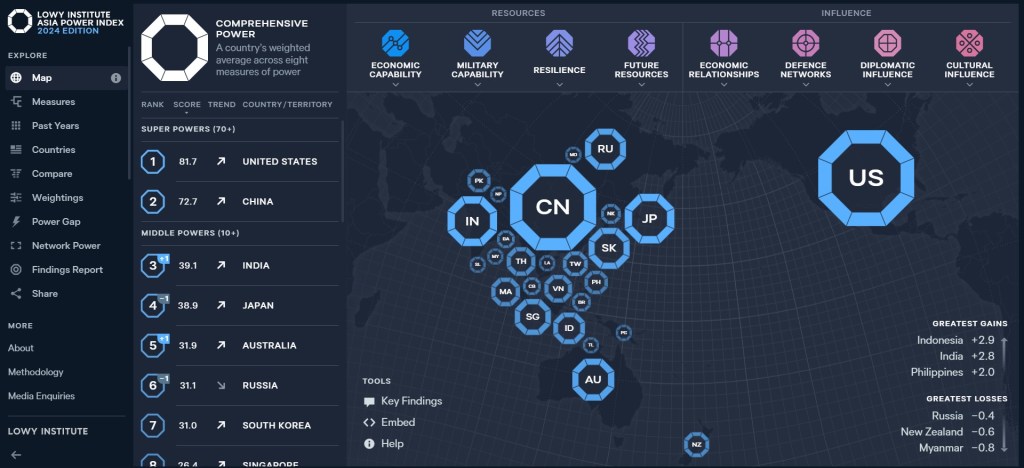
At the heart of the course is a focus on applying International Relations theory and analytical frameworks to real-world data. One particularly valuable resource is the Lowy Asia Power Index, produced by the Lowy Institute, which offers comprehensive, data-driven insights into the distribution of power in the region. By interrogating the Index’s eight measures of power, students are encouraged to develop a more comprehensive understanding of the region’s strategic landscape.
- Activity 1: Military Capability
- Activity 2: Defence Networks
- Activity 3: Economic Relationships
- Activity 4: Economic Capability
- Activity 5: Diplomatic Influence
- Activity 6: Resilience
- Activity 7: Future Resources
- Activity 8: Cultural Influence
This article presents a series of eight collaborative learning activities designed for students of International Relations. Each activity is aligned with one of the Index’s measures of power and employs a distinct structured analytical technique, as outlined in Pherson and Heuer’s seminal book Structured Analytic Techniques for Intelligence Analysis. These activities encourage students to critically engage with data, collaborate effectively, and produce professional outputs relevant to careers in diplomacy, defence, intelligence, international development, and global business.
Activity 1: Military Capability
This measure assesses a country’s ability to project force and defend its interests through conventional military strength, nuclear capabilities, and technological advancements. The Index evaluates metrics such as defence budgets, active personnel, weapons systems, and combat readiness, providing insights into the balance of hard power across the Indo-Pacific.
Lowy Asia Power Index definition: Conventional military strength; measured in terms of defence spending, armed forces and organisation, weapons and platforms, signature capabilities and Asian military posture.
Structured analytical technique: SWOT Analysis
Utility of technique: SWOT analysis is a diagnostic method for evaluating internal and external factors influencing a subject. It systematically categorises strengths, weaknesses, opportunities, and threats, ensuring a comprehensive understanding of a nation’s military capabilities within regional and global contexts (Pherson and Heuer 2021, pp. 297-603).
Reasoning for activity: Analysing military capability aligns with the subject’s outcomes of understanding Indo-Pacific security dynamics. Students learn to critically assess a country’s strategic assets and vulnerabilities, a skill valued in defence analysis and policy planning.
Output: Group presentation (10-minute slide deck)
Step-by-step instructions:
1. Select a country from the Indo-Pacific region and access its Military Capability data from the Lowy Asia Power Index.
2. Collaboratively perform a SWOT analysis:
- Strengths: Identify advanced weaponry, training, or technological assets.
- Weaknesses: Assess gaps in manpower, logistics, or funding.
- Opportunities: Highlight potential for alliances or technological modernisation.
- Threats: Analyse geopolitical challenges or regional conflicts.
3. Create a slide deck summarising findings and present to the class.
Activity 2: Defence Networks
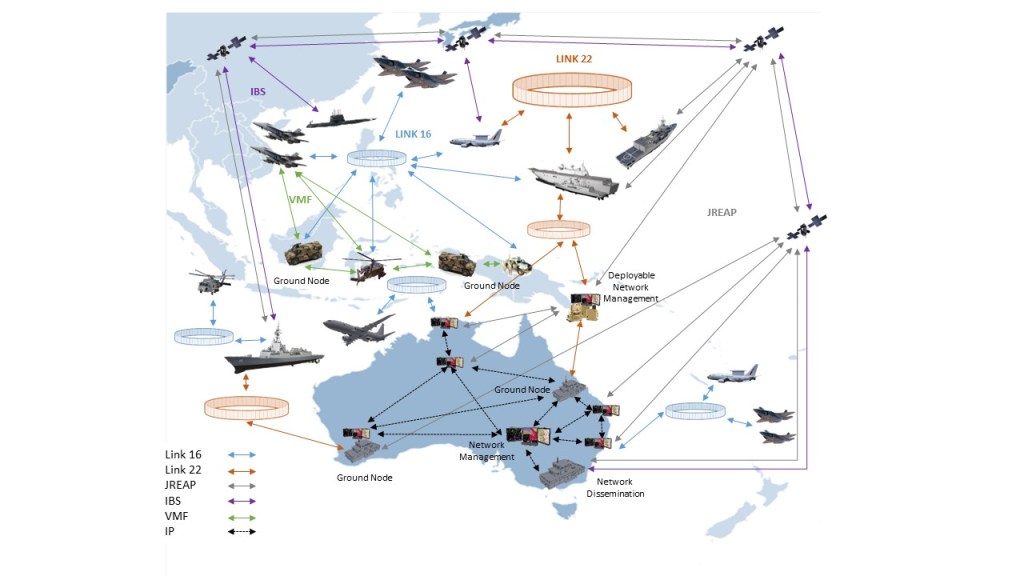
Defence networks gauge the strength and depth of a nation’s alliances, partnerships, and regional security cooperation. The Index examines formal military agreements, intelligence-sharing arrangements, and joint military exercises, highlighting the role of collective defence and strategic dependencies in shaping regional stability.
Lowy Asia Power Index definition: Defence partnerships that act as force multipliers of autonomous military capability; measured through assessments of alliances, regional defence diplomacy and arms transfers.
Structured analytical technique: Social network analysis
Utility of technique: Social network analysis identifies and visualises relationships between actors in a network. This method enables the mapping of alliances and partnerships, highlighting key nodes and vulnerabilities in defence networks (Pherson and Heuer 2021, pp. 231-240).
Reasoning for activity: Understanding defence networks develops analytical skills critical for roles in intelligence and strategic planning, enabling insights into alliance structures and their implications for regional stability.
Output: Interactive infographic
Step-by-step instructions:
1. Select a country and review its Defence Networks measure in the Index.
2. Use tools like Gephi or Cytoscape to create a network map showing the country’s alliances and partnerships.
3. Annotate the map with observations about the strength, dependency, and reliability of connections.
4. Submit the infographic and discuss insights with the class.
Activity 3: Economic Relationships
This measure analyses the extent and impact of economic interdependence between countries, focusing on trade volumes, investment flows, and economic agreements. The data reveal how bilateral and multilateral economic ties influence power dynamics and foster regional integration or competition.
Lowy Asia Power Index definition: The capacity to exercise influence and leverage through economic interdependencies; measured in terms of trade relations, investment ties and economic diplomacy.
Structured analytical technique: Cross-impact matrix
Utility of technique: The Cross-impact matrix evaluates how different factors interact and influence each other. This method helps to uncover interdependencies in economic relationships, enhancing the analysis of trade and investment dynamics (Pherson and Heuer 2021, pp. 272-279).
Reasoning for activity: Examining economic relationships prepares students for careers in international trade, development, and diplomacy by developing skills to evaluate complex economic interactions and dependencies.
Output: Policy brief (1,000 words)
Step-by-step instructions:
1. Choose two countries in the Indo-Pacific and review their Economic Relationships data in the Index.
2. Construct a Cross-impact matrix to assess how trade, investment, and economic agreements affect bilateral relations.
3. Use the findings to draft a policy brief with recommendations for improving economic ties.
Activity 4: Economic Capability
Economic capability evaluates a nation’s foundational economic strength, including GDP, productivity, and access to natural resources. This measure provides a long-term view of economic resilience and the ability to sustain influence through wealth generation and resource management.
Lowy Asia Power Index definition: Core economic strength and the attributes of an economy with the most geopolitical relevance; measured in terms of GDP at purchasing power parity (PPP), international leverage, technological sophistication and global connectivity.
Structured analytical technique: Key assumptions check
Utility of technique: Key assumptions check identifies and evaluates the underlying assumptions in an analysis. This structured process ensures that hidden biases or unexamined premises are exposed, leading to more robust conclusions (Pherson and Heuer 2021, pp. 253-263).
Reasoning for activity: Assessing economic capability teaches students to critically examine assumptions about growth potential, a skill essential in risk analysis and strategic forecasting.
Output: Video presentation (5 minutes)
Step-by-step instructions:
1. Select a country and access its Economic Capability data in the Index.
2. Identify key assumptions underlying the country’s economic projections (e.g., GDP growth, resource availability).
3. Test these assumptions by exploring alternative scenarios or counter-examples.
4. Record a video summarising findings and submit for peer review.

Activity 5: Diplomatic Influence
Diplomatic influence captures a country’s ability to shape regional norms, policies, and alliances through diplomacy. The Index considers factors such as leadership in international organisations, bilateral relations, and participation in multilateral forums, illustrating the importance of soft power in global politics.
Lowy Asia Power Index definition: The extent and standing of a state’s or territory’s foreign relations; measured in terms of diplomatic networks, involvement in multilateral institutions and clubs, and overall foreign policy and strategic ambition.
Structured analytical technique: Stakeholder mapping
Utility of technique: Stakeholder mapping visually represents key actors in a diplomatic ecosystem and their relationships. This method highlights who holds influence, enabling strategic engagement with diverse stakeholders (Pherson and Heuer 2021, pp. 214-222).
Reasoning for activity: Mapping stakeholders refines students’ ability to analyse complex diplomatic environments, a critical skill for careers in foreign affairs and international negotiations.
Output: Stakeholder map and commentary (750 words)
Step-by-step instructions:
1. Select a country and review its Diplomatic Influence measure in the Index.
2. Identify major stakeholders (e.g., states, international organisations, NGOs).
3. Create a stakeholder map using software like Miro or Lucidchart.
4. Write a commentary explaining each actor’s role, interests, and influence.
Activity 6: Resilience
Resilience assesses a nation’s capacity to withstand external shocks, including political instability, economic crises, and environmental threats. By analysing governance quality, economic stability, and environmental adaptability, this measure highlights vulnerabilities and strengths in maintaining long-term power.
Lowy Asia Power Index definition: The capacity to deter real or potential external threats to state stability; measured in terms of internal institutional stability, resource security, geoeconomic security, geopolitical security and nuclear deterrence.
Structured analytical technique: Premortem analysis
Utility of technique: Premortem analysis anticipates potential failures by imagining worst-case scenarios. This approach helps uncover vulnerabilities and develop strategies to enhance resilience (Pherson and Heuer 2021, pp. 392-405).
Reasoning for activity: Analysing resilience teaches students to anticipate crises and propose mitigation strategies, a key skill for professionals in risk management and policy planning.
Output: Risk briefing (500 words + 2 minute pitch)
Step-by-step instructions:
1. Select a country and access its Resilience data in the Index.
2. Conduct a premortem analysis:
- Imagine a scenario where the country’s resilience fails (e.g., political unrest, economic collapse).
- Identify contributing factors and vulnerabilities.
3. Develop a slide deck outlining findings and recommended strategies to enhance resilience.
Activity 7: Future Resources
Future resources focus on a country’s potential for long-term power projection, evaluating trends in demographics, technological innovation, and access to strategic resources. The Index identifies which nations are poised to expand their influence based on these emerging factors.
Lowy Asia Power Index definition: The projected distribution of future resources and capabilities, which play into perceptions of power today; measured in terms of estimated economic, defence and broad resources in 2035, as well as working-age population forecasts for 2050.
Structured analytical technique: Cone of plausibility
Utility of technique: The Cone of plausibility method generates scenarios by defining a range of plausible futures based on current trends and uncertainties. This structured foresight approach prepares analysts to anticipate long-term developments (Pherson and Heuer 2021, pp. 501-505).
Reasoning for activity: Forecasting future resources enhances students’ strategic thinking, a crucial skill for roles in policy advising and resource management.
Output: Written Report (1,200 words)
Step-by-step instructions:
1. Select a country and analyse its Future Resources data in the Asia Power Index.
2. Identify trends (e.g., technological advancements, demographic shifts) and uncertainties.
3. Develop three plausible scenarios (baseline, optimistic, pessimistic) using the Cone of Plausibility.
4. Write a report detailing the scenarios and their implications.
Activity 8: Cultural Influence
Cultural influence examines the role of cultural exports, education systems, and media in shaping perceptions and projecting soft power. This measure captures how countries use cultural diplomacy to build prestige and foster goodwill across the Indo-Pacific.
Lowy Asia Power Index definition: The ability to shape international public opinion through cultural appeal and interaction; measured in terms of cultural projection, information flows and people exchanges.
Structured analytical technique: Analysis by contrasting narratives
Utility of technique: Contrasting narratives compares different perspectives to understand how narratives shape perceptions and influence. This technique is vital for analysing soft power and cultural diplomacy (Pherson and Heuer 2021, pp. 535-544).
Reasoning for activity: Analysing cultural influence equips students to assess the effectiveness of a country’s soft power, a skill essential in public diplomacy and international communication.
Output: Podcast Episode (10 minutes)
Step-by-step instructions:
1. Review Cultural Influence data for a chosen country in the Index.
2. Compare its cultural exports (e.g., media, education) with narratives from competitors.
3. Develop a script for a podcast discussing how these narratives influence regional perceptions.
4. Record the podcast and share it with peers for feedback.

Closing reflections
The learning activities presented here not only align with the subject’s goals of enhancing critical and analytical skills but also prepare students for real-world challenges faced by International Relations specialists. By integrating data from the Lowy Asia Power Index with structured analytical techniques, these exercises foster a deep understanding of the Indo-Pacific’s strategic dynamics while equipping students with practical skills applicable to a wide range of professional contexts.
Students gain the ability to critically evaluate power structures, anticipate risks, and explore future scenarios—key competencies for roles in foreign affairs, defence, intelligence, and beyond. The emphasis on diverse outputs, including policy briefs, interactive infographics, and podcasts, ensures that students can effectively communicate their findings to varied audiences, a critical requirement in today’s interconnected and fast-paced world.
As the Indo-Pacific continues to shape the contours of global politics, the ability to analyse and interpret its security dynamics will remain a vital skill. By engaging with these thoughtfully crafted activities, students are not only learning about the Indo-Pacific but also preparing to contribute meaningfully to the decisions that will define the region’s future. These activities represent a step forward in bridging the gap between academic learning and professional practice, ensuring that graduates are ready to meet the demands of an increasingly complex international landscape.
Reference
Randolph H. Pherson and Richards J. Heuer Jr. (2021) Structured Analytic Techniques for Intelligence Analysis. 3rd Ed. Thousand Oaks: SAGE and CQ Press.
 Edge Dwellers Café
You must be logged in to post a comment.