
- Case introduction
- Part I: PESTLE Analysis
- Part II: Analysis of Competing Hypotheses
- Concluding reflections
Case introduction
The unprecedented recent deployment of North Korean troops to support Russia in its war against Ukraine has raised eyebrows internationally, not just for its immediate battlefront implications but also for the broader geopolitical dynamics it reflects.
Reports suggest that North Korea has dispatched a contingent of up to 10,000 soldiers to bolster Moscow’s beleaguered war effort, including highly trained special forces. This deployment coincides with other signs of deepening Russo-North Korean cooperation, including significant arms transfers and resource exchanges.
Understanding why North Korea has taken this step requires delving into its motivations and interests, which range from strengthening alliances and acquiring economic benefits to seeking advanced military technology and leveraging propaganda domestically, all of which can be interpreted under the umbrella of the survival and perpetuation of the regime of Kim Jong Un.
To unpack this complex decision-making process, I employ PESTLE Analysis (Political, Economic, Social, Technological, Legal, and Environmental) and the Analysis of Competing Hypotheses (ACH) frameworks. These structured analytical techniques help us as analysts to clarify our understanding of the overlapping motivations and strategies in play.
For undergraduate students of International Relations, this case study offers a unique opportunity to apply analytical frameworks to a real-world geopolitical dilemma. By dissecting North Korea’s decision through PESTLE and ACH, students gain insight into the multifaceted drivers of international conflict and alliance-building in today’s shifting global order.
Part I: PESTLE Analysis
Our first task is to undertake a comprehensive identify as many reasons as possible as to why North Korea might want to provide Russia with troops for its war in Ukraine. One useful structural analytical technique for this task is the PESTLE Analysis.
What is PESTLE Analysis?
PESTLE Analysis is a structured method for examining the external factors that could impact an issue or organisation, drawing from categories—Political, Economic, Social, Technological, Legal, and Environmental forces—that make up the PESTLE acronym mnemonic.
This analytical approach aligns with the concept of “Outside-In Thinking,” which emphasises considering broad, external dynamics before delving into specific, internal data (Pherson and Heuer 2020, pp. 363-368). Analysts using PESTLE begin by identifying how external trends might influence their topic of concern. This perspective ensures a more comprehensive understanding of the broader context, helping analysts to account for unexpected variables.
This method is particularly valuable during the initial stages of analysis, where it is crucial to identify all the relevant external factors that might affect future outcomes. It helps to mitigate the common analytical bias of focusing narrowly on familiar factors within a specialised field. By casting a wide net at the outset, PESTLE encourages analysts to think creatively, identify gaps in understanding, and explore alternative scenarios or hypotheses. This structured brainstorming process often uncovers relationships and dynamics that may not be immediately evident, ensuring a robust framework for understanding complex situations (Pherson and Heuer 2020, pp. 363-368).
The methodology of PESTLE Analysis includes generating a clear problem description, brainstorming external influences using the PESTLE mnemonic, and assessing how these factors interact with the issue at hand. The technique is adaptable to diverse contexts, whether applied in business, military intelligence, or broader strategic analysis.

Hypothesising why North Korea sent troops to fight for Russia
To answer the question of why North Korea sent troops to fight for Russia against Ukraine, PESTLE Analysis provides a structured framework to explore the multifaceted external factors influencing this decision. For this case study, let’s examine evidence for each letter of the PESTLE mnemonic in turn:
Political factors
North Korea’s decision to send troops to fight alongside Russia in Ukraine is a deeply political manoeuvre shaped by strategic, ideological, and geopolitical considerations. This action underscores the increasingly transactional and pragmatic alliance between the two nations as they confront shared adversaries in a shifting global order.
North Korea’s alignment with Russia signifies a deliberate strengthening of their strategic partnership, one rooted in mutual opposition to perceived Western dominance. This is evident in Pyongyang’s propaganda machine, which has increasingly promoted pro-Russian narratives in its domestic and external messaging. As Rachel Minyoung Lee observes in 38 North, “Pyongyang’s quick and decisive support for Russia’s war against Ukraine is in line with one of the earliest signs of its foreign policy reorientation in August 2021”. By deploying troops, North Korea signals its commitment to this partnership, while Moscow benefits from an ally willing to defy Western opposition.
The troop deployment serves as a direct challenge to Western powers, positioning North Korea as a critical player in the anti-Western bloc. This move aligns with broader efforts by several authoritarian regimes worldwide to undermine the international rules-based order. North Korea and Russia share a “sense of being together in an intensified epic struggle against the U.S. and the West”. This alignment is not merely rhetorical but serves as a geopolitical statement of solidarity, amplifying their Russia’s animosity towards NATO in Europe and their shared hostility toward U.S.-led alliances in Northeast Asia.
North Korea’s deployment of troops also represents a bold defiance of international norms and economic sanctions. Historically regarded as a pariah state, North Korea benefits from Russia’s diplomatic shield at the United Nations, allowing it to flout global condemnation without severe consequences. As Daniel R. Depretis notes in 38 North, “Russia’s obligations to North Korea are most prominently displayed at the UN Security Council, where Pyongyang is used to being ostracised by the great powers”. This defiance underscores Pyongyang’s willingness to prioritise geopolitical alliances over compliance with international rules.
While the North Korea-Russia relationship is politically significant, it is also transactional and opportunistic. The partnership is driven by mutual, short-term interests rather than a deep-seated ideological alignment. As Andrei Lankov argues in NK News, “Russian military delegations have begun appearing in Pyongyang with a frequency unseen since the Korean War”. This flurry of activity reflects a pragmatic collaboration, where Pyongyang supplies troops and weaponry in exchange for military technology, oil, and economic aid.
North Korea’s involvement in the Ukraine war aligns with Russia’s broader efforts to revive Cold War-era alliances and establish a grand strategic triangle involving itself, China, and North Korea. This strategy is designed to challenge U.S. influence in East Asia while leveraging North Korea as a critical partner in disrupting the balance of power. Gilbert Rozman notes in an article for 38 North that this collaboration “harks back to aspirations of the 1950s and targets a world where U.S. might and alliances are put under siege”. By involving Pyongyang in its geopolitical calculations, Moscow strengthens its positioning as a pivotal power in Northeast Asia.
For Russia, the alliance with North Korea also serves as a reaffirmation of its Eurasian identity, symbolising its enduring influence in East Asia. This partnership reinforces “Russia’s identity as a peer to Washington and Beijing”. From Pyongyang’s perspective, aligning with Russia allows Kim Jong-un to emulate his grandfather’s Cold War-era diplomacy, leveraging great power rivalries to secure North Korea’s position on the global stage.
Moscow’s partnership with Pyongyang also reflects a deliberate strategy to polarise Northeast Asia. By aligning with North Korea, Russia seeks to weaken U.S. alliances with South Korea and Japan while maintaining a degree of independence from China’s dominance. Anthony Rinna highlights this strategy in his article in Sino:NK, noting that “trilateral rapprochement between Japan, South Korea, and the U.S. has given the Kremlin reason to develop ties with North Korea”. This approach allows Russia to exploit perceived fractures within U.S.-led coalitions in the region.
Economic factors
North Korea’s decision to send troops to support Russia’s war in Ukraine is strongly influenced by economic considerations. These factors range from securing vital resources and alleviating sanctions-induced pressures to leveraging transactional exchanges of arms, labour, and technology to stabilise its regime and advance its strategic aspirations.
North Korea’s involvement in Russia’s war effort is largely driven by its acute dependency on external energy supplies, particularly oil. With chronic fuel shortages affecting the country’s economy, Russian energy resources provide a crucial lifeline. According to reports, documented by Anton Sokolin in NK News, North Korean tankers transported over one million barrels of oil from Russia in 2024—double the UN-mandated cap of 500,000 barrels—under an apparent barter deal exchanging military support for fuel supplies. Such oil shipments alleviate critical domestic shortages, ensuring the regime’s stability while mitigating the economic impact of international sanctions.
Strengthened economic ties with Russia offer North Korea access to vital goods that are otherwise restricted due to international sanctions. Russia’s provision of fuel, food, and industrial raw materials enables Pyongyang to sustain its economy under punitive economic measures imposed by the United Nations. The DPRK’s actions are “motivated by access to Russian energy resources” and constitute a strategy to return to the Cold War-era model of resource inflow from Moscow. This survival strategy highlights how North Korea views the partnership as a critical opportunity to counteract sanctions-induced constraints.
Economic engagement between North Korea and Russia extends beyond immediate resource compensation to include collaboration on infrastructure projects. Shared interests in Tumen River navigation and the Northern Sea Route align with Pyongyang’s economic aspirations, creating avenues for enhanced trade and regional connectivity. Russia’s interest in Rason and the Tumen River region, and plans for Arctic trade routes reinforce the economic dimension of their partnership. Additionally, discussions to bring North Korean labour into Russia further signal the practical economic cooperation underpinning their alliance.
Russia’s economic and military support offers North Korea a critical buffer against economic sanctions, reducing its vulnerability to international pressure. The partnership allows the Kim regime to be less concerned about additional sanctions, confident in Moscow’s willingness to provide material and diplomatic backing. North Korea’s strengthened relationship with Russia signals that Pyongyang is “even less worried about additional economic sanctions today than it normally is”.
Another economic motive for North Korea’s alignment with Russia lies in its effort to diversify partnerships and reduce over-reliance on China. Decades of strained economic dependence on Beijing have prompted Pyongyang to seek alternative sources of support. As Jakob Hallgren argues in The National Interest, North Korea benefits from “severing its uneasy dependence on China” and exploiting its long-standing ties with Russia to secure critical resources. This strategic diversification underscores the economic rationale behind the DPRK’s deepening ties with Moscow.
Social factors
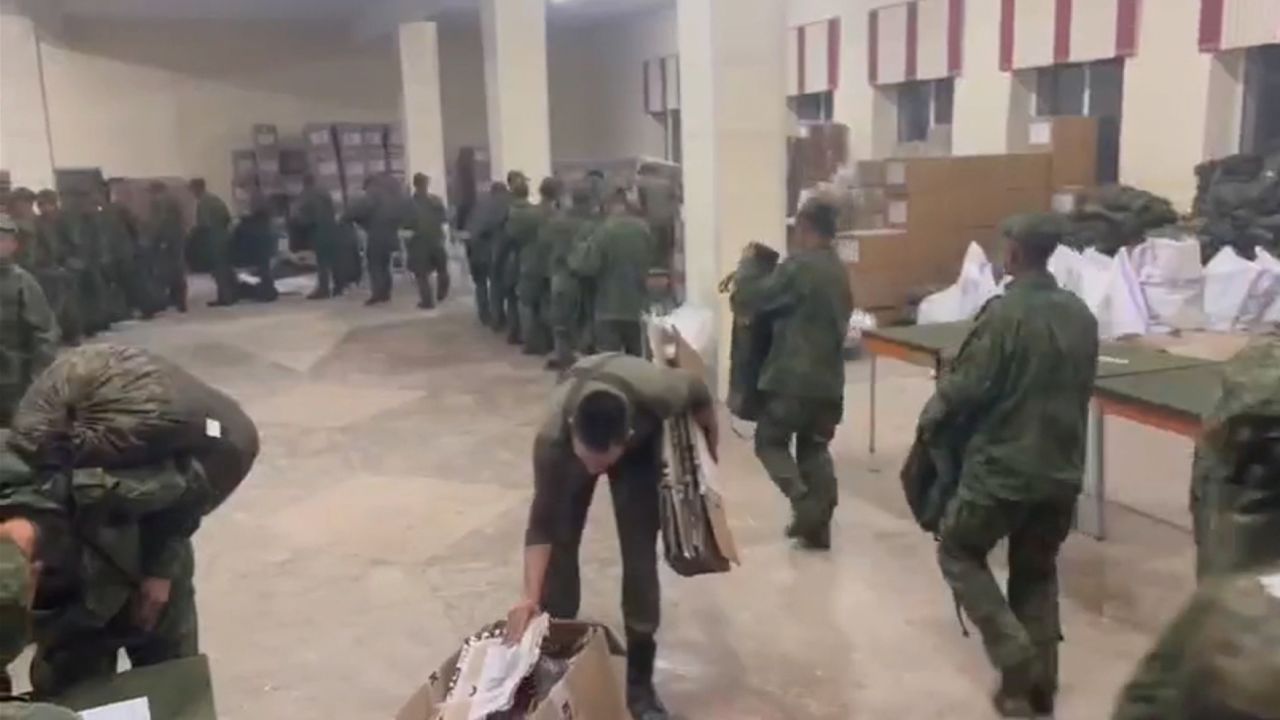
North Korea’s decision to deploy troops to support Russia’s war in Ukraine is heavily influenced by social considerations. These factors range from the regime’s use of propaganda to sustain its narrative of strength and global relevance, to concerns about internal dissent and the risks of exposing its military personnel to external ideologies.
The North Korean regime uses its involvement in Russia’s conflict as a tool to bolster nationalist pride and reinforce its ideological stance. By framing itself as a critical ally to a major power like Russia, the regime seeks to project strength and relevance on the global stage. North Korea’s state media amplifies this narrative to solidify internal loyalty, portraying the troop deployment as part of its fight against Western dominance. This approach underscores the use of external military engagements to reinforce domestic unity and legitimise the regime’s rule.
Despite its propaganda efforts, North Korea takes a cautious approach to publicising its involvement in the Ukraine war domestically. Sensitive to potential public backlash over resource allocation and military casualties, the regime has maintained a calculated silence on its direct involvement. This is evident in how domestic media refrained from mentioning the war until March 2023, more than a year after its outbreak. This strategy reflects a delicate balance between leveraging the conflict for propaganda purposes and minimising domestic dissent.
Sending troops abroad poses significant risks to the regime’s control over its military personnel. Exposure of their troops to more prosperous societies and contrasting socio-economic realities could foster dissent within the ranks upon their return. Fyodor Tertitskiy highlights this concern, noting the regime’s fear that soldiers might “pick up ‘incorrect’ ideas,” such as questioning North Korea’s economic hardships and rigid social structures after witnessing foreign standards of living. This risk necessitates stringent measures to control the narrative surrounding troop deployments and manage the returning soldiers’ reintegration into North Korean society.
North Korea’s participation in Russia’s war aligns with its broader ideological narrative of solidarity among authoritarian regimes resisting Western influence. This positioning helps justify troop deployment as part of a collective struggle against perceived Western hegemony, reinforcing shared values of self-reliance and defiance of external pressures. Gilbert Rozman underscores this alignment, noting how North Korea’s role in the conflict dovetails with Russia’s reassertion of its Cold War-era identity and anti-Western stance (38 North, October 2024).
In tandem with military collaboration, joint cultural and sporting events between Russia and North Korea serve as soft power tools to deepen ties and normalise the alliance. The announcement of biennial Russia-DPRK Summer Games exemplifies this effort to foster humanitarian ties and project an image of partnership beyond the battlefield. These initiatives contribute to the regime’s domestic narrative of strengthened international alliances.
The regime frames its involvement in Ukraine within its longstanding anti-Western ideology, where the United States is blamed for North Korea’s inability to reunify the Korean Peninsula and for its economic struggles. By participating in Russia’s “sacred struggle” against the West, North Korea not only aligns with its ideological narrative but also underscores its commitment to opposing US-led global systems.
North Korea’s participation in the Ukraine war also influences its global and regional standing. This move heightens regional tensions, with South Korea mulling over strategies to counter North Korea’s growing assertiveness. Additionally, North Korea’s role in the conflict has drawn international attention, further complicating alliances and diplomacy in both Europe and Northeast Asia.
Technological factors
North Korea’s decision to send troops to fight alongside Russia in Ukraine reflects significant technological considerations. These factors underscore Pyongyang’s pursuit of advanced military capabilities, access to cutting-edge warfare techniques, and a strengthened defence posture.
One of the primary technological incentives for North Korea’s involvement in the conflict is the potential to acquire advanced military technologies from Russia. This includes missile systems, satellite technologies, and other critical capabilities that align with Kim Jong Un’s defence modernisation strategy. Russia’s relationship with North Korea often involves exchanges of arms technology, which Pyongyang eagerly seeks to bolster its capabilities. North Korea’s interest in missile and aviation technology is well documented, with frequent delegations visiting Russian institutes in pursuit of expertise.
Despite these aspirations, there are indications that Moscow remains cautious about transferring sensitive technologies. While some analysts highlight the possibility of missile or nuclear advancements, others note that Russia has been hesitant to provide such assistance outright. Nevertheless, any cooperation in these areas is a cause for serious concern, particularly for regional stability on the Korean Peninsula.
The Ukraine war provides North Korean troops with invaluable combat experience, addressing a long-standing gap in their conventional military training. This includes the use of drones and advanced battlefield tactics. North Korean soldiers have already begun receiving drone training in Russia’s far east, a skill that could be repurposed for domestic or regional operations. Participation in a modern war also offers insights into contemporary warfare dynamics, enabling Pyongyang to enhance its operational readiness and strategies.
The deployment represents a “baptism in modern warfare,” a rare opportunity for North Korean forces to engage with technologically sophisticated weaponry and tactics not available within their own military framework. This technological exposure not only benefits individual soldiers but also supports broader military modernisation goals.
Pyongyang’s involvement with Russia may accelerate advancements in its missile and nuclear program, two cornerstones of its national defence strategy. Analysts have raised concerns about potential missile technology transfers stemming from the partnership, as both nations deepen their military ties. These exchanges could bolster North Korea’s conventional and nuclear forces, intensifying security challenges on the Korean Peninsula.
Such advancements are particularly troubling given Pyongyang’s uneven record in ballistic missile tests over recent years. Access to Russian expertise could help North Korea overcome these challenges, significantly improving its missile precision and reliability. The broader context of Russia’s invasion of Ukraine provides Pyongyang with a unique opportunity to leverage the conflict to advance its own defence modernisation. The deployment may involve tacit agreements to support North Korea’s nuclear program or other high-priority defence initiatives.
Furthermore, Russia’s willingness to share military technology as payment for North Korean involvement underscores the transactional nature of their alliance. While Pyongyang provides manpower and munitions, it expects technological compensation that will enhance its strategic autonomy.
The technological collaboration between Russia and North Korea has significant regional geopolitical ramifications. South Korea, for instance, is deeply concerned about the prospect of advanced Russian military technology being used to threaten its security. Seoul has publicly acknowledged the risks of closer Russia-DPRK defence ties, particularly in missile and nuclear domains. The integration of these technologies into North Korea’s arsenal could destabilise the regional balance of power, prompting neighbouring states to reassess their defence postures. The partnership, therefore, not only strengthens Pyongyang’s technological base but also heightens tensions across Northeast Asia.

Legal factors
The legal implications of North Korea’s decision to send troops to Russia to support its war in Ukraine are significant and multifaceted. These actions, ranging from violations of international sanctions to the exploitation of bilateral defence agreements, not only reinforce North Korea’s defiance of international norms but also expose broader concerns about the erosion of global security standards.
North Korea’s provision of troops and military supplies to Russia directly contravenes multiple United Nations Security Council (UNSC) resolutions. These sanctions, aimed at curbing Pyongyang’s nuclear and military ambitions, explicitly prohibit such activities. By aligning with Russia in the Ukraine war, North Korea intensifies its role as a global pariah, brazenly defying international law. This cooperation has sparked criticism from South Korea, which regards the Russia-DPRK military ties as both “unacceptable and illegal” under existing UNSC resolutions.
Further complicating the situation, Russia’s backing in the Security Council has paralysed efforts to impose new sanctions or enforce existing measures against North Korea. Moscow and Beijing’s repeated vetoes on sanctions underscore how geopolitical interests are enabling Pyongyang’s transgressions. These violations not only undermine the credibility of the UNSC but also embolden North Korea to continue flouting international norms without fear of accountability.
The Russia-North Korea alliance has also facilitated creative means of sanctions evasion, including barter arrangements involving oil and weapons. Reports reveal that North Korean tankers transported over one million barrels of oil from Russian ports in 2024, more than double the annual cap imposed by the United Nations. Such actions highlight both countries’ willingness to exploit legal loopholes and disregard international rules. Anton Sokolin describes this exchange as a blatant breach of sanctions, characterising it as an “oil-for-guns barter scheme” that exacerbates global security risks.
While the deployment of North Korean troops violates international law, Pyongyang and Moscow have framed their cooperation within the bounds of a June 2024 mutual defence treaty. This agreement, signed amid heightened tensions with the West, provides a legal pretext for military collaboration between the two nations. The treaty allows for joint defensive actions, though it operates entirely outside the framework of recognised international law.
This treaty also underscores the transactional nature of the relationship, as both nations use it to legitimise their defiance of global norms. By invoking the terms of their agreement, North Korea and Russia challenge the international community’s ability to enforce compliance with established rules. Kim Jong Un explicitly expressed his “strong support” for Russia’s military operations in Ukraine, framing their collaboration as a shared effort against perceived Western aggression.
North Korea’s involvement raises alarming questions about the precedent it sets for nuclear-armed states supporting wars of aggression. If Russia succeeds in Ukraine with North Korean assistance, it could embolden other nations to use nuclear threats or capabilities to achieve aggressive geopolitical aims. This challenges the foundational principles of international law, particularly the prohibition of wars of aggression under the UN Charter.
The Russia-DPRK alliance’s blatant disregard for international law undermines the global rules-based order. By participating in the Ukraine conflict, North Korea exacerbates existing challenges to the international legal framework, which relies on cooperation among major powers to uphold norms. Keith Johnson in his article in Foreign Policy describes North Korea’s troop deployment as a “significant escalation” that deepens the implications of their mutual defence pact and risks destabilising not only Europe but also Northeast Asia.
The erosion of legal norms extends beyond sanctions violations to questions of accountability. The Security Council’s inability to respond decisively reflects a broader failure of international institutions to address the actions of states like North Korea and Russia. The partnership between these nations challenges established norms and creates a polarised global environment where adherence to international law becomes secondary to strategic interests.
Environmental factors
North Korea’s decision to send troops to support Russia in the war against Ukraine is significantly influenced by environmental factors, particularly its energy needs. The military alliance likely includes provisions for energy supplies, reducing North Korea’s reliance on domestically strained resources and alleviating environmental pressures. Access to Russian energy resources helps stabilise North Korea’s energy sector, ensuring more reliable supplies and reducing the environmental burden of over-exploitation of domestic resources.
Additionally, regional geopolitical factors, such as the reemergence of interest in the Tumen River and Northern Sea Route, add complexity to North Korea’s environmental strategy. While these trade routes offer economic opportunities, they also pose ecological risks, including potential environmental disruption from infrastructure development. North Korea’s strategic military and trade decisions thus reflect a delicate balance between energy security, environmental sustainability, and regional geopolitical interests.
Part II: Analysis of Competing Hypotheses
Having established evidence across each of the PESTLE categories for why North Korea has sent troops to fight for Russia in Ukraine, our next task is to evaluate which of these categories represents the most salient hypothesis for the question at hand.
What is Analysis of Competing Hypotheses?
Analysis of Competing Hypotheses is an analytic process that identifies a complete set of alternative hypotheses, systematically evaluates data that are consistent or inconsistent with each hypothesis, and proceeds by rejecting hypotheses rather than trying to confirm what appears to be the most likely hypothesis.
ACH starts with the identification of a set of mutually exclusive alternative explanations or outcomes called hypotheses. The analyst assesses the consistency or inconsistency of each item of relevant information with each hypothesis, and then selects the hypothesis that best fits the relevant information.
The scientific principle behind this technique is to proceed by trying to refute as many reasonable hypotheses as possible rather than to confirm what initially appears to be the most likely hypothesis. The most likely hypothesis is then the one with the least amount of inconsistent information—not the one with an abundance of supporting relevant information (Pherson and Heuer 2020, p. 303).
For students encountering Analysis of Competing Hypotheses for the first time, we can break up this process into nine steps (Pherson and Heuer 2020, pp. 311-313):
- Identify hypotheses: List mutually exclusive hypotheses, including a possible deception hypothesis, and develop scenarios for each.
- List relevant information: Gather all pertinent information, including evidence and assumptions, to evaluate the hypotheses.
- Create a matrix: Construct a matrix with hypotheses across the top and relevant information down the side. Assess the diagnosticity of each item (consistent, inconsistent, or not applicable) with each hypothesis.
- Review discrepancies: Analyse differences in assessments and adjust ratings where necessary, considering different assumptions.
- Refine hypotheses: Reevaluate the hypotheses, combining or adding new ones if needed, and re-assess all relevant information for these.
- Draw conclusions: Based on the diagnosticity of evidence, calculate Inconsistency Scores and identify the most likely hypothesis by examining inconsistent ratings.
- Interpret inconsistency scores: Treat Inconsistency Scores as broad indicators rather than precise values. Use judgment to override scores when necessary.
- Assess sensitivity: Evaluate how dependent the conclusions are on key pieces of information. Reassess the impact if this data proves incorrect or misinterpreted.
- Report and monitor: Report the relative likelihood of hypotheses, highlighting the most diagnostic information. Identify future indicators or milestones that could affect the conclusions.

Analysis of Competing Hypotheses: Why Did North Korea Send Troops to Fight for Russia?
The Analysis of Competing Hypotheses method provides a structured approach to evaluate the competing explanations for North Korea’s decision to send troops to fight for Russia against Ukraine. By examining each of the PESTLE mnemonics—Political, Economic, Social, Technological, Legal, and Environmental—as competing hypotheses, we explore the evidence systematically to draw the most robust conclusion.
Step 1: Identify hypotheses
The hypotheses reflect different dimensions of North Korea’s potential motivations:
- Political hypothesis (P): North Korea aimed to strengthen its political alliance with Russia to counterbalance U.S. and Western influence.
- Economic hypothesis (Ec): The decision was driven by economic incentives, such as securing vital resources and military aid from Russia.
- Social hypothesis (S): Participation was intended to bolster domestic propaganda and reinforce regime loyalty by portraying North Korea as a global actor.
- Technological hypothesis (T): North Korea sought access to advanced Russian military technology and modern combat experience.
- Legal hypothesis (L): The action was legitimised under a defence treaty with Russia, allowing military cooperation despite international law violations.
- Environmental hypothesis (En): North Korea was motivated by broader environmental and resource considerations, including access to Arctic trade routes facilitated through Russia.
A possible deception hypothesis was considered but discarded as implausible, given the extensive reporting and mutual benefits for both nations.
Step 2: List relevant information
Pertinent information was drawn from the sources informing the PESTLE Analysis above. Key lines of evidence include:
- Evidence of Russia-North Korea defence agreements and historical ties.
- Reports of resource exchanges such as oil and military equipment.
- References to domestic propaganda campaigns portraying North Korea as a key ally to Russia.
- Concerns over sanctions violations and their impact on regional stability.
- Reports of North Korean troops receiving advanced drone and missile training in Russia.
- Lack of direct relevance for environmental factors, except for references to Arctic trade.
Step 3: Create a matrix
Create a matrix that evaluates the consistency of each piece of evidence with each hypothesis. To do this, assign each piece of evidence a consistency score: C (Consistent), I (Inconsistent), N/A (Not Applicable).
The evidence scores for the evidence evaluated in the ACH for this case study is illustrated below:

Step 4: Review discrepancies
The Political and Economic hypotheses dominate the matrix, but there are minor discrepancies in interpreting the diagnosticity of certain evidence. For instance, advanced military technology is consistent with both Political (strategic goals) and Technological (capability enhancement) hypotheses. There is similar cross-over in the diagnosticity of evidence in the Social and Technological hypotheses as well.
Refinements should therefore be made to the original set of hypotheses.
Step 5: Refine hypotheses
To improve the diagnosticity of our hypotheses, let’s combine the Legal (L) with the Political (P) hypotheses to simpify the analysis, as the legality of the Russia-DPRK defence treaty is an enabler of defence cooperation, rather than a stand-alone hypothesis. The refined hypotheses are:
- Political-Economic hypothesis (P/E): North Korea acted to strengthen strategic ties with Russia and secure critical economic benefits.
- Social-Technological hypothesis (S/T): The motivation lay in domestic propaganda and technological gains from military cooperation.
- Environmental hypothesis (E2): The decision was influenced by potential Arctic trade opportunities and resource access.
Step 6: Draw conclusions
Once we’ve refined our hypotheses, we are now in a position to draw some conclusions from the data. From the matrix above, collate the inconsistency scores of the number of inconsistent ratings for each hypothesis:
- Political-Economic (P/E): 2 inconsistent
- Social-Technological (S/T): 4 inconsistent
- Environmental (E2): 5 inconsistent
On this basis, the Political-Economic Hypothesis (P/E) emerges as the most plausible, with the least inconsistent ratings. Evidence such as resource exchanges, legal pretext under defence treaties, and alliance-strengthening aligns well with this hypothesis.
Step 7: Interpret inconsistency scores
While scores support the Political-Economic hypothesis, the Social-Technological hypothesis warrants attention due to its relevance in propaganda and military modernisation efforts. Further data should be collected for both of these hypotheses to continue iteratively refining our evaluation of the case study.
The Environmental hypothesis, however, appears less likely due to limited evidence linking troop deployment directly to Arctic trade ambitions. We can more confidently discard this hypothesis as one warranting further investigation.
Step 8: Assess sensitivity
When we evaluate how dependent the conclusions are on key pieces of information, key assumptions underpinning our conclusions emerge:
- The validity of reports on resource exchanges (oil-for-guns barter) and defence treaties.
- The diagnosticity of advanced military technology as a primary motivator.
If either assumption is incorrect—for example, if no significant technology transfer occurred—the Political-Economic hypothesis remains robust due to the breadth of supporting evidence.
Step 9: Report and monitor
The Political-Economic hypothesis is the most compelling explanation for North Korea’s troop deployment to Russia. ACH however is an iterative process, so future indicators to monitor include:
- Evidence of expanded military resource exchanges (e.g., oil shipments, advanced weaponry).
- Escalation of defence cooperation, such as joint exercises or further troop deployments.
- Any shift in North Korean domestic propaganda reflecting evolving motives or outcomes of the alliance.
These milestones will refine or corroborate the conclusions drawn.

Concluding reflections
The deployment of North Korean troops to Russia represents a convergence of political, economic, and strategic interests, rooted in a shared opposition to Western influence and driven by mutual expediencies. PESTLE Analysis highlights the breadth of factors shaping Pyongyang’s decision, from political alliances and economic incentives to domestic propaganda and technological ambitions.
Meanwhile, the Analysis of Competing Hypotheses framework systematically evaluates these motivations, ultimately suggesting that the primary drivers are political and economic: a desire to strengthen ties with Russia while securing vital resources and strategic benefits.
For undergraduate International Relations students, this topic exemplifies the complexities of global diplomacy and statecraft. North Korea’s actions underscore how seemingly isolated nations can navigate international isolation through opportunistic alliances.
By applying structured techniques like PESTLE and ACH, students learn to approach geopolitical challenges with analytical rigour, identifying key drivers and their broader implications. The case also highlights how state actions resonate beyond immediate battlefields, influencing global security, alliances, and the international rules-based order.
In a rapidly evolving geopolitical landscape, the ability to dissect such events with clarity and depth is invaluable. This study of North Korea’s troop deployment not only deepens our understanding of one of the most volatile global conflicts but also equips future analysts with the tools to navigate the complexities of international relations in the 21st century.
Reference
Randolph H. Pherson and Richards J. Heuer Jr. (2021) Structured Analytic Techniques for Intelligence Analysis. 3rd Ed. Thousand Oaks: SAGE and CQ Press.
 Edge Dwellers Café
You must be logged in to post a comment.