
- BRIEFING NOTES
- Colonialisms and systems of control
- LEARNING ACTIVITY
- Final thoughts
- Suggested sources
The ongoing drone sightings across the United States and globally—often described in the emerging official lingo as “unidentified anomalous phenomena” (UAP)—have sparked debates about the potential origins and intentions of these mysterious objects.
While there is no smoking-gun evidence linking these phenomena to extraterrestrial life, they have reignited public and academic interest in the possibility of first contact and the implications it could hold for humanity. These discussions provide a real-world context to explore how humanity might interpret and respond to the arrival of a malevolent advanced extraterrestrial civilisation intent on colonising the Earth.
In the article below, I offer preparatory background information and a structured learning activity, based on the hypothetical scenario of extraterrestrial arrival, to help students explore how different types of colonialism—settler, exploitation, plantation, maritime, internal, and neo- colonialism—have shaped our world.
This article is not really about extraterrestrials. Nor is the hypothetical ET scenario meant to trivialise colonialism as it has manifested in the real world. In a way, this article is a Trojan horse, offering a non-conventional entry point for students to engage with this topic, especially for students who have no direct experience of colonial legacies and struggle to empathise with more prosaic expositions of the topic.
Students will analyse how colonial systems function as political, economic, social, ideological, and cultural mechanisms of control. Through collaborative research and discussion, they will develop a deeper understanding of how colonial legacies continue to influence contemporary International Relations and speculate on the potential future of inter-civilisational encounters.
BRIEFING NOTES
Colonialisms and systems of control
Colonialism, in its various forms, operates as a complex system that integrates political, economic, social, ideological and dimensions. To assist students in completing the learning activity, below is an analysis of how each type of colonialism functions within these frameworks, along with real-world examples, summaries of historic and ongoing impacts, and suggested sources.
With that case history understood, we can return back to our thought experiment about extra-terrestrial colonisation of Earth and hypothesise what that might look like as a system of political, economic, social, ideological and cultural control.
Settler Colonialism
Settler colonialism is characterised by the migration of settlers from a colonial power to a foreign territory, where they establish permanent settlements. The primary goal is the appropriation of land for economic exploitation and demographic expansion. The colonisers seek to create a new homeland, in the process attempting to erase the cultural and social systems of the native inhabitants.
Settler Colonialism, as a political system, establishes political institutions that secure land ownership and governance for settlers. These systems prioritise settler sovereignty while marginalising or disenfranchising Indigenous populations. Governance may include land policies that legalise expropriation, and assimilation laws to integrate or eliminate Indigenous identities.
The economic system in settler colonies is based on the exploitation of land for agriculture, mining, or industrial production. The focus is on long-term economic development for settlers, often through private property systems. Indigenous economies are dismantled to make way for settler-driven resource extraction and trade integration.
As a system of social control, Settler Colonialism is exerted through policies of segregation, forced displacement, and violence. Policing and judicial systems are structured to suppress Indigenous resistance while enforcing settler dominance. Education systems often promote settler values, further marginalising Indigenous perspectives.
As an ideological system, Settler colonialism is justified through narratives of “manifest destiny,” the “civilising mission,” or divine providence. These ideas portray settlers as agents of progress, legitimising the displacement of First Peoples as necessary for the greater good.
As a cultural system, settler colonialism seeks to erase Indigenous traditions and replace them with settler norms. Language suppression, religious conversion, and education systems are tools for cultural domination. Indigenous cultures are often reduced to stereotypes or commodified as exotic relics.
Real-world examples of Settler Colonialism
Settler colonialism is exemplified by the United States, where Indigenous peoples were displaced and dispossessed to establish European settler communities. Similarly, Canada implemented systems like residential schools and land appropriation, perpetuating the marginalisation of Indigenous populations.
In Australia, European settlers claimed sovereignty over Aboriginal lands, erasing Indigenous legal and cultural systems. South Africa under apartheid reflects settler colonialism, where European settlers dominated Indigenous populations through racial segregation and land control. In Aotearoa/New Zealand, the Treaty of Waitangi was used to formalise settler claims while Indigenous Māori communities faced land dispossession and cultural suppression.
Historic and ongoing impacts of Settler Colonialism
Populations subjected to settler colonialism have endured historic and ongoing trauma rooted in the dispossession of land, cultural erasure, and systemic marginalisation. Indigenous communities in regions such as the United States, Canada, Australia, and Aotearoa/New Zealand were forcibly removed from their ancestral lands, severing connections to their spiritual and cultural identities. Policies like residential schools in Canada and the Stolen Generations in Australia inflicted deep intergenerational harm, disrupting family structures and imposing cultural assimilation.
Today, Indigenous populations face systemic inequities in health, education, and economic opportunities, while ongoing land disputes and resource extraction projects continue to undermine their sovereignty and environmental stewardship. These traumas are compounded by the denial of historical injustices and the persistence of colonial narratives in national histories.
Anti-colonial resistance
Anti-colonial resistance in settler colonial contexts often involves efforts to reclaim land, assert Indigenous sovereignty, and preserve cultural identities. Movements such as Idle No More in Canada and the Standing Rock protests in the United States challenge resource extraction projects and settler state policies that undermine Indigenous rights. Legal battles for land restitution, language revitalisation programs, and the resurgence of traditional practices are central to decolonial strategies.
Activists also engage in political advocacy and international solidarity to highlight ongoing colonial injustices, emphasising self-determination, treaty enforcement, and environmental stewardship as key aspects of resistance. Australian anti-colonial resistance has taken diverse forms, from early armed conflicts during the Frontier Wars, led by figures such as Pemulwuy and Jandamarra, to contemporary legal, political, and cultural advocacy.
More recent resistance movements include the Aboriginal Tent Embassy, established in 1972, the Mabo decision of 1992, which overturned the doctrine of terra nullius and recognised native title, and advocacy for a treaty process, as articulated in the Uluru Statement from the Heart.
Activity scenario: ET presence as Settler Colonialism
In this version of the hypothetical ET scenario:
The ET settlers establish permanent colonies on Earth, displacing human populations to claim land for their exclusive use. This could involve the occupation of regions with ideal living conditions or strategic value, often accompanied by the marginalisation or eradication of human societies.
States might face internal and external pressures to either resist or align with ET settlers. Similar to the fragmented alliances among Native American tribes during European expansion (such as the conquest of the Aztec empire by Cortez, or the French-Indian War in North America), human nations could struggle to unify against alien encroachment.
Exploitation Colonialism
Exploitation colonialism centres on the extraction of resources, labour, and wealth from the colonised territory for the economic benefit of the coloniser. This type is marked by minimal settlement by the colonising population, as the primary focus is maintaining control over local resources and labour systems.
This form of colonialism often led to oppressive administrative systems and brutal labour exploitation, leaving a legacy of underdevelopment and systemic inequality in many formerly colonised nations. The extractive economic practices disrupted traditional economies and entrenched dependency on the colonial power.
As a political system, Exploitation Colonialism establishes centralised administrative structures designed to maintain order and maximise resource extraction. These political systems often depend on collaboration with local elites who enforce colonial directives.
As an economic system, the economy under Exploitation Colonialism revolves around the extraction of raw materials (e.g., minerals, cash crops) and the use of cheap or coerced labour. Colonies are integrated into the global economy as resource suppliers for the colonial power’s industries. Local economies are subordinated and often destroyed.
As a system of social control, Exploitation Colonialism is maintained through militarised repression, forced labour systems, and the imposition of legal structures that criminalise resistance. Hierarchies based on race, ethnicity, or class are used to divide and suppress local populations.
As an ideological system, Exploitation Colonialism is rationalised through ideologies of racial superiority and economic necessity. Colonisers depict themselves as managers bringing order and productivity to “backward” societies, often invoking the “white man’s burden.”
As a cultural system, Exploitation Colonialism includes the suppression of local traditions in favour of colonial norms. Local art, religion, and customs are often appropriated or suppressed, and the colonisers’ language becomes dominant. Resistance is culturally delegitimised as primitive or uncivilised.
Real-world examples of Exploitation Colonialism
Exploitation colonialism is illustrated by the Congo under Belgian rule, where King Leopold II extracted rubber and ivory using extreme violence against Indigenous labourers. In British-ruled India, colonial policies prioritised resource extraction and economic restructuring, leading to the deindustrialisation of local economies.
Bolivia under Spanish rule saw the exploitation of Indigenous labour in the silver mines of Potosí, fuelling European wealth. The Dutch cultivation system in Indonesia forced local populations to grow cash crops like sugar and coffee for Dutch profit. Similarly, Vietnam under French colonial rule experienced agricultural exploitation and forced labour for export-oriented production.

Historic and ongoing impacts of Exploitation Colonialism
Exploitation colonialism inflicted profound trauma on colonised populations through the extraction of resources and the exploitation of labour under brutal conditions. In the Congo, Belgian colonial rule resulted in mass violence, mutilation, and population decline as labourers were coerced to meet rubber quotas. In India, British colonial policies led to devastating famines, such as the Bengal Famine of 1943, exacerbated by resource diversion to Britain.
These exploitative systems have left lasting legacies of poverty, environmental degradation, and structural dependency, as former colonies struggle with weakened economies shaped to serve colonial interests rather than local development.
Anti-colonial resistance
In regions affected by exploitation colonialism, resistance typically involves mobilisation against resource extraction and labour exploitation, often through labour strikes, mass uprisings, and organised political movements. Examples include Gandhi’s Satyagraha non-violent campaigns for independence in India, which challenged British economic policies, and the Mau Mau Rebellion in Kenya, which opposed British land dispossession and exploitation.
Contemporary forms of resistance include advocating for fair trade, demanding reparations for historical injustices, and opposing neocolonial trade agreements that perpetuate dependency. Grassroots activism often intersects with environmental justice, as communities resist mining and deforestation projects initiated by global corporations.
Activity scenario: ET presence as Exploitation Colonialism
In this version of the hypothetical ET scenario:
ETs extract Earth’s resources—whether rare metals, energy sources, or even biological materials—to benefit their home civilisation. Human populations could be relegated to servile roles in this extractive system.
Nations hosting valuable resources might be co-opted into alien systems, creating stark inequalities. This dynamic could mirror the colonial “core-periphery” system, where peripheral regions supply resources to the dominant core. Resistance movements like India’s struggle for independence might inspire global efforts to end ET exploitation.
Plantation Colonialism
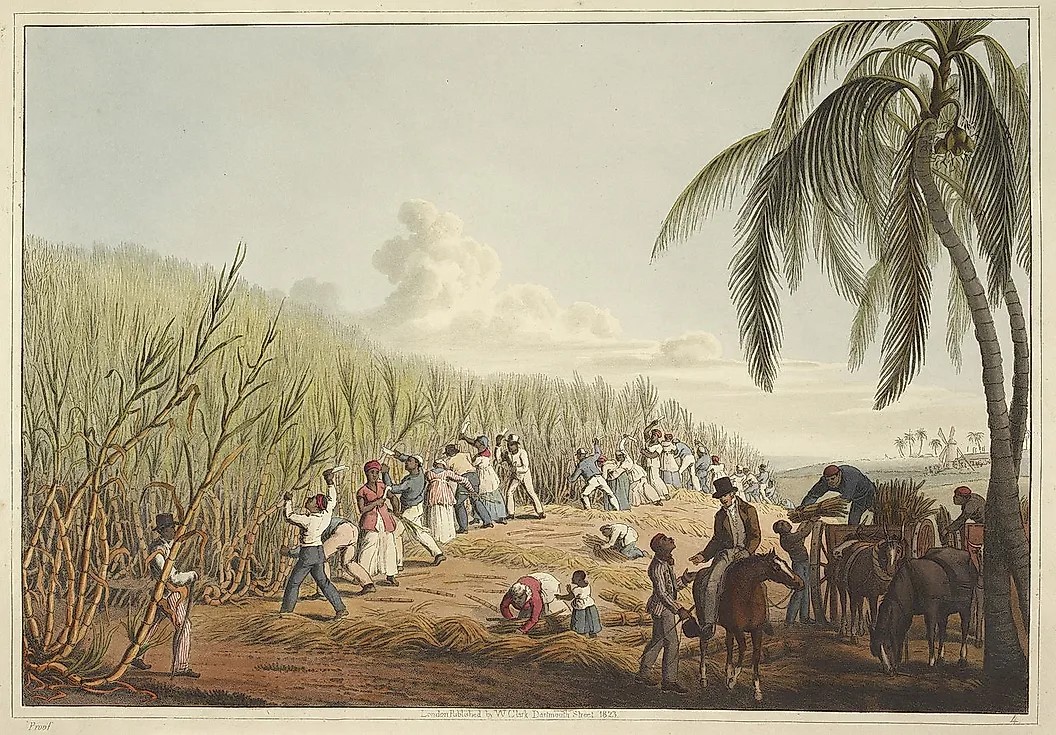
Plantation colonialism is a subset of exploitation colonialism, focusing on large-scale agricultural production using enslaved or indentured labour. Sugar, cotton, and tobacco plantations in the Americas and the Caribbean are key examples. Colonists established plantations to serve global markets, relying heavily on the transatlantic slave trade and other coercive labour systems.
This form of colonialism was highly racialised and structured around economic hierarchies, creating societies deeply divided along racial and class lines. Its impact persists in contemporary issues such as systemic racism and economic inequality in post-plantation societies.
As a political system, plantation systems are supported by political structures that prioritise the interests of plantation owners. These include laws enforcing land ownership, labour contracts, and slavery. Governments often align with plantation elites to suppress uprisings and maintain order.
As an economic system, plantation economies are built on monoculture agriculture (e.g., sugar, cotton, tobacco) designed for export. They depend on the exploitation of enslaved, indentured, or coerced labour, with profits flowing to the colonial power or local elites.
As a system of social control, plantation social hierarchies are rigidly enforced, often along racial or ethnic lines. Enslaved or labouring populations are controlled through violence, surveillance, and systemic oppression. Mobility and personal freedoms are severely restricted.
As an ideological system, Plantation Colonialism is justified by ideologies of racial inferiority and economic necessity. Colonisers portray enslaved or coerced labour as a “natural” order, essential for the prosperity of the colony and the metropole.
As a cultural System, Plantation Colonialism erases the identities of enslaved populations, forcing them into homogenised roles. Folk traditions and resistance cultures often emerge as subversive responses to cultural erasure and oppression.
Real-world examples of Plantation Colonialism
Plantation colonialism thrived in the Caribbean, with sugar plantations in Jamaica, Barbados, Antigua and Haiti built on enslaved African labour. In the American South, cotton and tobacco plantations during the antebellum period relied on slavery to sustain economic production. In Brazil, the economy was dominated by sugar and coffee plantations that exploited African and Indigenous labour.
Mauritius became a hub for sugar production under British rule, with indentured Indian workers replacing enslaved Africans. In Guyana, a plantation economy emerged, first driven by African slavery and later by Indian indentured labour, producing sugar for British markets.
Historic and ongoing impacts of Plantation Colonialism
Plantation colonialism inflicted severe trauma through the systemic enslavement and exploitation of African and Indigenous peoples, creating enduring legacies of racial and economic inequality. Enslaved Africans on Caribbean, Brazilian, and American plantations were subjected to extreme violence, family separation, and the erasure of cultural identities. The plantation economy’s reliance on forced labour dehumanised entire populations, embedding racism and white supremacy into the social fabric of colonial societies. After the abolition of slavery, systems of indentured servitude and racialised labour persisted, maintaining economic exploitation.
Today, the descendants of those affected continue to face systemic poverty, racial discrimination, and limited access to resources, alongside the psychological scars of historical injustice and cultural displacement. In the United States, African-Americans endured centuries of slavery, followed by racial segregation under Jim Crow laws and systemic discrimination that persists today, manifesting in racialised poverty, mass incarceration, and police violence.
Anti-colonial resistance
Anti-colonial resistance in plantation colonial systems has historically taken the form of slave revolts, maroon communities, and abolitionist movements. The Haitian Revolution remains the most prominent example, where enslaved Africans overthrew French colonial rule and established an independent state.
Today, resistance includes advocacy for reparations for slavery and its legacies, the celebration of cultural resilience through Afro-diasporic art and traditions, and movements to address systemic inequities rooted in plantation economies. Farmers and labourers in post-plantation economies also resist exploitative agricultural practices imposed by global markets, reclaiming land rights and advocating for sustainable, locally controlled production systems.
Activity scenario: ET presence as Plantation Colonialism
In this version of the hypothetical ET scenario:
The ETs establish agricultural or energy plantations, employing humans as labourers. These plantations might produce food, energy, or other resources vital for ET sustenance or commerce.
Nations providing labour for ET plantations could see internal strife and external criticism, akin to abolitionist movements during historical slavery. Global efforts might emerge to end human servitude, paralleling the anti-slavery campaigns of the 19th century.
Maritime Colonialism
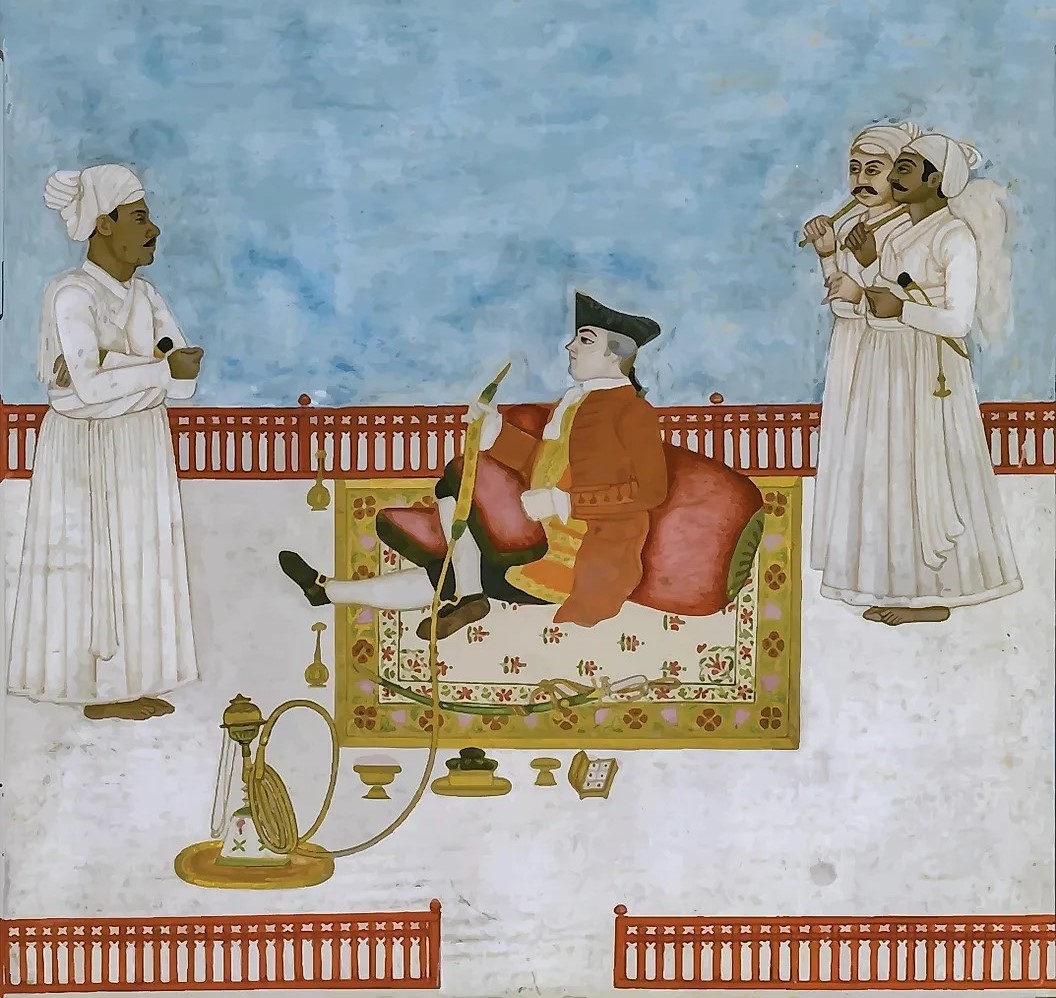
Maritime colonialism prioritises control over trade routes and coastal territories rather than expansive territorial conquest. European powers like Portugal and the Netherlands pioneered this type in the Indian Ocean and Southeast Asia. The focus was on establishing fortified trading posts and monopolising lucrative markets like spices and silk.
Unlike settler colonialism, maritime colonialism relied more on naval power and economic influence than demographic settlement. It significantly reshaped global trade networks and contributed to the rise of European mercantilism and global capitalism.
As a political system, maritime colonial powers establish naval supremacy and fortified trading posts. Political agreements with local rulers often secure the colonisers’ dominance over key trade hubs without direct governance of the hinterland.
As an economic system, the Maritime economy is based on controlling maritime trade routes and monopolising the flow of goods like spices, silk, and precious metals. Colonised regions become nodes in a global trade network dominated by the colonial power.
As a system of social control, Maritime Colonialism exerts power indirectly through alliances with local elites, mercenaries, or private trading companies like the Dutch East India Company. Rebellions or piracy are met with swift military retaliation.
As an ideological system, Maritime Colonialism is justified by ideologies of commercial superiority and exploration. Colonisers present themselves as pioneers of global trade and civilisation, downplaying the exploitative aspects of their activities.
As a cultural system, Maritime Colonialism facilitates cultural exchange but often in ways that subordinate local traditions. Colonisers spread their language, religion, and customs while commodifying or marginalising indigenous cultures.
Real-world examples of Maritime Colonialism
Maritime colonialism is reflected in the Portuguese Empire, which established trading posts in Africa, India, and Southeast Asia to dominate the spice and gold trade. The Dutch East India Company exemplified maritime dominance, controlling Indian Ocean trade routes and monopolising goods like spices.
The British Empire expanded its maritime reach through strategic control of port cities such as Singapore, Cape Town, and Hong Kong. The Spanish Empire used maritime routes to exploit the Americas, extracting vast amounts of gold and silver. Similarly, the French Empire relied on coastal control in West Africa, Southeast Asia, and the Caribbean to sustain its trade networks.
Historic and ongoing impacts of Maritime Colonialism
Maritime colonialism inflicted trauma by reshaping coastal and island societies through forced integration into global trade networks, often accompanied by the displacement and enslavement of local populations.
The transatlantic slave trade, a key element of maritime colonialism, forcibly removed millions of Africans from their homelands, subjecting them to horrific conditions on slave ships and enslavement in the Americas. Coastal regions in Africa, Southeast Asia, and the Caribbean saw the erosion of traditional economies and cultural practices, replaced by systems that prioritised colonial profits.
These disruptions continue to affect affected populations through economic dependency, cultural disintegration, and enduring diasporic displacement, as communities struggle with the lingering impacts of historical exploitation and global inequality.
Anti-colonial resistance
Resistance to maritime colonialism historically involved efforts to disrupt colonial trade networks and reclaim control over coastal and island economies. Examples include the actions of pirates and privateers who targeted colonial ships and the resistance of coastal African kingdoms like the Ashanti and Dahomey, which negotiated or fought against European encroachment.
Today, anti-colonial resistance in maritime contexts includes demands for reparations for the transatlantic slave trade, protection of coastal ecosystems from neo-colonial exploitation, and cultural movements that honour maritime histories and reclaim sovereignty over navigable waters and fishing rights.
Activity scenario: ET presence as Maritime/Space Colonialism
In this version of the hypothetical ET scenario:
The ETs prioritise control over Earth’s oceans, airspace, or orbital zones to dominate trade routes, resource-rich areas, or planetary logistics. Naval and aerospace supremacy would become critical.
Maritime colonialism by ETs could disrupt existing trade routes and create dependency on alien-controlled logistics. Nations with strong naval and space programs, such as the U.S. and China, might lead efforts to counter this control, potentially creating a “space navy” to challenge alien fleets.
Internal Colonialism
Internal colonialism occurs within the borders of a state, where dominant groups exploit marginalised or indigenous populations and their territories. Examples include the treatment of Native Americans in the United States or Indigenous peoples in Australia. It mirrors external colonialism in its mechanisms of dispossession and cultural erasure.
This type challenges the conventional notion of colonialism as exclusively transnational, emphasising how domestic power dynamics can replicate colonial structures of domination and resource exploitation within a single polity.
As a political system, Internal Colonialism involves centralised governance that prioritises dominant groups while marginalising others. Policies often enforce unequal access to resources, political representation, and rights.
As an economic system, marginalised regions or populations are economically exploited for resources or labour. Investments are concentrated in dominant areas, perpetuating inequalities.
As a system of social control, control is maintained through systemic discrimination, segregation, and policing. Legal and bureaucratic systems reinforce the subordination of marginalised groups.
As an ideological system, dominant groups justify Internal Colonialism by portraying marginalised populations as backward, lazy, or unfit for self-governance. Nationalism often excludes or erases minority identities.
As a cultural system, cultural suppression under Internal Colonialism includes the erasure of minority languages, religions, and traditions. Assimilation policies aim to integrate marginalised groups into the dominant culture, often by force or coercion.
Real-world examples of Internal Colonialism
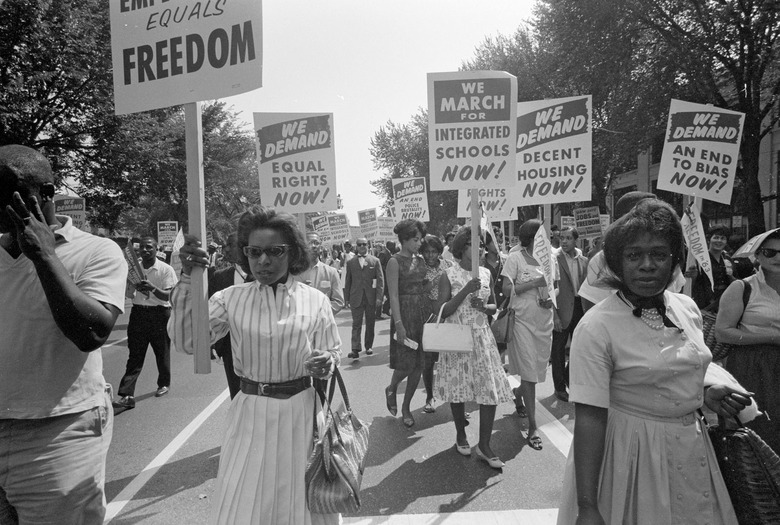
Internal colonialism often occurs within state borders, as seen in the United States, where systemic racial segregation and the Jim Crow laws marginalised African Americans. In Canada, Indigenous communities were confined to reserves and subjected to cultural erasure through forced assimilation policies.
South Africa’s apartheid regime created a racially stratified society, exploiting Black South Africans for economic labour while politically disenfranchising them. In Mexico, Indigenous communities, especially in Chiapas, have faced economic exploitation and displacement for natural resource extraction. In India, the caste system operates as a form of internal colonialism, particularly in the economic marginalisation of Dalit populations.
Historic and ongoing impacts of Internal Colonialism
The trauma of internal colonialism lies in the systematic marginalisation of minority groups within a nation, often replicating colonial structures of exploitation and discrimination.
In Canada and Australia, Indigenous peoples were confined to reserves, stripped of their cultural autonomy through policies like residential schools, and subjected to systemic socioeconomic inequities. In South Africa, apartheid institutionalised racial hierarchies, resulting in widespread displacement, economic exploitation, and intergenerational poverty for Black South Africans.
These systems of internal colonialism perpetuate historical traumas, as marginalised populations continue to face systemic barriers, cultural erasure, and unequal access to resources, often with limited acknowledgment or reparative measures.
Anti-colonial resistance
Resistance to internal colonialism often manifests in civil rights movements, land reclamation efforts, and cultural revitalisation. In the United States, the Civil Rights Movement challenged racial segregation and systemic oppression through legal advocacy, protests, and grassroots organising.
In Canada and Australia, Indigenous communities resist internal colonialism through land defence campaigns, such as those opposing pipelines and mining projects, and by revitalising Indigenous languages, ceremonies, and governance systems.
Anti-racist and anti-caste movements in regions like South Africa and India similarly address systemic discrimination, emphasising equity, reparations, and the dismantling of entrenched hierarchies within nation-states.
Activity scenario: ET presence as Internal Colonialism
In this version of the hypothetical ET scenario:
The ETs might exploit specific human populations or regions within their broader system of control, creating severe inequalities. Marginalised or resource-rich regions could bear the brunt of ET policies.
The imposition of internal colonialism by ETs could lead to widespread resistance, particularly in exploited regions. Global solidarity movements might form to resist alien domination, paralleling indigenous rights movements such as the American Indian Movement or anti-apartheid struggles in South Africa.
Neo-Colonialism
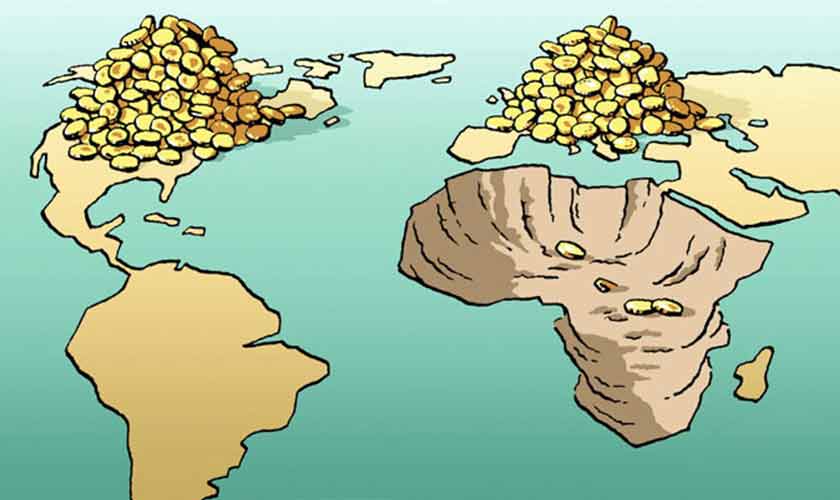
Neo-colonialism refers to the continued economic and political domination of former colonies by former colonial powers or global powers, despite formal decolonisation. This type relies on indirect mechanisms, such as economic dependence, cultural hegemony, and political influence, rather than direct military control. The economic policies of institutions like the IMF and World Bank are often cited as tools of neo-colonialism.
It perpetuates a legacy of inequality by maintaining structural dependencies, where former colonies remain reliant on the economic and technological superiority of developed nations, undermining their sovereignty and development prospects.
As a political system, Neo-Colonialism operates through diplomacy, economic pressure, and influence over domestic policies in weaker states. International institutions like the IMF and World Bank often enforce neo-colonial agendas.
As an economic system, the neo-colonial economy is characterised by dependency, where former colonies rely on foreign investment, loans, and trade relationships controlled by powerful nations. These dependencies perpetuate global inequalities.
As a system of social control, domination is maintained by empowering local elites who align with foreign interests. These elites often suppress resistance and enforce policies that benefit external powers.
As an ideological system, Neo-Colonialism is justified through narratives of globalisation, modernisation, and development. These ideologies obscure the exploitative dynamics of dependency and control.
As a cultural system, Neo-Colonialism spreads dominant norms, values, and consumer practices through media, education, and cultural exchange. Indigenous or local traditions are often overshadowed by the influx of foreign culture.
Real-world examples of Neo-Colonialism
Neo-colonialism is evident across Africa, where former colonial powers maintain economic control through trade agreements, foreign aid, and structural adjustment programs. Haiti remains economically dependent on foreign aid and institutions like the International Monetary Fund, which impose policies that perpetuate inequality.
In Southeast Asia, multinational corporations exploit cheap labour in industries such as textiles and electronics, reinforcing economic dependency. Latin America’s “Banana Republics” highlight U.S. economic influence and political interventions to protect corporate interests. In the Middle East, oil-rich states are subjected to economic control by multinational energy corporations and Western intervention, ensuring the continued flow of resources to global powers.
Historic and ongoing impacts of Neo-Colonialism
Neo-colonialism perpetuates the trauma of colonialism through economic dependency, cultural domination, and political interference, despite formal independence. African nations, for instance, are often burdened by debt to former colonial powers and international financial institutions like the IMF, which impose austerity measures that exacerbate poverty and inequality. In Haiti, economic policies dictated by foreign actors have undermined local autonomy and led to persistent poverty, while environmental degradation from resource extraction projects disproportionately harms local communities. In Southeast Asia and Latin America, multinational corporations exploit cheap labour and natural resources, replicating colonial extractive systems under new guises.
These practices have sustained cycles of economic disparity and cultural marginalisation, preventing affected populations from achieving full sovereignty and fostering deep resentment against global inequities rooted in colonial histories.
Anti-colonial resistance
Resistance to neo-colonialism involves challenging global power structures, such as international financial institutions, multinational corporations, and former colonial powers, that perpetuate dependency and inequality. Movements like the Non-Aligned Movement and Global South coalitions advocate for economic self-determination and equitable global trade systems.
Grassroots efforts, such as those opposing IMF-imposed austerity measures in Latin America and Africa, emphasise local control over resources and public policy. Cultural resistance includes rejecting Western cultural dominance by revitalising indigenous knowledge systems and promoting local art, language, and education. These forms of resistance collectively challenge the persistence of colonial legacies in global economic and political systems.
Activity scenario: ET presence as Neo-Colonialism
In this version of the hypothetical ET scenario:
Rather than direct control, ETs might dominate Earth through economic, technological, or ideological dependency. They could introduce systems that make humanity reliant on alien technologies or governance structures, subtly undermining sovereignty.
The ET introduction of superior technologies or economic systems could perpetuate global inequalities. Nations that adopt alien technologies might gain temporary advantages but risk dependency. This could provoke ideological divides, similar to Cold War-era debates about capitalism and communism, as humanity grapples with its autonomy.
LEARNING ACTIVITY
This activity is a structured thought experiment, designed to be completed over the course of a 2-hour class.
Students will analyse the hypothetical scenario of extraterrestrial (ET) arrival to explore historical colonialism. Working backward, they will research real-world historical examples corresponding to different colonial systems and examine how each type functions as a political, economic, social control, ideological, and cultural system.
The activity promotes collaboration, critical thinking, and synthesis of historical and theoretical knowledge. These are the intended learning outcomes for this activity:
- Understanding Colonialism: Students will analyse the systemic functions of colonialism through historical and speculative contexts.
- Research skills: Students will connect ET scenarios to real-world historical examples using online resources.
- Collaboration: Groups will synthesise diverse perspectives into a coherent analysis and presentation.
- Critical thinking: Students will evaluate how colonial structures inform speculative scenarios and contemporary politics.
- Empathic thinking: Students will need to engage with the lived experiences of colonised peoples in order to hypothesise how they might themselves experience colonisation by the ET invaders in this hypothetical scenario.
Part I: Individual preparation
Prior to the class, students should attend the lecture / watch the content video and complete the required readings on this topic. These will be assigned by the instructor, including notes from the descriptive section above and suggested sources at the end of this article.
Students should also toggle through the interactive World Colonial Empires, 1900 map, published by Oxford Learning Link, to get a spatial understanding of the geographical extents of colonial systems.
Next, students should research real-world historical examples of each type of colonialism…
- Settler colonialism
- Exploitation colonialism
- Plantation colonialism
- Maritime colonialism
- Internal colonialism
- Neo-colonialism
…and compile a brief set of notes on how each type of colonialism functioned as a political, economic, social control, ideological, and cultural system. These notes will help to inform the in-class discussion.
Prompting questions for students as they compile their notes might include:
- Which colonial powers and societies were involved?
- How did governance structures enforce control (political system)?
- How were resources extracted and/or labour exploited (economic system)?
- What methods allowed the colonial power to maintain control over the colonised population (social control)?
- What ideologies justified the colonial enterprise (ideological system)?
- How were the colonised population’s cultures impacted or suppressed (cultural system)?

Part II: Group synthesis
In groups of 3-4, students compare and synthesise their individual research to create a cohesive analysis of the different types of colonialism and their political, economic, social, ideological, and cultural control functions.
Part III: Collaborative scenario-building
The instructor introduces the hypothetical extraterrestrial arrival scenario:
Over a few months, increasingly common fleets of drone-like unidentified aircraft are spotted over key military and infrastructure sites in countries across the globe.
It is then discovered through satellite and Earth-based telescopic imagery that there are several unidentified “motherships” in geostationary orbit around the planet, from which the drone fleets originated. These motherships are accompanied by many other mid-sized vessels.
The speed, manoeuvrability and stealth capabilities of all of these unidentified craft appear far advanced beyond any known human technology.
World leaders assume the worst, understanding that they are outgunned by the technological superiority of the visitors, and fear that humanity is about to be colonised by an ET power.

In their groups, students collaboratively hypothesise how the ET visitors might colonise Earth.
They should describe a colonisation scenario for each of the six types of colonialism (settler, exploitation, plantation, maritime, internal and neo-colonialism), focusing on each of the five systemic functions (political, economic, social, ideological, and cultural control). Real-world historical examples can be used to help develop their scenarios.
Groups should arrive at a reasoned theory as to which type of colonialism is most likely under the ET arrival scenario. They should also describe what types of resistance might arise from the colonised human population under their most likely colonisation scenario.
Deliverable: Each group makes a 10-minute presentation to the class, summarising their findings.
Part IV: Reflective discussion
At the conclusion of the group presentations, the whole class will engage in a reflective discussion to debrief the activity.
The instructor facilitates the discussion with prompting questions. These might include:
- What do these historical examples reveal about the systemic nature of colonialism?
- Are there patterns in colonial history that might inform humanity’s response to an ET arrival?
- How can the study of colonial systems shape our understanding of contemporary global politics?
- What did you learn about the systemic nature of colonialism through this activity?
- How do historical examples shape your understanding of the ET arrival scenario?
- How can lessons from colonial history inform responses to global challenges today?
This activity can be complimented by each student submitting a reflective paper or briefing report documenting the findings of their groups, incorporating citations from the academic literature on colonialism.

Final thoughts
By exploring the ET arrival scenario, we can dissect the mechanisms of colonialism in a speculative context while grounding our understanding in historical examples. Each form of colonialism integrates political governance, economic exploitation, social control mechanisms, and ideological frameworks to establish and maintain dominance. Cultural systems, whether through suppression or exchange, play a crucial role in shaping identities and justifying colonial structures. Understanding these dynamics is key to analysing both historical and contemporary power relationships.
The UFO/UAP debate in the contemporary world offers a different entry point for students to critically engage colonialism, especially those who haven’t previously been compelled to grapple with these issues through life experience. These typologies of colonialism students engage with in this activity underscore the diverse strategies and enduring impacts of colonialism and imperialism, highlighting their relevance in understanding contemporary global inequalities and historical legacies.
Suggested sources
This categorised bibliography is a useful starting point to help students in their research for this learning activity.
Settler colonialism
- Alfred, T. (2009). Peace, power, righteousness: An Indigenous manifesto. Oxford University Press.
- Barker, J. (Ed.). (2005). Sovereignty matters: Locations of contestation and possibility in Indigenous struggles for self-determination. University of Nebraska Press.
- Byrd, J. A. (2011). The transit of empire: Indigenous critiques of colonialism. University of Minnesota Press.
- Cavanagh, E., & Veracini, L. (2017). The Routledge handbook of settler colonialism. Routledge.
- Dunbar-Ortiz, R. (2014). An Indigenous peoples’ history of the United States. Beacon Press.
- Elkins, C., & Pedersen, S. (Eds.). (2005). Settler colonialism in the twentieth century: Projects, practices, legacies. Routledge.
- Kauanui, J. K. (2018). Paradoxes of Hawaiian sovereignty: Land, sex, and the colonial politics of state nationalism. Duke University Press.
- Moreton-Robinson, A. (2015). The white possessive: Property, power, and Indigenous sovereignty. University of Minnesota Press.
- Povinelli, E. A. (2011). Economies of abandonment: Social belonging and endurance in late liberalism. Duke University Press.
- Simpson, L. B. (2017). As we have always done: Indigenous freedom through radical resistance. University of Minnesota Press.
- Smith, A. (2012). Conquest: Sexual violence and American Indian genocide. Duke University Press.
- Tuck, E., & Yang, K. W. (2014). Unbecoming claims: Pedagogies of refusal in qualitative research. Qualitative Inquiry, 20(6), 811–818.
- Veracini, L. (2015). The settler colonial present. Palgrave Macmillan.
- Wolfe, P. (2001). Land, labour, and difference: Elementary structures of race. The American Historical Review, 106(3), 866–905.
Exploitation colonialism
- Amin, S. (1974). Accumulation on a world scale: A critique of the theory of underdevelopment. Monthly Review Press.
- Chakrabarty, D. (2000). Provincialising Europe: Postcolonial thought and historical difference. Princeton University Press.
- Comaroff, J., & Comaroff, J. L. (1997). Of revelation and revolution: Christianity, colonialism, and consciousness in South Africa. University of Chicago Press.
- Cooper, F. (1996). Decolonisation and African society: The labour question in French and British Africa. Cambridge University Press.
- Cooper, F., & Stoler, A. L. (1997). Tensions of empire: Colonial cultures in a bourgeois world. American Ethnologist, 24(4), 854–866.
- Galeano, E. (1973). Open veins of Latin America: Five centuries of the pillage of a continent. Monthly Review Press.
- Lugard, F. D. (1922). The dual mandate in British tropical Africa. Blackwood.
- Mamdani, M. (1996). Citisen and subject: Contemporary Africa and the legacy of late colonialism. Princeton University Press.
- Mbembe, A. (2001). On the postcolony. University of California Press.
- Mitchell, T. (1988). Colonising Egypt. Cambridge University Press.
- Rodney, W. (1972). How Europe underdeveloped Africa. Bogle-L’Ouverture Publications.
- Said, E. W. (1993). Culture and imperialism. Knopf.
- Scott, J. C. (1985). Weapons of the weak: Everyday forms of peasant resistance. Yale University Press.
- Stoler, A. L. (2002). Carnal knowledge and imperial power: Race and the intimate in colonial rule. University of California Press.
Plantation colonialism
- Baptist, E. E. (2014). The half has never been told: Slavery and the making of American capitalism. Basic Books.
- Davis, A. (1981). Women, race, and class. Random House.
- Drescher, S. (2010). Abolition: A history of slavery and antislavery. Cambridge University Press.
- Genovese, E. D. (1976). Roll, Jordan, roll: The world the slaves made. Vintage.
- Hall, C. (2002). Civilising subjects: Metropole and colony in the English imagination, 1830–1867. University of Chicago Press.
- Higman, B. W. (2000). Plantation society in the Americas. Johns Hopkins University Press.
- Holt, T. C. (1990). The problem of race in the American plantation South, 1619–1865. Harvard University Press.
- Holt, T. C. (1992). The problem of freedom: Race, labour, and politics in Jamaica and Britain, 1832–1938. Johns Hopkins University Press.
- Mintz, S. W. (1985). Sweetness and power: The place of sugar in modern history. Viking Penguin.
- Morgan, J. L. (2004). Labouring women: Reproduction and gender in New World slavery. University of Pennsylvania Press.
- Morgan, P. D. (1998). Slave counterpoint: Black culture in the eighteenth-century Chesapeake and Lowcountry. University of North Carolina Press.
- Patterson, O. (1982). Slavery and social death: A comparative study. Harvard University Press.
- Tomich, D. W. (2004). Through the prism of slavery: Labour, capital, and world economy. Rowman & Littlefield.
- Williams, E. (1944). Capitalism and slavery. University of North Carolina Press.
Maritime colonialism
- Benton, L. (2010). A search for sovereignty: Law and geography in European empires, 1400–1900. Cambridge University Press.
- Bhabha, H. K. (1994). The location of culture. Routledge.
- Canny, N., & Pagden, A. (Eds.). (1987). Colonial identity in the Atlantic world, 1500–1800. Princeton University Press.
- Chaudhuri, K. N. (1990). Asia before Europe: Economy and civilisation of the Indian Ocean from the rise of Islam to 1750. Cambridge University Press.
- Crosby, A. W. (1986). Ecological imperialism: The biological expansion of Europe, 900–1900. Cambridge University Press.
- Curtin, P. D. (1984). Cross-cultural trade in world history. Cambridge University Press.
- Gilroy, P. (1993). The black Atlantic: Modernity and double consciousness. Harvard University Press.
- Klein, H. S. (2010). The Atlantic slave trade. Cambridge University Press.
- Linebaugh, P., & Rediker, M. (2000). The many-headed hydra: Sailors, slaves, commoners, and the hidden history of the revolutionary Atlantic. Beacon Press.
- Rediker, M. (1987). Between the devil and the deep blue sea: Merchant seamen, pirates, and the Anglo-American maritime world, 1700–1750. Cambridge University Press.
- Rediker, M. (2007). The slave ship: A human history. Viking.
- Said, E. W. (1993). Culture and imperialism. Knopf.
- Stein, S. J., & Stein, B. H. (2000). Silver, trade, and war: Spain and America in the making of early modern Europe. Johns Hopkins University Press.
- Tracy, J. D. (1990). The rise of merchant empires: Long-distance trade in the early modern world, 1350–1750. Cambridge University Press.
Internal colonialism
- Blauner, R. (1972). Racial oppression in America. Harper & Row.
- Chakrabarty, D. (2000). Provincialising Europe: Postcolonial thought and historical difference. Princeton University Press.
- Coulthard, G. S. (2014). Red skin, white masks: Rejecting the colonial politics of recognition. University of Minnesota Press.
- Hechter, M. (1975). Internal colonialism: The Celtic fringe in British national development, 1536–1966. Routledge.
- Mamdani, M. (1996). Citisen and subject: Contemporary Africa and the legacy of late colonialism. Princeton University Press.
- Mohanty, C. T. (1988). Under Western eyes: Feminist scholarship and colonial discourses. Feminist Review, 30, 61–88.
- Pulido, L. (1996). Environmentalism and economic justice: Two Chicano struggles in the Southwest. University of Arizona Press.
- Pulido, L. (2000). Rethinking environmental racism: White privilege and urban development in Southern California. Annals of the Association of American Geographers, 90(1), 12–40.
- Smith, A. (2012). Conquest: Sexual violence and American Indian genocide. Duke University Press.
- Smith, L. T. (2012). Decolonising methodologies: Research and Indigenous peoples. Zed Books.
- Tabb, W. K. (1970). The political economy of the Black ghetto. W. W. Norton & Company.
Neo-colonialism
- Blauner, R. (1972). Racial oppression in America. Harper & Row.
- Chakrabarty, D. (2000). Provincialising Europe: Postcolonial thought and historical difference. Princeton University Press.
- Chomsky, N. (1999). Profit over people: Neoliberalism and global order. Seven Stories Press.
- Fanon, F. (1961). The wretched of the earth. Grove Press.
- Harvey, D. (2003). The new imperialism. Oxford University Press.
- Klein, N. (2007). The shock doctrine: The rise of disaster capitalism. Metropolitan Books.
- Loomba, A. (2005). Colonialism/postcolonialism. Routledge.
- Mbembe, A. (2001). On the postcolony. University of California Press.
- Memmi, A. (1965). The coloniser and the colonised. Beacon Press.
- Mignolo, W. D. (2011). The darker side of Western modernity: Global futures, decolonial options. Duke University Press.
- Nkrumah, K. (1965). Neo-colonialism: The last stage of imperialism. Thomas Nelson & Sons.
- Said, E. W. (1993). Culture and imperialism. Knopf.
 Edge Dwellers Café
[…] level to a cosmic scale, addressing interplanetary governance, cross-species diplomacy, and the implications of first contact scenarios (Harrison […]