
- The global climate movement
- Learning activity: Investigating actors in the global climate movement
- Final thoughts
- References

The global climate movement is an intricate and dynamic network of actors united by a shared determination to combat climate change, a challenge that threatens the stability of ecosystems and the future of human society. As the movement evolves, it integrates a variety of organisational structures, from hierarchical NGOs to grassroots collectives, each contributing to the broader climate justice agenda.
This article explores the global climate movement, through a framework derived from the social movement literature, including its mobilising grievances, political opportunity, organisational dynamics, and goals, strategies and tactics of these actors in addressing the climate crisis.
Additionally, through a learning activity focused on the investigation of case study organisations, students will critically engage with the complexities of the movement, developing their analytical and communication skills while gaining a deeper understanding of the forces shaping global climate politics. This learning activity is inspired by a blog and discussion-based assessment task from my subject International Politics of Climate Change at La Trobe University.
The global climate movement
The global climate change movement is a diverse, transnational collective of actors, including activists, organisations, and communities, united by a shared commitment to addressing the environmental, social, and political challenges posed by climate change and advocating for urgent action to mitigate its impacts.
Social movements
Social movements have long been a subject of academic interest, with scholars examining their structures, strategies, and impacts on societal change. Charles Tilly (1978) defines social movements as collective challenges to authorities or elites, driven by grievances that mobilise groups into collective action. They are collective challenges by people with common purposes and solidarity in sustained interaction over time with prevailing systems of authority through known repertoires of protest and innovations of practice (Snow and Soule 2010; Tarrow 1994; Tilly 2004).
Transnational social movements provide social infrastructures for movement coordination, cultivate constituencies for intergovernmental organisations, mobilise and redistribute resources to movement members, foster transnational identities around the movement, and stimulate coordinated attempts to redress problems that transcend state boundaries (Kriesberg 1997).
The global climate movement, as a prominent and expansive social movement, is firmly situated within the broader social movement family tree. Its large, truly global scale is a key factor in its significant political impact within the wider ecosystem of international climate politics.
The academic literature on social movements is vast, but a useful summary by Remy Cross and David Snow (2012) in the Wiley-Blackwell Companion to Sociology identifies several core elements that characterise social movements. These include:
- Mobilising grievances, which reflect the shared concerns that drive collective action.
- Contextual conditions, which encompass the political, economic, and social environment in which movements operate.
- Movement dynamics, describing how participants organise and collaborate with each other.
- Biographic availability of participants, highlighting the varied demographic and resource-based factors that shape participation.
- Organising dynamics, which refer to the structural and tactical aspects that influence how movements coordinate and mobilise.
These elements are crucial for understanding the climate movement’s ability to galvanise support and influence international climate policies, and I use these as a framework for the learning activity below.
Mobilising grievances
Early analyses of social movements in the late nineteenth century and early twentieth century looked to relative deprevation as an explainer of social movement participation. Expanding on the work of Gustave Le Bon (1897) on the political implications of crowd behaviour, Relative Deprivation Theory argues that participation in social movements driven by deprivation and shared grievances in relation to existing power structures. From this perspective, the potential for collective political violence is related to the scope and intensity of shared grievances across a society (Gurr 2011), a threat which increases when socio-economic and political inequalities operate in parallel (Collier and Hoeffler 2004; Stewart and Brown 2008).
Examining contemporary social movements from this perspective is informative in terms of identifying the mobilising grievances of a movement, the underlying social, economic, political and/or environmental conditions that underpin their formation provide the motivational impetus for collective action and organisation, recruitment of new members and sustained activity of the movement (Cross and Snow 2012).
The mobilising grievances that animate movement participants to action, stemming from the disproportionate impacts of environmental degradation, the failures of state and corporate actors to mitigate climate risks, and the inequities faced by marginalised communities. These grievances resonate with scientific findings that underscore the urgency of achieving significant emissions reductions to prevent catastrophic global warming (IPCC 2021). Activist organisations articulate these concerns through discourses of intergenerational justice, planetary ethics, and the moral imperative of immediate action (Heinrichs 2019).
Contextual conditions
The specific contextual conditions that are required for the occurrence of social movements in the times and places in which they emerge. This relates to the opening of opportunity for political action—political opportunity—to redress mobilising grievances, the availability of resources to conduct those actions, accessibility of the public sphere as a “free space” for action, and relationship to other social movements (Kitschelt 1986; Tarrow 1994).
Political opportunity theory hails from a political sociology perspective and explores the impact of political context as a key variable which opens or closes the window of opportunity for social movement action. Openness of the prevailing political system to organised dissent is a key variable here (Tilly 1978) and can be influenced by factors such as institutional structures, political cleavages and strategic alliances among political factions (Kitschelt 1986; McAdam et al 1996; Tarrow 1994).
Variations of political opportunity studies point to both country-specific social movement mobilisation patterns (Kriesi et al 1992) and the salience of acro-political forces at the global level in opening opportunities for political action (Smith and Wiest 2012).
The political and economic context within which the climate movement operates is shaped by a complex interplay of global governance challenges, entrenched neoliberal economic systems, and the contested nature of climate policy. Transnationally, the movement engages with frameworks such as the Paris Agreement while critiquing their inadequacies in addressing the scale of the crisis (Fremstad and Paul 2022). National contexts, meanwhile, reveal significant variation, with progressive policies emerging in some states juxtaposed against resistance in others, driven by fossil fuel lobbies and populist scepticism (Newell and Paterson 2020).
Despite these barriers, the climate movement’s ability to leverage public discontent and increasing climate awareness has positioned it as a transformative force in global politics.
Organisational dynamics
Resource Mobilisation Theory evolved in the 1960s in response to explosion of anti-hegemonic politics leading up to the worldwide upheavals of 1968. This interrogated social movements from an organisational analysis perspective and examines the ways in which social movements obtain and deploy finances, people and information, among other available resources, in their political activities (Cress and Snow 1996; McCarthy and Zald 1977). This perspective is instructive in identifying the variables that determine movement dynamics, or, to put it another way, the ability to procure and deploy available resources to perpetuate itself and achieve its political objectives (Jenkins 1983).
Organisationally, the climate movement spans both professionalised organisations such as Greenpeace and participatory collectives like Extinction Rebellion. Professional organisations tend to adopt hierarchical structures to facilitate resource management and campaign coordination, whereas participatory groups favour horizontal and decentralised approaches that emphasise grassroots mobilisation (Schlosberg 2014). XR’s model, for example, relies on autonomous local groups operating within a broader framework of shared principles, promoting inclusivity while avoiding top-down control (Bell 2021). This dichotomy between professional and participatory approaches reflects broader tensions in social movement theory regarding efficiency versus inclusivity.

Biographical availability and identity
Inspired by the constructivist turn in the social sciences, New Social Movement Theory emphasises the reformist rather than revolutionary quality of social movements that have developed in post-industrial developed countries since the 1960s as class conflict became muted by generally rising prosperity and the welfare state (Touraine 1985; Habermas 1981). Scholars in this tradition are interested in the impact of ideology, identity, emotional engagement, and framing in social movement activities and how social movement participants interpret and perceive their political context (Melucci 1985). New social movement analysis helps to define the character of movement participation, in terms of who participates, how they participate, and why (Snow and Soule 2010).
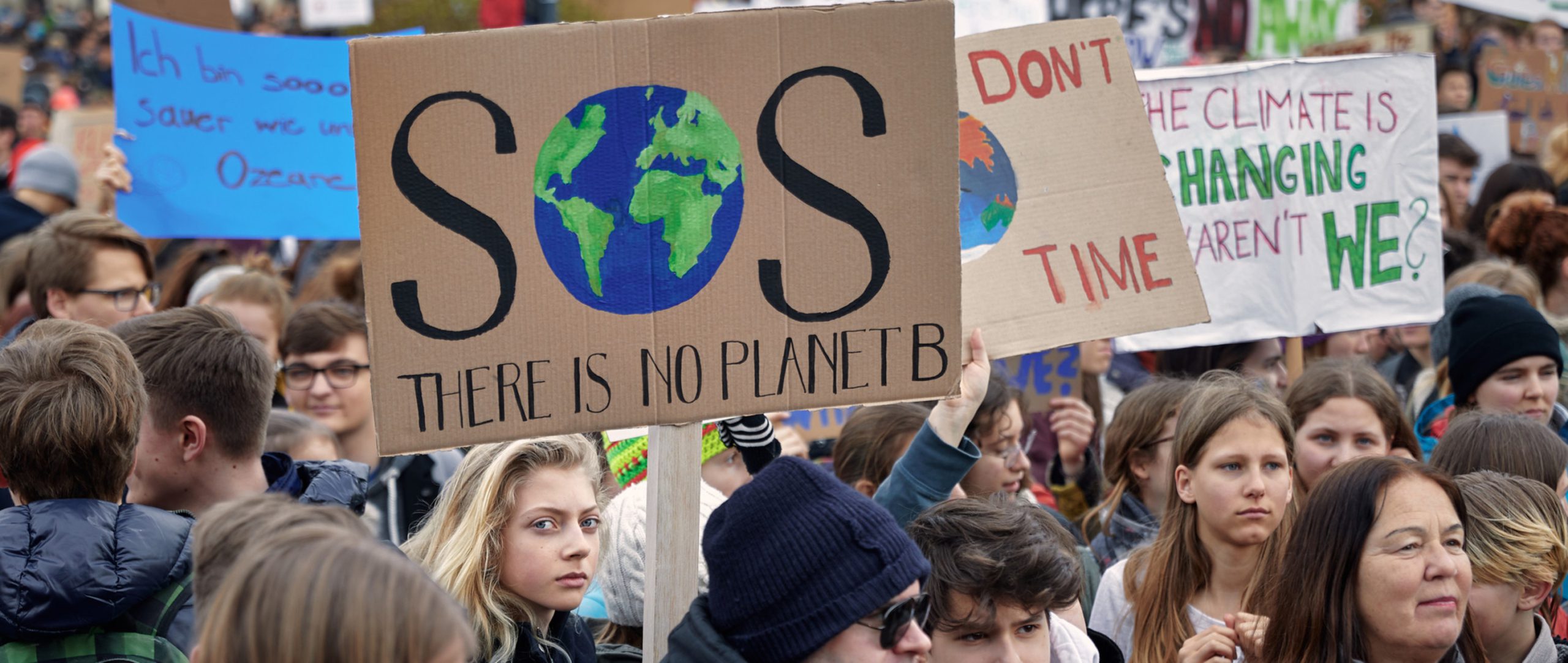
Biographical availability often plays a significant role in who can participate actively in the climate movement, with youth, retirees, and individuals in flexible employment disproportionately represented (McAdam 1986). The Fridays for Future movement, led by school-aged activists, highlights how specific life stages enable individuals to commit to sustained activism. However, the financial and social constraints faced by marginalised groups can limit their participation, raising questions about the inclusivity of the movement (Bagchi et al 2024).
Collective identity plays a crucial role in fostering solidarity within the movement. Climate activism often embodies emotional resonances, including grief for ecological loss, anger at institutional inaction, and hope for transformative change (Melucci 1996). These emotions are not merely peripheral; they serve to galvanise action, strengthen bonds between participants, and shape the movement’s narrative. Performative acts such as Extinction Rebellion’s “die-ins” or the symbolic planting of trees by community groups are illustrative of how emotional expression is intertwined with political praxis (Plate 2024).
Goals, strategies and tactics
These perspectives lead us to the most important questions of all, relating to the political consequences and outcomes of social movements (Snow and Soule 2010). It is difficult to measure “success” in terms of social movement efficacy, as social change is a long-term inter-generational project where each social movement builds on the possibilities opened by those that came before it. The political impact of a social movement is more usefully conceptualised in terms of consequences and outcomes of the strategies and tactics the movement employs in relation to the structures of power in which it is mobilised against (McBay 2011).
The goals, strategies, and tactics of climate actors are multifaceted and context-dependent. Key goals include pressuring governments to adopt ambitious climate policies, transitioning to renewable energy systems, and embedding climate justice principles within global governance frameworks (Plate 2024). Strategies often combine direct action with policy advocacy, while tactics range from nonviolent protests to strategic litigation against polluters. The alignment between these approaches and the movement’s goals underscores its adaptability, though challenges persist in balancing radical and reformist elements.
Evaluating success within the climate movement requires a nuanced understanding of both immediate and long-term objectives. While success may involve tangible outcomes such as legislative changes or emissions reductions, it also encompasses less measurable achievements, including shifting public discourse and normalising climate activism (O’Brien 2017). The viability of strategies and tactics is heavily influenced by political and social contexts; for instance, civil disobedience may yield positive outcomes in democratic states but provoke repression in authoritarian regimes (Sika 2024).

Ultimately, the impact of the climate movement extends beyond individual organisations, contributing to a broader ecosystem of actors working towards systemic transformation. Alliances between grassroots groups, NGOs, and international networks enhance the movement’s capacity to address the interconnected dimensions of the climate crisis. By fostering collaboration and amplifying diverse voices, the movement positions itself as a pivotal actor in the struggle for a sustainable and equitable future.
Learning activity: Investigating actors in the global climate movement
This learning activity invites students to engage critically with the global climate movement by exploring the structures, strategies, and impacts of its diverse organisations and collectives. Through a combination of research, analysis, collaboration, and reflection, students will select a case study organisation or collective to investigate its role in addressing climate-related grievances, its operational dynamics, and its contribution to the broader climate justice agenda.
By producing a briefing paper, participating in group discussions, and writing a critical evaluation, students will develop a deeper understanding of the complexities of social movements and enhance their analytical and communication skills in the context of global climate politics.
Learning objectives
By completing this activity, students should learn the following:
- Develop critical analysis skills by examining social movement dynamics.
- Enhance understanding of organisational structures, strategies, and tactics in climate activism.
- Foster collaboration and communication skills through group discussions and presentations.
- Strengthen research and academic writing proficiency by engaging with case studies and literature.
Activity instructions
This activity is made up of four parts, which guide students through an in-depth process of case study analysis, with individual research and collaborative elements.
Part I: Identifying and selecting a case study
Tasks in Part I are to be completed by students individually.
Climate movement brainstorm: Brainstorm a list of organisations and collectives active in the global climate movement. Use the following categories:
- Local (e.g., community-based initiatives).
- National (e.g., country-level campaigns or organisations).
- International (e.g., transnational alliances or NGOs).
Compile a Spreadsheet: Organise your findings into a spreadsheet with columns for Local, National, and International actors. Include a brief description of each organisation’s focus and activities.
Choose a case study: Choose one organisation or collective from your compiled list as your case study. Write a short paragraph outlining your reasons for selecting this specific organisation, focusing on its significance, relevance, or unique characteristics.
Create a 1-Minute Video: Record a short video where you explain the reasons for your choice of case study. Highlight its importance within the global climate movement and your interest in exploring it further.
Part II: Case study analysis
This research task should be completed by students individually.
Case study analysis paper: Write a 2,000-word case study analysis paper on your chosen case study organisation or collective, addressing the following questions:
- What are the mobilising grievances that drive your case study’s actions?
- In what political context does it operate?
- Is the case study professional or participatory? Is it hierarchically or horizontally organised?
- What is the biographical availability of its participants (e.g., demographics, resources, time availability)?
- How does your case study foster collective identity and emotional connections among its members?
- What roles and tasks do participants undertake as part of their political praxis?
- What are your case study’s goals, strategies, and tactics?
- Who are its allies among other actors within the local, national, and international climate movement?
Guidelines: Use a combination of primary sources (e.g., the organisation’s website, reports) and secondary sources (e.g., academic journal articles). Include citations and a bibliography in APA 7th format.
Part III: Presenting and discussing case studies
Students should complete tasks in Part III in class, in groups of 3-4.
Case study presentation: Work in groups of 3–4 students. Each member presents their case study findings to the group in a 5–minute presentation. Use visual aids where possible (e.g., slides, infographics).
Group discussion and feedback: After each presentation, group members discuss and provide feedback. Discussions and feedback should focus on the following evaluative questions:
- Are the goals of the case study organisation an appropriate response to its mobilising grievances?
- How is “success” defined and assessed for your case study?
- Do the strategies and tactics align with your case study’s goals?
- Are the goals, strategies, and tactics viable within their political context?
- What is your case study’s impact on the wider climate movement?
Students should take notes on key points from the group’s feedback on their presentations.
Part IV: Case study evaluation
Tasks in Part IV should be completed by students individually.
Critical evaluation report: Write a 1,000-word report evaluating the effectiveness of your chosen organisation or collective. Incorporate feedback from your group discussions and engage with relevant academic literature to support your analysis. Address the following evaluative questions, as discussed in Part III:
- Are the goals of the case study organisation an appropriate response to its mobilising grievances?
- How is “success” defined and assessed for your case study?
- Do the strategies and tactics align with your case study’s goals?
- Are the goals, strategies, and tactics viable within their political context?
- What is your case study’s impact on the wider climate movement?
Guidelines: Please submit your report with citations from the academic literature, a bibliography in APA 7th format, and observations from your group discussion (see Part III).
Learning assessment criteria
This activity integrates research, analysis, and collaboration, providing a comprehensive learning experience in studying the global climate movement. Across all of the outputs for Parts I-IV, student submissions should display the following:
- Depth of analysis: Demonstrates a thorough understanding of the case study’s dynamics, supported by evidence and academic references.
- Critical engagement: Critically evaluates the organisation’s effectiveness, incorporating diverse perspectives and feedback.
- Clarity and structure: Presents ideas coherently with clear organisation and logical flow.
- Academic rigour: Engages with relevant literature and adheres to citation standards.
- Collaboration and communication: Active participation in group discussions and quality of presentation delivery.
Final thoughts
The global climate movement represents a transformative force in the fight against climate change, shaped by an array of actors whose actions span local, national, and international levels. Their collective efforts reflect the urgency of the climate crisis and the varied strategies required to address it.
From professional organisations to grassroots collectives, the diversity of approaches within the movement is essential to its strength and adaptability. As the movement faces political and economic challenges, its ability to unite diverse voices and mobilise public support continues to position it as a central actor in global climate governance.
The accompanying learning activity offers students the opportunity to critically explore the roles of these actors, deepening their understanding of the complexities inherent in social movements and their contribution to a sustainable and equitable future. By analysing case study organisations and reflecting on their strategies, students will gain valuable insights into the practical realities and potential impacts of climate activism.

References
Bagchi, D., Srivastava, A., and Tushir, B. (2024). Harnessing the Power of Climate Activism: Insights from Psychological Perspectives on Climate Change Engagement—A Systematic Review. In: Mukhopadhyay, U., Bhattacharya, S., Chouhan, P., Paul, S., Chowdhury, I.R., Chatterjee, U. (eds). Climate Crisis, Social Responses and Sustainability. Springer, 193–218.
Bell, K. (2021). Diversity and inclusion in environmentalism. Routledge.
Collier, P., and Hoeffler, A. (2004). Greed and grievance in civil war. Oxford Economic Papers. 56(4), 563-595.
Cress, D. M., and Snow, D. A. (1996). Mobilization at the margins: Resources, benefactors, and the viability of homeless social movement organizations. American Sociological Review. 61(6), 1089-1109.
Cross, R., and Snow, D. A. (2012). Social Movements. In G. Ritzer (Ed.), The Wiley-Blackwell Companion to Sociology. Wiley-Blackwell, 522-544.
Fremstad, A. and Paul, M. (2022). Neoliberalism and climate change: How the free-market myth has prevented climate action. Ecological Economics. 197.
Gurr, T. R. (2011). Why Men Rebel. Taylor and Francis.
Habermas, J. (1981). New Social Movements. Telos. 1981(49), 33-37.
Intergovernmental Panel on Climate Change. (2021). Sixth assessment report.
Jenkins, J. C. (1983). Resource Mobilization Theory and the Study of Social Movements. Annual Review of Sociology. 9, 527-553.
Kitschelt, H. P. (1986). Political Opportunity Structures and Political Protest: Anti-Nuclear Movements in Four Democracies. British Journal of Political Science. 16(1), 57-85.
Kriesberg, L. (1997). Social Movements and Global Transformation. In J. Smith, C. Chatfield, & R. Pagnucco (Eds.), Transnational Social Movements and Global Politics: Solidarity Beyond the State. Syracuse University Press, 3-18.
Kriesi, H., Koopmans, R., Duyvendak, J. W., & Giugni, M. G. (1992). New social movements and political opportunities in Western Europe. European Journal of Political Research. 22(2), 219-244.
Le Bon, G. (1897). The Crowd: A Study of the Popular Mind. T. Fisher Unwin.
McAdam, D. (1986). Recruitment to high-risk activism: The case of Freedom Summer. American Journal of Sociology. 92(1), 64–90.
McAdam, D., McCarthy, J. D., & Zald, M. N. (1996). Comparative perspectives on social movements : political opportunities, mobilizing structures, and cultural framings. Cambridge University Press.
McBay, A. (2011). A Taxonomy of Action. In A. McBay, K. Lierre, and D. Jensen (eds.), Deep Green Resistance: Strategy to Save the Planet. Seven Stories Press, 239-276.
McCarthy, J. D., Zald, M. N. (1977). Resource Mobilization and Social Movements: A Partial Theory. American Journal of Sociology. 82(6), 1212-1241.
Melucci, A. (1985). The Symbolic Challenge of Contemporary Movements. Social Research. 52(4), 789.
Melucci, A. (1996). The playing self: Person and meaning in the planetary society. Cambridge University Press.
Newell, P., and Paterson, M. (1998). A climate for business: global warming, the state and capital. Review of International Political Economy. 5(4), 679–703.
O’Brien, K. (2017). Climate Change Adaptation and Social Transformation. In International Encyclopedia of Geography: People, the Earth, Environment and Technology (Richardson, D., Castree, N., Goodchild, M.F., Kobayashi, A., Liu, W., and R.A. Marston (eds.). Wiley.
Plate, Y. (2024). Background: Social Movements, Climate Justice, & Extinction Rebellion. In: Social Identity Motivators in Environmental Collective Action. Springer VS.
Schlosberg, D. (2014). Ecological Justice for the Anthropocene. In: Wissenburg, M., and Schlosberg, D. (eds) Political Animals and Animal Politics. Palgrave Macmillan.
Sika, N. (2024). Civil Society, Activism, and Repression in Authoritarian Regimes. In Civil Society and Activism in the Middle East: Regime Breakdown vs. Regime Continuity. Oxford University Press, 16-43.
Smith, J., & Wiest, D. (2012). Social Movements in the World-System: The Politics of Crisis and Transformation. Russell Sage Foundation.
Snow, D. A., and Soule, S., A. (2010). A Primer on Social Movements. Norton and Company.
Stewart, F., & Brown, G. K. L., Arnim. (2008). Major Findings and Conclusions on the Relationship Between Horizontal Inequalities and Conflict. In F. Stewart (Ed.), Horizontal Inequalities and Conflict: Understanding Group Violence in Multiethnic Societies. Palgrave Macmillan, 285-300.
Tarrow, S. (1994). Power in Movement: Social Movements, Collective Action and Politics. Cambridge University Press.
Tarrow, S. (2011). Power in Movement: Social Movements and Contentious Politics. Cambridge University Press.
Tilly, C. (1978). From Mobilization to Revolution. Addison-Wesley.
Tilly, C. (2004). Social Movements, 1768-2004. Paradigm Publishers.
Touraine, A. (1985). An Introduction to the Study of Social Movements. Social Research. 52(4), 749.
 Edge Dwellers Café
You must be logged in to post a comment.