
- Case study: Psychedelic Trance (Psytrance)
- Psytrance does IR theory
- Summary
- Learning activity: Exploring IR theories through music
- References

When I was a first-year undergrad IR student, I was absolutely bored out of my mind by International Relations theory. My lecturer was fantastic, the best one I had through my degree, but I just couldn’t resonate with the content or the obtuse way IR theory is written about in the literature.
Understanding International Relations theories can be a challenging task for undergraduate students encountering these frameworks for the first time, as I found 25 years ago. To bridge the gap between abstract concepts and practical application, this article presents an easy learning activity which uses the global phenomenon of music as a lens through which students can explore the core principles of IR theories. By analysing their favourite music genres—be it hip hop, classical, or electronic dance music—students connect their personal interests with the labour of theoretical interrogation. I’ve chosen the Psychedelic Trance (psytrance) genre for my case study. Psytrance is a globally significant style of electronic dance music with its own dynamic cultural community, for which there are many potential IR-related angles of investigation and analogy.
The activity is designed to introduce students to key IR theories, such as Realism, Liberalism, and Constructivism, while encouraging critical thinking, collaborative discussion, and reflective writing. Through critical engagement with ChatGPT, students access AI-generated perspectives that serve as a foundation for deeper analysis and academic exploration.
This dynamic approach ensures that students not only understand the foundational elements of IR theories but also gain the skills to evaluate their relevance to real-world phenomena. By framing music genres as international phenomena, the activity provides an accessible and engaging way to navigate the complexities of IR theories.
Case study: Psychedelic Trance (Psytrance)
Music has long been recognised as a potent medium for engaging with and facilitating discussions on complex political issues, serving as both a reflective and transformative cultural artefact. Scholars have highlighted its ability to transcend linguistic barriers and evoke emotional resonance, making it an effective tool for addressing contentious topics (Street 2012; Hesmondhalgh 2013).
In educational settings, music has been utilised to create empathetic engagement and stimulate critical dialogue, as evidenced by studies on the integration of music into curricula as an entry point to emotionally charged political topics (Vaugeois 2007; Ojala 2017).
In this article I examine Psychedelic Trance (Psytrance) as a case study music genre, though any music genre will do fine. Similarly, this activity could be completed with a sport as its case study, or any other type of transnational cultural phenomenon. I have been into Psytrance since the early-2000s, when I got into artists such as Astral Projection and Electric Universe.
What is Psytrance?
The psytrance genre and its associated movement have garnered significant scholarly interest due to their distinctive blend of musical, cultural, and spiritual elements. Psytrance emerged in the late 1980s and early 1990s, primarily within Goa, India, before diffusing globally (St John 2010; Saldanha 2007). It also draws inspiration from acid house, techno, and traditional Indian music.
Researchers have noted its origins in Goa’s hippie counterculture, which served as a confluence for Western and Eastern philosophies, resulting in a synthesis of psychedelic experiences and electronic music production technologies (D’Andrea 2007; Throckmorton 2024).
Central to psytrance music is its capacity to evoke a sense of collective trance among participants through its non-linear temporal structures, high-tempo beats, and intricate soundscapes, features that have been explored in depth by musicologists such as Butler (2006) and St John (2015).
Its characteristic tempo, ranging between 135 and 150 beats per minute, is underpinned by a steady, driving four-on-the-floor beat that forms the foundation of its constantly evolving textures and ‘trippy’ effects (Throckmorton 2024). Repetitive, trance-inducing melodies and layered sequences heighten this effect, building tension and releasing it in waves, with an emphasis on altered states of consciousness inspired by the psychedelics your hippie boomer grandparents were taking in the 1960s (Fadiman 2011).
The global psytrance community
The psytrance movement is as much about the culture it fosters as the hypnotic beats and rumbling bass of the music itself. The international psytrance community represents a vibrant and tightly knit subculture, transcends geographic and (some) cultural boundaries, drawing participants from many walks of life. There are thriving psytrance scenes in Europe, South America, India, Japan, Australia, and Israel. It is adaptable to local contexts, wherein participants integrate psytrance culture with indigenous practices and regional aesthetics (Partridge 2014).
Psytrance resonates deeply with audiences seeking both euphoric dance-floor energy and a transcendent experience. Festivals such as Boom Festival in Portugal, Ozora Festival in Hungary and Universo Paralello in Brazil have become central to its global community. Festivals function as temporary autonomous zones where psytrance enthusiasts engage in rituals of collective dance, alternative lifestyle practices, and the co-creation of artistic installations (Maffesoli 1996; St John 2017).
The genre’s cultural and visual identity is as striking as its sound, incorporating neon-coloured fractal art, mandalas, and event décor that reflect its psychedelic ethos. The spatial arrangements and symbolic motifs in such events reflect the influence of shamanic traditions and psychedelic visual art, fostering an immersive environment conducive to altered states of consciousness (Palhares et al 2024).
Creative expression is central to the psytrance ethos, extending beyond the music into fashion, art, and body decoration (Bennett 1999; Gilmore 2010). Psytrance fashion often blends colourful tribal and futuristic designs with glowing neon accessories, body painting, henna, and tattoos, further enriching the sensory and aesthetic experience.
For many ravers, psytrance serves as a pathway to self-discovery or spiritual awakening, often tied to altered states of consciousness (Hutson 2000). The dancefloor experience often induces flow states, where participants feel fully present and connected, and many find emotional release and healing through the cathartic power of communal dancing.
Psytrance does IR theory
Realism
Realism is a foundational theory in International Relations (IR), asserting that the international system is inherently anarchic, with no overarching authority to regulate interactions between states. In this environment, states act as rational, self-interested entities focused on survival and the pursuit of power. This perspective assumes that competition and conflict are inevitable as states seek to maximise their relative power to safeguard their interests. Classical realism, as articulated by figures like Thucydides, Niccolò Machiavelli (2008), and Hans Morgenthau, links this struggle for power to human nature, emphasising the importance of pragmatism and prudence in navigating global politics (Morgenthau 1948).
Modern realism, particularly Kenneth Waltz’s structural realism, shifts the focus from human nature to the anarchic structure of the international system, where power dynamics are shaped by the distribution of capabilities among states. Waltz (1979) introduces the concept of polarity—unipolarity, bipolarity, or multipolarity—as a determinant of stability and conflict. While realism provides a robust framework for understanding power struggles, its critics argue that it downplays the potential for cooperation, the role of non-state actors, and the influence of norms. Despite this, realism remains influential, offering critical insights into alliances, deterrence, and the balance of power in global politics.
The centrality of Israeli artists and fans in the global psytrance movement, and the prominence of psytrance in Israeli pop culture, offer a realist case study for our IR theory / psytrance cross-over. Israel’s realist approach to foreign policy, characterised by its emphasis on security, territorial sovereignty, and military power, underpins its occupation of Palestine and shapes its broader regional strategy in the Middle East (Peters and Pinfold 2024). Rooted in the realist assumption that states must prioritise survival in an anarchic international system, Israel’s policies focus on maintaining strategic dominance through military capabilities, alliances, and control over contested territories such as the West Bank and East Jerusalem.
However, this state-centric focus is problematised when viewed alongside Israel’s prominent role in the global psytrance movement, which espouses values of inclusivity, communal harmony, and transcendence (Evans 2023). Psytrance festivals in Israel bring together diverse participants under the banner of shared cultural experience, yet they frequently fail to engage with the realities of occupation or provide space for Palestinian participation (St John 2010).
Critics argue that the psytrance movement’s apolitical stance and its tendency to appropriate Indigenous and diasporic cultural motifs mirror broader dynamics of erasure and exclusion inherent in Israel’s occupation policies (Pappe 2024). Thus, while psytrance embodies an ethos of transcendence and unity, it risks reinforcing structural inequalities by failing to address the stark contradictions between its rhetoric and the lived realities of dispossession and occupation.
Liberalism
Liberalism presents an optimistic counterpoint to realism, arguing that cooperation among states is not only possible but essential in an interdependent world. It emphasises the role of institutions, democratic governance, and economic ties in reducing conflict and fostering peaceful interactions. Classical liberal thinkers like Immanuel Kant (2018) envisioned perpetual peace achieved through democratic cooperation and economic interdependence, while in 1919 Woodrow Wilson (2017) championed the League of Nations as a platform for collective security.
Contemporary liberalism expands these ideas, focusing on global institutions such as the United Nations, the European Union, and the World Trade Organization, which promote stability and collaboration. Scholars like Robert Keohane and Joseph Nye emphasise complex interdependence, where states benefit from economic and political cooperation, making war less appealing due to the high costs (Keohane and Nye 1977). While liberalism is critiqued for underestimating power politics and the resilience of anarchy, its insights into diplomacy, trade, and norm-building provide valuable alternatives to realist pessimism.
Liberalism foregrounds the interconnectedness of states and non-state actors, providing insight into psytrance as a facilitator of global cooperation. The genre thrives through transnational networks of artists, producers, and festival organisers, which reflect liberal notions of interdependence and collaborative exchange (Keohane and Nye 1977). The economic infrastructure of psytrance, heavily reliant on international trade in music production tools, ticketing systems, and digital platforms, exemplifies the liberal assertion that global markets enable the diffusion of culture (Moravcsik 1997). Additionally, the communal ethos of psytrance events often aligns with liberal ideals of fostering global unity and peace (Hutson 2000).
Constructivism
Constructivism challenges the materialist assumptions of realism and liberalism, arguing that the international system is shaped by social constructs, including norms, ideas, and identities. Unlike theories that treat the international system as a fixed, anarchic structure, constructivism asserts that this structure is shaped by shared understandings and interactions among states. Alexander Wendt (1992) famously stated, “Anarchy is what states make of it,” highlighting how states’ behaviours and relationships are influenced by their social context and shared ideas.
Constructivism focuses on how norms evolve and influence state actions, such as the emergence of human rights norms or the non-proliferation of nuclear weapons. It also examines identity formation, exploring how states perceive themselves and others in the international system. For instance, the post-Cold War rapprochement between the United States and former Eastern Bloc states can be understood through changing perceptions and identities rather than shifts in material power. Critics of constructivism argue that it is overly focused on ideational factors and lacks predictive power, but it remains a vital framework for analysing how international norms and ideas shape global politics.
Constructivist approaches emphasise the role of ideas, identities, and social norms in shaping international phenomena. Psytrance’s embrace of altered states of consciousness and its integration of spiritual themes exemplify its ability to reconfigure cultural norms and challenge traditional paradigms of identity (Wendt 1992). The geographic spread of psytrance, often tied to global backpacker routes, facilitates the formation of a transnational subculture that transcends national boundaries (Finnemore and Sikkink 1998). Constructivism elucidates how psytrance communities construct alternative narratives of global interconnectedness, resisting hegemonic cultural norms through their shared rituals and aesthetics (Katzenstein 1996).
Scholars have critiqued the psytrance movement’s entanglement with Israeli nationalism, arguing that its global cultural narrative often masks the perverse penetration of nationalist ideologies, wherein psytrance festivals and spaces are co-opted to subtly reinforce Israeli state narratives and militaristic pride, particularly through the prominence of ex-soldiers and the celebration of resilience tied to national identity (Throckmorton 2024; Evans 2023). This has become particularly divisive in the context of the October 7, 2023 Hamas attack on the Supernova Music Festival and Israel’s subsequent genocide in Gaza.

English School
The English School, or International Society Theory, seeks to reconcile the competing claims of realism and liberalism by focusing on the concept of an international society where states operate within shared norms, rules, and institutions. This perspective recognises that while the international system is anarchic, it is not devoid of order; states acknowledge principles such as sovereignty, diplomacy, and international law that facilitate cooperation. Hedley Bull’s seminal work, The Anarchical Society, explores how these shared frameworks create a stable international order despite the absence of a central authority (Bull 1977).
The English School identifies three key pillars: the international system (realist power politics), international society (shared norms and rules), and world society (transnational actors and human solidarity). This multi-layered approach allows for a nuanced analysis of global politics. Critics of the English School argue that its normative focus lacks empirical rigor, but it remains influential in exploring the interplay between order and anarchy in international relations.
The English School’s focus on international society and the interplay of order and justice resonates with the cultural dynamics of psytrance. The genre’s communal gatherings reflect solidarist principles, wherein diverse participants engage in collective experiences that transcend state boundaries (Bull 1977). Major psytrance festivals, operating as microcosms of global cooperation, embody pluralist ideals of coexistence within a shared cultural framework (Buzan 2004). Psytrance’s critiques of materialism and consumerism align with the English School’s normative emphasis on justice and equitable global engagement (Dunne 1995).
Marxist IR Theory
Marxist IR theory applies Karl Marx’s critique of capitalism to the global political system, arguing that international relations are shaped by class struggle and economic exploitation. It views the global system as hierarchical, with powerful capitalist states exploiting weaker, peripheral nations for resources and labour. Vladimir Lenin’s theory of imperialism frames global politics as the extension of capitalist competition into the international sphere, where states act as proxies for economic interests (Lenin 1999).
Immanuel Wallerstein’s world-systems theory builds on this, categorising states into core, semi-periphery, and periphery, highlighting systemic inequalities perpetuated by global capitalism (Wallerstein 1974). Marxist IR critiques traditional theories like realism and liberalism for neglecting the economic structures that drive state behaviour. While its focus on structural inequality remains highly relevant, critics argue that it oversimplifies global politics by reducing complex interactions to economic determinism.
From a Marxist perspective, psytrance is both a critique of and a product of global capitalism. Its countercultural ethos challenges the commodification of human experiences, yet the genre’s integration into global markets underscores the contradictions of resistance within capitalist frameworks (Gramsci 1971; Harvey 2007). Commodification of psytrance and the potential dilution of its countercultural origins in its global diffusion (St John 2009).
Also, the exploitation of local resources for global festivals and the uneven distribution of profits between artists and multinational promoters reflect the structural inequalities inherent in the global music industry (Cox 1987). Psytrance thus exemplifies how cultural production is enmeshed within the dynamics of class struggle and capitalist hegemony.
Feminist IR Theory
Feminist IR theory highlights the gendered dimensions of international politics, critiquing mainstream theories for marginalising women and neglecting how gender shapes power dynamics. Feminist scholars argue that global politics is dominated by masculinist norms that privilege aggression, competition, and hierarchy. Cynthia Enloe’s work reveals how the international system relies on the often-unseen contributions of women, from diplomatic spouses to factory workers, whose labour underpins global security and economy (Enloe 1989).
J. Ann Tickner (1992) critiques traditional security studies for focusing narrowly on state-centric, militarised conceptions of security while ignoring human security issues such as poverty, health, and gender-based violence. Feminist IR advocates for an inclusive approach that considers intersectional inequalities and emphasises cooperation and care. While critics argue that it can be overly focused on gender, feminist IR has broadened the discipline by centring marginalised voices and reframing concepts of power and security.
Feminist IR theories interrogate psytrance’s dynamics of gender, inclusion, and power. While the genre’s emphasis on community and spirituality provides spaces for alternative gender expressions, the predominance of male DJs and producers reveals persistent gender imbalances in cultural production (Tickner 1992). Psytrance’s ecological and communal ethos aligns with feminist calls for relational approaches to power, challenging hierarchical norms of domination and exclusion (Enloe 1989).
Additionally, the genre provides a platform for intersectional resistance to patriarchal and capitalist structures, amplifying marginalised voices within a predominantly masculine industry (True 2012). These critiques highlight the need for intersectional approaches that foreground marginalised voices within the genre’s global networks.

Post-colonial IR Theory
Post-colonial IR theory examines the lasting impacts of colonialism on the international system, critiquing Eurocentric narratives that dominate mainstream IR theories. Scholars like Edward Said (1979) argue that colonial power structures persist in forms such as cultural imperialism, economic dependency, and political marginalisation. This theory challenges the universality of Western-centric ideas about sovereignty, development, and global governance, emphasising the agency of formerly colonised nations.
Post-colonial IR highlights the ways in which historical legacies shape contemporary power dynamics, from the economic dependency of the Global South to the cultural domination of Western norms Gayatri Spivak (1988). It also explores themes of identity and resistance, advocating for a more inclusive understanding of international relations. While critics contend that post-colonial IR lacks a unified methodology, its emphasis on deconstructing power asymmetries and amplifying marginalised voices provides a vital corrective to mainstream IR.
Post-colonial perspectives illuminate psytrance’s origins and diffusion as reflective of broader dynamics of cultural imperialism and resistance. The genre’s birth in Goa represents a fusion of Western electronic music with local spiritual traditions, raising questions about cultural appropriation and authenticity (Said 1979). However, psytrance also challenges Western hegemony by foregrounding non-Western cosmologies and aesthetics, reshaping global cultural flows (Bhaba 1994). Its localisation in diverse contexts, from Israel to Brazil, exemplifies how formerly colonised societies reinterpret Western cultural imports to assert their agency within globalised cultural landscapes (Spivak 1988). Psytrance thus functions as both a product of and a challenge to colonial legacies within global cultural flows.
First Nations Diplomacies
First Nations diplomacies provide a lens for understanding the spiritual and relational aspects of psytrance. The genre’s integration of Indigenous motifs and its emphasis on harmony with nature reflect Indigenous epistemologies of interconnectedness (Coulthard 2014). However, the commodification of these themes raises questions about cultural appropriation and the erasure of Indigenous agency within global cultural flows.
First Nations diplomacies highlight the relational and spiritual dimensions of psytrance, as well as the tensions between appropriation and authenticity. The genre’s incorporation of Indigenous motifs reflects broader patterns of cultural borrowing, raising questions about the ethics of representation and agency (Coulthard 2014). However, psytrance’s emphasis on ecological harmony and collective well-being aligns with Indigenous epistemologies of interconnectedness and reciprocity.
However, the use of Indigenous symbols and spiritual motifs at live events and in the music itself, without adequate contextual understanding or acknowledgment, has raised issues of cultural appropriation, prompting calls for greater cultural sensitivity (Throckmorton 2024). Critics also highlight a tendency to romanticise and homogenise spiritual practices, thereby trivialising their original significance (Gilmore 2010).
Critical Theory
Critical Theory challenges the foundational assumptions of traditional IR theories, arguing that these often reinforce existing power structures and inequalities. Rooted in the Frankfurt School, it critiques capitalism, colonialism, and patriarchy, seeking to expose how these systems perpetuate oppression. Scholars like Robert Cox famously stated that “theory is always for someone and for some purpose,” emphasising the political nature of theoretical frameworks (Cox 1981).
Critical Theory prioritises emancipation, focusing on social justice, equity, and the potential for transformative change. It critiques mainstream theories like realism for legitimising the status quo and ignoring the structural forces that shape global inequalities (Linklater 1998). While some critics argue that it is overly idealistic and lacks actionable solutions, Critical Theory remains an important framework for imagining a more just and inclusive global order.
Critical theory interrogates the emancipatory potential of psytrance as a counter-hegemonic cultural practice. The genre’s emphasis on transcendence and ecological harmony aligns with critiques of capitalist alienation and instrumental rationality (Marcuse 1964; Habermas 1984). Psytrance festivals operate as experimental spaces that resist neoliberal commodification, fostering alternative modes of social organisation and cultural production (Adorno 1991).
Yet, the commodification of these spaces by global markets highlights the limitations of cultural resistance within capitalist frameworks. Additionally, the movement’s rhetoric of inclusivity and community has been questioned, as studies note underlying hierarchies and exclusions based on race, gender, and socioeconomic status, contradicting its egalitarian ideals (St John 2010; Partridge 2014).

Post-modernist IR Theory
Post-Modernist IR Theory deconstructs the narratives and concepts that underpin traditional IR theories, questioning their claims to universality and objectivity. It emphasises how language, discourse, and cultural practices shape political realities, drawing on the work of thinkers like Michel Foucault (1977). Post-modernists challenge the notion of fixed categories such as sovereignty or anarchy, arguing that these are socially constructed and serve specific power interests.
The theory exposes the Eurocentric and patriarchal biases of mainstream IR, advocating for the inclusion of marginalised perspectives (Ashley 1989). It also critiques grand narratives, emphasising plurality and context-specific understandings. While critics argue that post-modernism lacks coherence and practical applicability, its focus on deconstruction and hidden power dynamics provides valuable insights into how global politics is framed and understood.
Post-modernist theories deconstruct the grand narratives underpinning global cultural production. Psytrance’s bricolage of spiritual motifs and digital soundscapes embodies post-modernism’s embrace of hybridity and pastiche (Lyotard 1984). The genre’s rejection of conventional musical structures challenges dominant paradigms of authenticity and hierarchy, reflecting the fragmented and contested nature of global cultural power (Ashley 1989). Psytrance’s playful and performative aesthetics (Bennett 1999; Gilmore 2010) destabilise traditional IR frameworks, emphasising the multiplicity of meanings within global cultural exchanges (Walker 1993).
Complex Systems Theory in IR
Complex Systems Theory views the international system as a dynamic network of interconnected actors and processes, where small changes can produce disproportionate and often unpredictable effects. Drawing from systems science, it emphasises feedback loops, emergent behaviours, and adaptability, challenging linear models of causation in traditional IR theories (Mitchell 2009).
This approach is particularly useful in understanding phenomena like globalisation, climate change, and financial crises, where interactions among multiple actors create cascading effects. For example, the 2008 financial crisis illustrates how localised actions in one sector of the global economy can produce far-reaching impacts. Critics argue that Complex Systems Theory can be overly abstract, but its emphasis on non-linearity and interdependence offers a fresh perspective on global dynamics (Axelrod and Cohen 2000).
Complex systems theory highlights the emergent and adaptive dynamics of psytrance within global cultural networks. The genre’s decentralised production and distribution exemplify the non-linear processes of globalisation, where local innovations produce unpredictable global effects (Holling 1973). Festivals and digital platforms function as nodes within a complex cultural system, enabling feedback loops that shape the evolution of psytrance as a global phenomenon (Jervis 1998). The genre’s resilience and adaptability underscore its significance within interconnected global systems (Axelrod and Cohen 2000).
Green Theory
Green Theory focuses on the environmental dimensions of International Relations, addressing the global challenges posed by climate change, biodiversity loss, and ecological degradation. It critiques traditional IR theories for prioritising state power, security, and economic growth over ecological sustainability. Green theorists argue that the global system must be reoriented to respect ecological limits and promote environmental justice, advocating for a transformation in how states, corporations, and individuals interact with the environment (Adams 2009).
Drawing from political ecology and environmental ethics, Green Theory examines the structural drivers of ecological crises, such as neoliberal capitalism and unequal resource distribution. It also highlights the role of transnational environmental movements and global governance institutions in addressing ecological challenges. While critics argue that Green Theory is overly idealistic and underestimates the constraints imposed by the existing international system, its emphasis on sustainability and equity is increasingly relevant in the Anthropocene, where environmental issues are central to global politics.
Psytrance’s thematic focus on interconnectedness and planetary well-being resonates with green theory’s emphasis on ecological justice and global responsibility. The genre’s embrace of sustainability and ecological consciousness at events such as Boom Festival reflects its alignment with eco-critical principles (Dryzek 2022). Psytrance thus serves as a site of ecological critique and advocacy within global cultural systems.
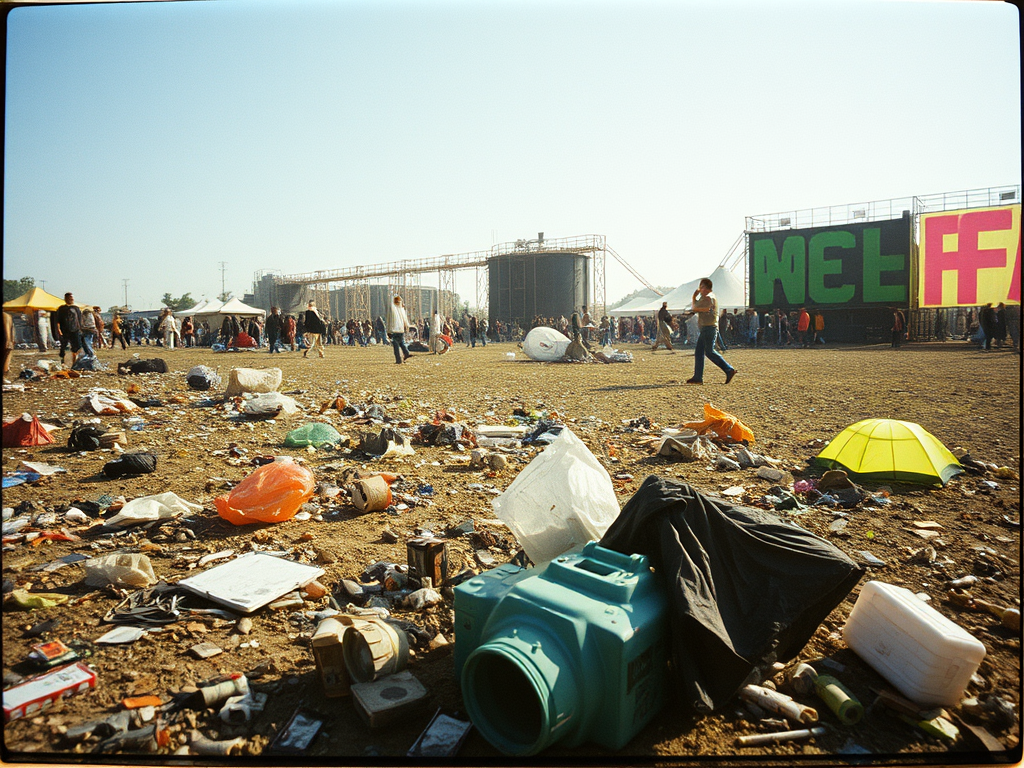
However, from a Green Theory perspective, one can critique the ecological impacts of psytrance’s global infrastructure, including the carbon footprint of international festivals and digital distribution (Newell and Paterson 2010). Festivals have also been critiqued for their ecological footprints, despite claims to environmental consciousness (St John 2017).
Political Psychology
Political Psychology examines how cognitive processes, emotions, and group dynamics influence state behaviour and international relations. It focuses on the decision-making of leaders, exploring how biases, perceptions, and psychological factors shape foreign policy. Robert Jervis’ work on misperception, for example, highlights how inaccurate assumptions about adversaries can lead to conflict escalation (Jervis 1976).
The theory also considers collective phenomena, such as the role of public opinion, nationalism, or groupthink in shaping international outcomes (Tajfel and Turner 1979). Political Psychology provides tools for understanding crises, where fear, trust, or overconfidence play pivotal roles in state behaviour (Jervis 1976). Critics argue that its focus on individual and group-level factors may overlook structural influences, but its insights into the psychological underpinnings of decision-making add depth to the study of IR.
Political psychology provides insight into the emotive and cognitive dimensions of psytrance’s appeal. The genre’s repetitive rhythms and immersive soundscapes evoke altered states of consciousness, fostering emotional solidarity among participants (Palhares et al 2024). Psytrance festivals often create liminal spaces where attendees experience a temporary dissolution of traditional identities, reflecting psychological theories of collective identity and belonging. This transformative potential underscores the genre’s capacity to influence individual and group behaviour within transnational contexts (Stein 2013).
Political psychology examines psytrance’s emotional and cognitive impact on individuals and communities. The genre’s immersive soundscapes and repetitive rhythms evoke altered states of consciousness, fostering collective experiences of belonging and transcendence (Tajfel & Turner, 1979). Psytrance festivals create liminal spaces where traditional social identities are temporarily dissolved, enabling participants to engage in alternative modes of interaction and self-perception (Jervis 1976). This transformative potential underscores the genre’s significance as a cultural phenomenon that shapes individual and collective behaviour.
Critical Geography
Critical Geography is an approach within human geography that interrogates the power dynamics, inequalities, and ideologies embedded in spatial arrangements and representations. It challenges traditional, apolitical views of geography by focusing on how space is socially constructed and contested, often reflecting and reinforcing systems of domination, such as capitalism, colonialism, and patriarchy (Harvey 1996). This perspective emphasises the interconnectedness of spatial, economic, and cultural processes, advocating for transformative practices that address social and environmental injustices (Massey 1994).
Critical geography examines how psytrance reconfigures spatial imaginaries through its association with alternative spaces. Goa’s beaches, European forests, and desert landscapes become sites of resistance to urbanisation and commodified space, reflecting Harvey’s (1996) critique of spatial inequality. Psytrance festivals serve as temporary autonomous zones, contesting dominant spatial narratives and creating alternative mappings of cultural and social belonging (Massey 1994).
Critical geography examines the spatial dimensions of psytrance, highlighting its reconfiguration of traditional geographic imaginaries. Goa’s beaches, European forests, and desert landscapes become alternative spaces of cultural production, contesting dominant spatial narratives of urbanisation and commodification (Harvey 1996). Psytrance festivals operate as temporary autonomous zones (Maffesoli 1996; St John 2017), creating new spatial imaginaries that reflect the lived realities of global subcultures.
Summary
In conclusion, the integration of music into the study of International Relations offers a compelling and accessible approach to understanding complex theoretical frameworks. By using genres like psychedelic trance (psytrance) as a case study, students can explore how music functions not only as an art form but also as a dynamic international phenomenon intertwined with political, cultural, and economic forces. The activity fosters critical thinking and encourages students to reflect on how their personal interests connect to broader global systems.
Through the lens of IR theories such as Realism, Liberalism, and Constructivism, students gain valuable insights into the ways in which culture, identity, and power shape the global stage. Music, as a universal language, facilitates deeper engagement with these theories and provides an innovative tool for understanding the interplay between cultural expression and international relations. Ultimately, this approach empowers students to think critically about both the relevance of IR theories in the modern world and the transformative potential of cultural phenomena like music in shaping global politics.
Learning activity: Exploring IR theories through music
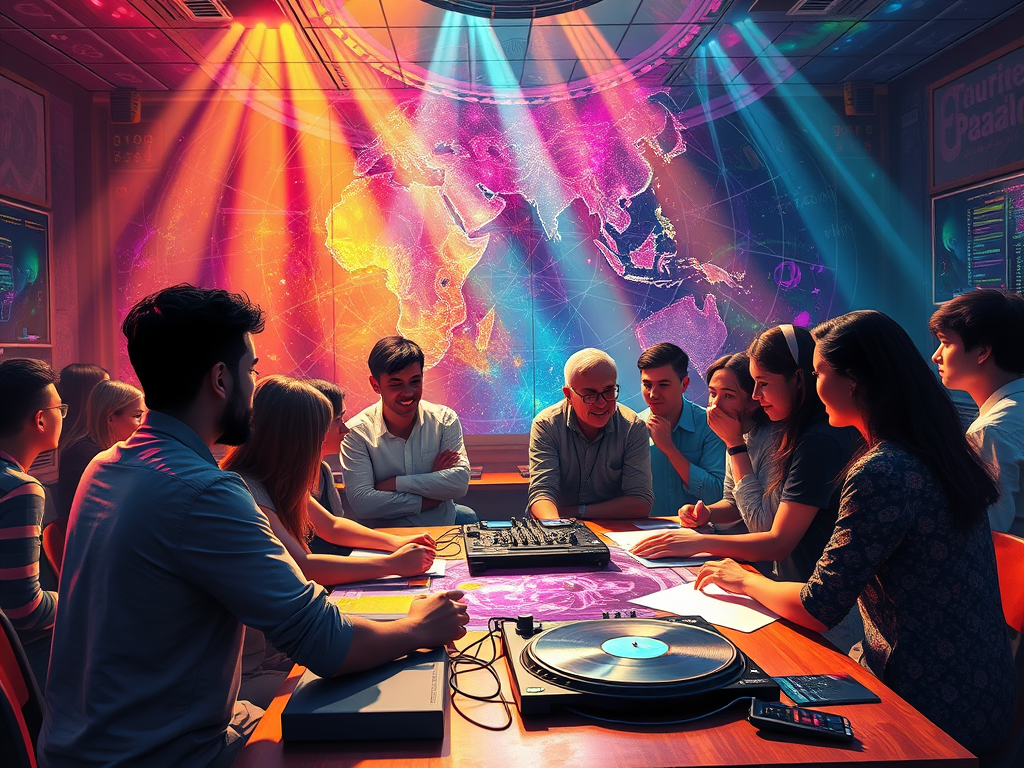
This activity introduces undergraduate students to foundational IR theories by applying them to their favourite music genres, enabling them to connect abstract concepts with real-world cultural phenomena.
This learning activity transforms the study of International Relations theories from a purely academic exercise into a personally meaningful and globally relevant exploration. By applying abstract concepts to the cultural dynamics of music, students develop a nuanced understanding of how IR theories explain real-world phenomena. The use of ChatGPT as a generative tool encourages engagement with contemporary technologies while prompting critical evaluation of their outputs. Collaborative in-class discussions enrich the learning experience, fostering peer-to-peer insight and diverse perspectives.
Ultimately, the written blog task consolidates learning by challenging students to synthesise their analysis, articulate a clear argument, and substantiate it with academic references. This approach not only enhances their theoretical understanding but also builds essential skills in research, critical thinking, and academic writing. By connecting personal interests to global dynamics, this activity empowers students to see the relevance of IR theories in everyday life, laying a solid foundation for further study in the field.
Learning outcomes
By completing this activity, students will:
- Develop a foundational understanding of IR theories and their core elements.
- Apply abstract theoretical frameworks to analyse cultural phenomena.
- Enhance critical thinking skills by interrogating AI-generated content and cross-referencing academic sources.
- Engage in collaborative discussion to deepen understanding of diverse perspectives.
- Practice articulating arguments in a concise, academically informed written format.
Instructions
Preparation (prior to class)
Prior to the class, students should prepare by completing the following:
- Lecture/content video: Provide a 30-minute pre-recorded video that introduces the core elements of the specified IR theories (Realism, Liberalism, Constructivism, etc.). The video should highlight each theory’s key assumptions, central concepts, and areas of focus.
- Introductory reading: Assign a short, accessible chapter from the course IR theory textbook or an equivalent summary resource, ensuring students are familiar with the terminology and distinctions between the theories.
In-class component (2 Hours)
Step 1: Individual exploration with ChatGPT (20 minutes)
Each student uses their own device to access ChatGPT and inputs the provided prompt for their favourite music genre. They should copy the response into written notes for further analysis.
ChatGPT PROMPT: As an expert in International Relations and music. From the perspective of the following IR theories, explain what is significant about [your favourite music genre], in relation to the core elements of each IR theory:
- Realism
- Liberalism
- Constructivism
- English School
- Marxist IR theory
- Feminist IR theory
- Post-colonial IR theory
- First Nations diplomacies
- Critical Theory
- Post-modernist IR theory
- Complex systems theory in IR
- Green Theory
- Political psychology
- Critical Geography
Step 2: Interrogating the responses (30 minutes)
Students analyse the ChatGPT responses for each IR theory:
- Identify the core elements of each theory as articulated in the response.
- Compare these with explanations in the assigned textbook, noting where ChatGPT’s analysis aligns or diverges from the academic sources.
- Take detailed notes or mark annotations directly on the response.
Step 3: Group discussion (45 minutes)
Students form small groups (4–5) to:
- Share their ChatGPT-generated responses for their respective music genres.
- Compare and contrast how different genres (e.g., hip hop, classical music, electronic dance music) are explained through the lens of each IR theory.
- Discuss which theories seem most and least effective at explaining the global impact of music genres.
- Record key points and observations for use in their written task.
Step 4: Class-wide synthesis (25 minutes)
Groups present key findings to the class, focusing on:
- The most frequently cited or significant theories across music genres.
- Notable contrasts in how the theories apply to different genres.
- Emerging questions about the theories’ explanatory power.
The instructor summarises, addressing any misconceptions and connecting insights back to the broader IR theoretical framework.
Post-class written task
Blog
Students individually write a 500-word blog post that:
- Makes a reasoned argument for which IR theory best explains their chosen music genre as an international phenomenon.
- Integrates key concepts from the textbook and references relevant academic texts to support their argument.
- Reflects on insights gained from the group discussion and ChatGPT analysis.
- Follows academic standards for citation and clarity.
Submission instructions and assessment criteria
This activity combines theoretical learning with creative engagement, fostering a deeper understanding of IR theories and their relevance to global cultural dynamics.
The blog post should be submitted electronically within one week.
Students are encouraged to share their posts on a class forum or blog site to foster ongoing peer engagement and discussion.
The specific assessment criteria include:
- Understanding of IR theories: Demonstrates a clear and accurate understanding of the chosen theory and its application to the music genre.
- Critical engagement: Critiques the applicability of theories and substantiates arguments with references to academic texts and group discussions.
- Clarity and structure: Presents ideas in a coherent, logical format with appropriate academic style and citations.
- Originality and insight: Offers a unique perspective on the intersection of music and IR theories, informed by thoughtful analysis and discussion.

References
Adams, W. M. (2008). Green Development: Environment and Sustainability in a Developing World (3rd Ed.). Routledge.
Adorno, T. (1991). The Culture Industry: Selected Essay on Mass Culture. Routledge.
Ashley, R. K. (1989). Living on Borderlines: Man, Poststructuralism, and War. International/Intertextual Relations: Postmodern Readings of World Politics. In Der Derian, J. & Shapiro, M. J. (eds.). Lexington Books, 259–321.
Axelrod, R., and Cohen, M. D. (2000). Harnessing Complexity: Organizational Implications of a Scientific Frontier. Basic Books.
Bennett, A. (1999). Subcultures or neo-tribes? Rethinking the relationship between youth, style and musical taste. Sociology, 33(3), 599-617.
Bhaba, H. (1994). The Location of Culture. Routledge.
Bull, H. (1977). The Anarchical Society. Columbia University Press.
Butler, M. J. (2006). Unlocking the groove: Rhythm, meter, and musical design in electronic dance music. Indiana University Press.
Buzan, B. (2004). From International to World Society?: English School Theory and the Social Structure of Globalisation. Cambridge University Press.
Coulthard, G. (2014). Red Skin, White Masks. University of Minnesota Press.
Cox, R. (1987). Production, Power, and World Order. Columbia University Press.
Cox, R. W. (1981). “Social Forces, States, and World Orders: Beyond International Relations Theory.” Millennium: Journal of International Studies. 10(2), 126-155.
D’Andrea, A. (2007). Global nomads: Techno and new age as transnational countercultures in Ibiza and Goa. Routledge.
Dryzek, J. S. (2022). The Politics of the Earth: Environmental Discourses (4th ed.). Oxford University Press.
Dunne, T. (1995). “The Social Construction of International Society.” European Journal of International Relations. 1(3), 367–389.
Enloe, C. (1989). Bananas, Beaches and Bases: Making Feminist Sense of International Politics. Pandora.
Evans, J. (2023). Do psychedelics and psytrance alter Israelis’ attitudes to war? Ecstatic Integration.
Fadiman, J. (2011). The Psychedelic Explorer’s Guide: Safe, Therapeutic, and Sacred Journeys. Inner Traditions/Bear.
Finnemore, M., & Sikkink, K. (1998). International Norm Dynamics and Political Change. International Organisation. 52(4), 887–917.
Foucault, M. (1977). Discipline and Punish: The Birth of the Prison. Penguin.
Gilmore, L. (2010). Theater in a crowded fire: Ritual and spirituality at Burning Man. University of California Press.
Gramsci, A. (1971). Selections from the Prison Notebooks. International Publishers.
Habermas, J. (1984). The Theory of Communicative Action. Beacon Press.
Harvey, D. (1996). Justice, Nature, and the Geography of Difference. Blackwell.
Harvey, D. (2007). A Brief History of Neoliberalism. Oxford University Press.
Hesmondhalgh, D. (2013). Why music matters. John Wiley & Sons.
Holling, C. S. (1973). Resilience and Stability of Ecological Systems. Annual Review of Ecology and Systematics. 4, 1–23.
Hutson, S. (2000). The rave: Spiritual healing in modern western subcultures. Anthropology of Consciousness, 11(1-2), 61-82.
Jervis, R. (1976). Perception and Misperception in International Politics. University Press.
Jervis, R. (1998). System Effects: Complexity in Political and Social Life. Princeton University Press.
Kant, I. (2018). Project for a Perpetual Peace: A Philosphical Essay. Creative Media Partners, LLC.
Katzenstein, P. (1996). The Culture of National Security: Norms and Identity in World Politics. Columbia University Press.
Keohane, R. and Nye, J. (1977). Power and Interdependence: World Politics in Transition. HarperCollins.
Lenin, V. I. (1999). Imperialism: The Highest Stage of Capitalism. Resistance Books.
Linklater, A. (1998). The Transformation of Political Community: Ethical Foundations of the Post-Westphalian Era. Polity Press.
Lyotard, J-F. (1984). The Postmodern Condition: A Report on Knowledge. University of Minnesota Press.
Machiavelli, N. (2008). The Prince. Random House.
Maffesoli, M. (1996). The time of the tribes: The decline of individualism in mass society. SAGE Publications.
Marcuse, H. (1964). One-Dimensional Man. Beacon Press.
Massey, D. (1994). Space, Place, and Gender. Polity Press.
Mitchell, M. (2009). Complexity: A Guided Tour. Oxford University Press.
Moravcsik, A. (1997). Taking Preferences Seriously: A Liberal Theory of International Politics. International Organization. 51(4), 513–553.
Morgenthau, H. (1948). Politics Among Nations: The Struggle for Power and Peace. Knopf.
Newell, P. and Paterson, M. (2010). Climate Capitalism: Global Warming and the Transformation of the Global Economy. Cambridge University Press.
Nye, J. (2004). Soft Power. PublicAffairs.
Ojala, M. (2017). Hope and climate change: The importance of hope for environmental engagement among young people. Environmental Education Research, 23(7), 1023-1037.
Palhares, P. T., Sas, M. I., and Gonçalves, O. F. (2024). Music and states of consciousness: A narrative review of the broader significance of music to understanding absorption, mind wandering and creative thought. Neuroscience & Biobehavioral Reviews. 167, 105920.
Pappe, I. (2024). A Very Short History of the Israel–Palestine Conflict. Oneworld Publications.
Partridge, C. (2014). The lyre of Orpheus: Popular music, the sacred, and the profane. Oxford University Press.
Peters, J. and Pinfold, R. G. (eds.). (2024). Routledge Handbook on Israel’s Foreign Relations. Taylor & Francis.
Said, E. (1979). Orientalism. Pantheon.
Saldanha, A. (2007). Psychedelic White: Goa Trance and the Viscosity of Race. University of Minnesota Press.
Spivak, G. C. (2020). Can the Subaltern Speak? Afterall Books.
St John, G. (2009). Technomad: Global raving countercultures. Equinox.
St John, G. (2015). Mystery school in hyperspace: A cultural history of DMT. North Atlantic Books.
St John, G. (2017). Weekend societies: Electronic dance music festivals and event-cultures. Bloomsbury Academic.
St John, G. (2010). The Local Scenes and Global Culture of Psytrance. Taylor & Francis.
Stein, J. G. (2013). “Threat Perception in International Relations.” Oxford Handbook of Political Psychology (2nd ed.). In Huddy, L., Sears, D. O., and J. S. Levy. Oxford University Press. 364–394.
Street, J. (2012). Music and politics. Polity.
Tajfel, H., & Turner, J. C. (1979). “An Integrative Theory of Intergroup Conflict.” In The Social Psychology of Intergroup Relations. Austin, W. G. and Worchel, S. (eds.). Brooks/Cole, 33–47.
Throckmorton, H. (2024). The Psytrance Scene: From Goa to Global. Good for Business.
Tickner, J. (1992). Gender in International Relations: Feminist Perspectives on Achieving Global Security. Columbia University Press.
True, J. (2012). The Political Economy of Violence Against Women. Oxford University Press.
Vaugeois, L. (2007). Social justice and music education: Claiming the space of music education as a site of postcolonial contestation. Action, Criticism, and Theory for Music Education. 6(4), 163-200.
Walker, R. B. J. (1993). Inside/Outside: International Relations as Political Theory. Cambridge University Press.
Wallerstein, I. M. (1974). The Modern World-system: Capitalist agriculture and the origins of the European world-economy in the sixteenth century. Academic Press.
Waltz, K. N. (1979). Theory of International Politics. Addison-Wesley Publishing Company.
Wendt, A. (1992). Anarchy is what States Make of it: The Social Construction of Power Politics. International Organization. 46(2), 391-425.
Wilson, P. W. (2017). The Fourteen Points Speech: Includes MLA Style Citations for Scholarly Secondary Sources, Peer-Reviewed Journal Articles and Critical Essays (Squid Ink Classics). CreateSpace Independent Publishing Platform.
 Edge Dwellers Café
You must be logged in to post a comment.