
- BRIEFING NOTES: CONTENT AND DISCOURSE ANALYSIS CASE STUDY
- Context
- Purposes
- Core themes
- Intended audiences
- Linguistic and rhetorical devices
- Cultural nuances
- LEARNING ACTIVITY: CRITICAL CONTENT AND DISCOURSE ANALYSIS OF FOREIGN POLICY SPEECHES
- Conclusion
- References

As a Northeast Asia watcher, I have spent many a hot January afternoon parsing over the transcripts of traditional new year addresses by Chinese and North Korean leaders. And so it is again, with Chinese President Xi Jinping delivering his annual new year speech in the most complicated economic and governance environment that a Chinese leader has faced since 1989.
In the first half of this article, I present a brief content and discourse analysis case study in which I critically evaluate the context, purposes, core themes, intended audiences, linguistic and rhetorical devices, and cultural nuances of Xi’s 2025 new year address. Xi’s speech exemplifies a carefully crafted political communication, designed to reinforce CCP authority, galvanise national pride, and articulate China’s role on the global stage. Critical methodologies reveal how the speech selectively frames achievements, downplays challenges, and employs cultural and rhetorical strategies to resonate with diverse audiences. These insights illustrate how Xi’s address functions as both a governance tool and a mechanism for projecting confidence amidst significant domestic and international uncertainties.
In the second half of the article, I present a structured learning activity for undergraduate students of International Relations, Comparative Politics, and Asian Studies, in which I present a simple step-by-step guide to content and discourse analyses, which I use as an introductory activity to show students how to analyse speeches by world leaders. This learning activity empowers students to deconstruct and evaluate such speeches critically, fostering skills essential for understanding the complex interplay of rhetoric, power, and policy in global leadership discourse. I having utilised this teaching strategy with students getting to individually analyse the transcript of an important speech, then compare and reflect on their findings in small-group discussions in class, in my subject Contemporary Politics of Northeast Asia at La Trobe University.
BRIEFING NOTES: CONTENT AND DISCOURSE ANALYSIS CASE STUDY
Context
The context of a speech provides the substantive meaning to what a leader is trying to communicate, and why. Understanding the context of Xi Jinping’s 2025 New Year address is crucial for interpreting its messaging and core themes, as the speech reflects the political, economic, and global challenges shaping China’s trajectory at this pivotal moment.
As we move further into 2025, the Chinese government is navigating significant headwinds related to the weakness of its economy, growing social unrest and questions about the relative stability of China’s political system, and foreign policy challenges related to its role in the Russia-Ukraine War, crises in the Middle East, and its relationship with the incoming Trump administration in the US.
Natural disasters
The year 2024 saw unprecedented storms, rains and flooding events across China. China experienced significant economic and humanitarian impacts from natural disasters in the third quarter of 2024, with direct losses reaching 230 billion yuan (US$32.3 billion), more than double the 93.16 billion yuan recorded in the first half of the year (Reuters 2024). China’s Ministry of Emergency Management (2024) stated that over 84 million people were affected in the first nine months of 2024, 836 people were reported dead or missing, and nearly 3.35 million required urgent resettlement, alongside extensive damage to homes and crops.
Climate patterns such as El Niño, combined with monsoon dynamics and human-driven greenhouse gas emissions, have led to more frequent and severe rainstorms and floods in China, with 2024 far exceeding historical averages (Tan & Song 2024). Additionally, urban factors such as poor city planning, land subsidence, and infrastructure design further amplify flood risks, highlighting the compounded impact of both climatic and human influences on extreme weather events (Habib 2024).
Economic vulnerabilities
China faces serious global economic headwinds in 2025, as it attempts to overcome a worsening economic crisis in its domestic economy. An escalation of the US-China trade war with the incoming Trump administration in Washington seems likely (Czin 2025), along with further competition over microchips, AI, and electric vehicles to go with its continued economic decoupling from the United States (Garg et al 2023). Xi acknowledges challenges in transitioning from old to new growth drivers, signalling that economic transformation is incomplete. However, there was little hint of the more fundamental structural economic reforms that are likely required to resurrect the Chinese economy from its precarious position.
Slowing economic growth and rising unemployment have increased public dissatisfaction. To combat this, the government articulated its number one priority for 2025 as “vigorously boosting consumption and improving investment efficiency to expand domestic demand comprehensively” (Bishop 2024). Promises were made to spend more money to help boost the economy by increasing the budget deficit and issue long-term bonds to fund important new initiatives. Local governments will also be allowed to borrow more and use the money for a wider range of projects, including starting new ones (Bishop 2024). However, external critics have argued that the level of government stimulus is insufficient to arrest the perpetuating cycle of under-consumption (McKay 2025).
Tsinghua University’s Yan Xuetong is sceptical of China’s ability to reshape the global order without addressing internal challenges (Yan 2024), which is subtle code for economic reform. Former Finance Minister Lou Jiwei offered a critical analysis of systemic issues in China’s financial sector, contrasting sharply with Xi Jinping’s optimistic narrative of progress. Lou highlighted inefficiencies in government-led venture capital (VC) funds and underperforming private equity (PE) funds, attributing these issues to poor management. He suggests that strict regulation is required to mitigate systemic risks in China’s financial sector (Lou 2024).
Peking University Professor Wu Xiaoying argues for comprehensive market-based reforms and institutional changes to eliminate economic inefficiencies, suggesting that long-term growth requires reduced government intervention and fair competition (Wu 2024). Former mayor of Chongqing, Huang Qifan, argues that inefficiencies in land use policies, such as the central government’s rigid control over land quotas, hampers rural development and income growth (Huang 2024).
One does not have to be Milton Freidman to see that China’s “economic miracle” has hit a wall and that significant structural changes are necessary in order to arrest the slide. Whether Xi Jinping and the Chinese Communist Party (CCP) can accommodate that scale of reform within their ideological approach to governance is an important question moving forward in 2025 (Liu 2024).
Political stability
Many have argued that China has become a two-tiered society, at the pinnacle of which sits the CCP and its privileged cadres and beneath which toil everyone else, breeding enormous popular resentment against the Party. The disparities in income and development between urban and rural residents persist, emerging as a further source of grievance (Rozelle & Hell 2022). Unrest is growing nonetheless and is manifesting in different forms beyond direct criticism of and confrontation with the government, which is difficult in the face of government repression.
Despite optimistic messaging, China’s youth face significant challenges in education and employment, which are increasingly fuelling dissatisfaction. This has manifested in the “lying flat” (tang ping) movement, in which young people disappointed by their lack of economic opportunities and social mobility, have decided to shun the values of hard work, home ownership and marriage, to just do enough to get by (Yeh 2022). This has evolved into “letting it rot” (bailan), where some young people feel so powerless to satisfy their social expectations that they essentially give up on doing anything at all (Yip & Woo 2022).
Even more troubling is the emergence of public mass-casualty attacks by lone wolf actors, usually economically stressed and socially marginalised men who are taking out their anger in violent outbursts. In November 2024, a man in Zhuhai killed 35 people by driving into a sports complex, upset over his divorce settlement (Chou 2025). Such incidents reflect both growing levels of public discontent and a lack of avenues for grievance redress.
Then there are the cracks emerging within the elite itself (Lam 2025). Xi Jinping came to power in 2012 promising to weed out corruption across the CCP and the Chinese government, and over the course of his leadership has undertaken a sweeping crackdown on CCP members, government officials, and business figures. As we enter 2025, Xi’s anti-corruption purge is rooting out “enemies” in the People’s Liberation Army as well. While clearly these purges have allowed Xi to eliminate potential threats from rival factions within the CCP, it remains to be seen how long Xi can sustain such a high turnover of officials without stimulating some kind of resistance among the elite.
Foreign policy
Uncertainties in the global environment represent major risk vectors for China in 2025. The re-election of President Donald Trump has introduced uncertainties in trade relations, with threats of increased tariffs on Chinese imports. China aims to strengthen its position in the Global South to counterbalance U.S. influence. However, leveraging these relationships effectively presents its own set of challenges (Gong 2024) .
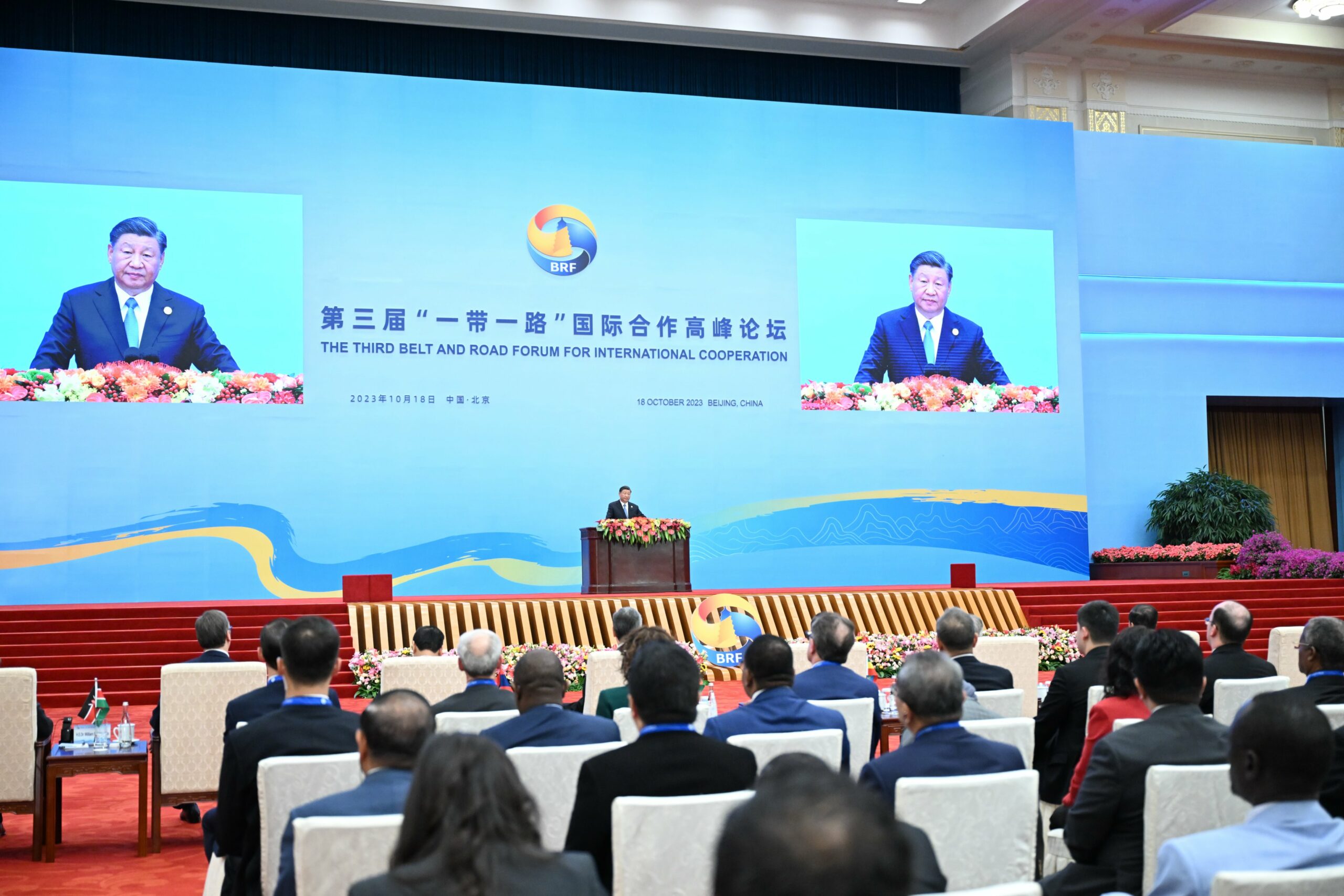
China’s role as a “responsible major country” and its active engagement in global governance were central themes of Xi’s address, with a focus on the Global South and multilateral institutions. Participation in BRICS, G20, and the Belt and Road Initiative highlights China’s growing influence in global economic and political systems. President of the Asian Infrastructure Investment Banks (AIIB), Jin Liqun, views the world in 2024 as marked by significant geopolitical fragmentation, economic inequality, and pressing global challenges, particularly climate change, requiring renewed multilateral cooperation (Jin 2024).
Emphasis on cultural exchange and solidarity with the Global South, argues Xi, enhances China’s soft power and image as a partner to developing nations. Xi also cited the Beijing Summit and contributions to global peace underscore ambitions to position China as a leader in international affairs. Peking University Professor Wang Jisi calls for China to balance deterrence against separatism with proactive diplomacy to strengthen ties with developing nations and protect global stability, particularly in conflicts like Russia-Ukraine and Israel-Palestine (Wang 2024).
The international environment for China is not without risks. In addition to the global economic headwinds highlighted previously, efforts to reform global governance in China’s favour will face resistance from established powers, especially the U.S. and its allies. China’s recent crackdowns in Hong Kong since the umbrella protests and its advancing plans to retake Taiwan, underscore unresolved regional issues that could become potential conflict triggers (Green & Medeiros 2020).

Purposes
The purpose of a policy speech often falls into categories such as persuasion, information dissemination, justification of actions, and/or the legitimisation of authority (van Hulst et al 2024; Arvatu & Aberdein 2022). Understanding the purpose requires evaluating the context of the speech, the speaker’s role, the narrative framing of the speech, and its intended outcomes.
The President’s New Year address in China is a strategic tool for governance, nation-building, and diplomacy. To this end, it serves several key purposes. It is both a ceremonial and strategic communication tool that reflects the priorities of the CCP and the state. Identifying these purposes reveals the strategic goals behind his messaging, from rallying domestic support to asserting China’s influence on the global stage.
Below are the main purposes that are evident in Xi’s address:
Reinforcing the legitimacy of the CCP: The address celebrates the CCP’s role in steering China’s progress, portraying it as the central force behind the country’s stability, development, and modernisation (Wong 2023). By highlighting achievements in economic recovery, technological innovation, and international cooperation, projecting an image of progress and strength, Xi is attempting to underscore the CCP’s competence and legitimacy.
Fostering national unity and patriotism: The speech appeals to a shared national identity by referencing historical milestones, cultural heritage, and collective achievements. In it, Xi aims to create a sense of unity among diverse ethnic, regional, and social groups, especially by emphasising shared struggles and successes. References to sovereignty issues in relation to Taiwan and Hong Kong reinforce the importance to the CCP territorial integrity and national pride.
Setting the national agenda for 2025: The address outlines the government’s priorities and goals for the coming year, serving as a guiding framework for policymakers and citizens alike in terms of work priorities and appropriate political behaviour. It reaffirms long-term strategies like high-quality development, technological self-reliance, and green development, foreshadowing the key elements of the upcoming 15th Five-year Plan for the Chinese economy. These goals serve to align the public with the government’s broader vision of Chinese modernisation and global leadership
Inspiring confidence and optimism: The speech projects optimism, emphasising resilience in overcoming challenges and confidence in a brighter future. Xi has attempted to motivate citizens to contribute to national goals, framing their individual efforts as integral to China’s collective success. As noted above, the context of Xi’s speech sees China in a period of immense and possibly intractable economic and social difficulties (Liu 2024). With this in mind, Xi’s speech combines a motivational tone, highlighting collective resilience, with an explanatory approach detailing policy successes and future goals. This duality suggests an intent to inspire national pride while reassuring citizens of the government’s competency during a period of uncertainty.
Connecting leadership with the people: Through personal anecdotes, references to ordinary citizens, and mentions of grassroots concerns, Xi has attempted to humanise the CCP leadership as empathetic and responsive. His references to public concerns about jobs, healthcare, education, and welfare, are meant to reassures citizens of the government’s commitment to their well-being in a time of economic hardship (von Soest & Grauvogel 2015).
Managing public expectations: The address balances celebration of achievements with acknowledgment of challenges, preparing the public for potential hardships while emphasising the government’s capacity to navigate them. Phrases about resilience and hard work aim to temper expectations while maintaining confidence in eventual success . By projecting unity and competence, the address helps consolidate political stability and minimise dissent. Xi has attempted to reassure both domestic and international audiences of China’s steady leadership amidst global uncertainty. The speech often reiterates firm positions on sovereignty-related issues, such as Taiwan and territorial disputes, demonstrating resolve and reinforcing the CCP’s commitment to national security.
Communicating China’s global vision: Xi uses the address to highlight China’s role on the world stage, emphasising its contributions to global governance, peace, and development. Themes like the Belt and Road Initiative, solidarity with the Global South, and building a “community with a shared future for mankind” are intended to position China as a global leader.
Core themes
Core themes are the central ideas or motifs that underpin a policy speech. These themes provide insight into the speaker’s priorities, values, and goals (Naeem et al 2023; Fairclough 2003). Identifying them involves examining recurring concepts, key phrases, and the overall structure of the speech. Themes often emerge from the introduction, conclusion, and repeated messaging.
The address highlights three core themes: economic and technological innovation, domestic harmony through social reforms, and China’s role as a global leader. These themes reflect a blend of confidence, pragmatism, and nationalism. They emphasise resilience in the face of challenges, economic and technological self-reliance, people-centric governance, cultural pride, global leadership, political unity, and collective optimism.
Together, these themes project an image of a stable, ambitious, and forward-moving China under the leadership of the CCP. These themes reflect the CCP’s strategic focus, providing a roadmap for China’s future while reinforcing the Party’s vision of national progress and global leadership.
However, while Xi Jinping’s address is rhetorically effective and aligned with the CCP’s overarching narratives, it suffers from selective framing and avoidance of key challenges. The speech effectively galvanises support for the government and highlights achievements but fails to adequately address pressing socioeconomic and geopolitical issues. This gap between rhetoric and reality may leave some audiences unconvinced, particularly among economically distressed citizens, marginalised groups, and external critics.
National resilience and progress
The speech conveys a tone of optimism and national pride, aimed at reinforcing unity and resilience amid China’s well-documented challenges. Its purpose is to celebrate achievements, reassure the public about China’s direction, and inspire confidence in continued progress.
“When floods, typhoons and other natural disasters struck, members of the Communist Party of China and officials stepped forward to lead disaster relief efforts, and our people were of one mind and reached out to each other.” Xi Jinping.
Xi emphasises China’s ability to overcome challenges, achieve progress, and emerge stronger despite domestic and international difficulties. This theme is woven throughout the speech to inspire confidence in China’s trajectory. Xi highlights China’s response to domestic and global uncertainties, stressing the CCP’s adaptability and the Chinese people’s unity. He specifically points to milestones in economic growth, technology, and social development as evidence of a forward-looking optimism to back up his narrative of progress.
However, critics argue that Xi’s emphasis on enduring hardships and promoting a strong work ethic fails to provide concrete strategies to address China’s pressing economic and social challenges (Hope 2025). Significant national challenges such as income inequality, local government debt, repeated natural disasters, demographic pressures, and the lingering impacts of COVID-19 are largely omitted from Xi’s triumphal narrative. His use of ambiguous phrasing like “winds and rains” and “extraordinary year” lack specificity regarding the actual nature of challenges faced and their impact on ordinary citizens.
Economic growth and high-quality development
Recurring phrases like “high-quality development,” “modernisation,” and “reform and opening up” establish a narrative of progress and ambition. The introduction and conclusion focus on national strength and shared aspirations, anchoring the address in themes of unity and hope.
“We have adopted a full range of policies to make solid gains in pursuing high-quality development.” Xi Jinping.
Economic development is clearly the cornerstone of the address, with a strong focus on transitioning from traditional growth drivers to innovative and sustainable ones. Xi points to China’s rebounding economy, referencing the expected GDP surpassing 130 trillion yuan, along with robust agricultural output as indicators of recovery. He emphasises technological breakthroughs in AI, integrated circuits, and quantum communications as pillars of China’s ambition for technological self-reliance. He also highlights sustainability, with green and low-carbon initiatives pointing to the government’s efforts to align economic policies with global environmental standards.
From a critical perspective, Xi’s address over-emphasises success at a time when the Chinese economy is clearly under significant stress (Eves 2025). While Xi highlighted a projected GDP exceeding 130 trillion yuan, analysts point out a disconnect between this optimistic portrayal and the economic realities faced by Chinese citizens, including a struggling property sector and a shrinking population.
The rebound in GDP and technological breakthroughs are highlighted, but there is little acknowledgment of pressing issues like the real estate crisis, youth unemployment, or reliance on government stimulus to prop up growth (He & Widmaier 2024). Xi’s speech does not address the uneven development between regions or the risk of technological decoupling with Western economies, which could hinder China’s ambitions for self-reliance. While new industries are celebrated, the address also overlooks widening income disparities, the continuing negative impacts of COVID-19 pandemic controls, and the socioeconomic impact of industrial transformation (Smith 2024).
Social welfare and people-centric governance
Xi dedicates significant attention to the well-being of the Chinese people, reaffirming the CCP’s commitment to improving lives.
“The concerns of the people about jobs and incomes, elderly and child care, education and medical services are always on my mind.” Xi Jinping.
In authoritarian countries, positioning oneself as a guardian of the people’s well-being is an important element of establishing political legitimacy (von Soest & Grauvogel 2015). He points to social programs, including improvements in pensions, healthcare, and education aim to address public concerns and reduce inequality. He stresses cultural unity by referencing his visits to diverse regions and ethnic communities stress efforts to build inclusivity and harmony. By acknowledging simple desires—such as better education for children and care for the elderly—Xi appeals to the universal human aspirations for a better life.
Xi’s messaging on social welfare is noticeably superficial. The benefits of industrial and export growth have not sufficiently trickled down to consumers, leading to stagnant domestic consumption and declining living standards (Reuters 2025). This situation is exacerbated by rising unemployment and deflationary pressures.
Indeed, Xi does not acknowledge the widespread popular discontent that is bubbling to the surface. Manifestations of discontent, from violent public attacks by disaffected and desperate men, labour disputes over working conditions and unpaid wages as the economy worsens, and widespread dissatisfaction with governance are not addressed (Soong & Mischer 2025). While hardly surprising for a speech by an authoritarian leader, this lack of empathy in the face of widespread material depravation is likely to further fan the flames of popular disaffection with the CCP.
Initiatives like pension increases and medical bill settlements are mentioned by Xi, however deeper systemic issues—such as the underfunding of rural development (Huang 2024), housing affordability, and high youth unemployment—are not fully addressed.
National pride and cultural heritage
The speech ties China’s contemporary achievements to its rich historical and cultural identity, fostering a sense of pride and continuity.
“Nurtured by our 5,000-plus years of continuous civilization, our country, China, is engraved not only on the bottom of the ancient bronze ritual wine vessel of He Zun, but also in the heart of every Chinese.” Xi Jinping.
Historical legacy is front and centre, with Xi invoking China’s 5,000-year civilisation to reinforce national identity and legitimise the CCP’s leadership (Zhao 2021). He mentions of achievements like the Chang’e-6 lunar probe and the Antarctic Qinling Station, showcasing China’s ambition and ingenuity, while linking modern progress with historic legacy to legitimise his larger national vision.
From a critical perspective, Xi’s invocation of historical and cultural heritage appears more performative than substantive, primarily serving as a tool to legitimise the CCP. The speech’s focus on ideological perseverance and nationalism is viewed by some as a diversion from pressing economic reforms and as a means to consolidate power amid internal challenges (Hope 2025). While Xi mentions mixed-ethnic communities, the address unsurprisingly does not mention CCP repression in China’s special administrative regions (Hong Kong, Xinjiang and Tibet), highlighting the gap between rhetoric and reality in the cultural unity narrative.
Global leadership and diplomacy
China’s positioning as a global power and a proponent of international cooperation is a recurring theme.
“In a world of both transformation and turbulence, China, as a responsible major country, is actively promoting global governance reform and deepening solidarity and cooperation among the Global South.” Xi Jinping.
Xi highlights partnerships with developing countries, particularly through the Belt and Road Initiative, and highlights China’s multilateral engagement activities, including China’s role in BRICS, G20, APEC. The vision of “a community with a shared future for mankind” underscores China’s efforts to project itself as a responsible global leader. The “responsible major country” reference is a pointed critique of the United States, which China sees as a destabilising force in the international system (Hope 2025). These references emphasise Xi’s aspirations for Chinese leadership in global governance.
For foreign audiences, Xi’s address contained a clear statement of intent. China’s solidarity with developing countries is clearly intended to alienate the United States and its Western allies, acknowledging continued economic decoupling with the US and division of the world economy into rival blocks (Goldman 2025).
While Xi advocates for mutual cooperation and global governance reform, China’s assertive foreign policies—such as military posturing in the South China Sea—undermine this message. The Wolf Warrior diplomacy that characterised increasing Chinese assertiveness during the 2010s did enormous damage to its reputation abroad (Wong 2023).
The strong language on reunification risks escalating tensions with Taiwan and its allies, undermining regional stability. Xi’s assertion that “no one can stop the historic trend of national reunification” with Taiwan has been criticised for escalating cross-strait tensions, as it reinforces a hardline stance, particularly in the context of recent large scale naval exercises in waters around Taiwan (Green & Nouwens 2024). Similarly, international concerns over debt sustainability in Belt and Road Initiative projects and of China’s human rights record are unlikely to be assuaged by this speech.
Political unity and stability
Xi’s narrative projects an image of unity, resilience, and purpose, with the CCP maintaining its dominant role.
“We Chinese on both sides of the Taiwan Straits belong to one and the same family. No one can ever sever the bond of kinship between us, and no one can ever stop China’s reunification, a trend of the times.” Xi Jinping.
However, there are major cracks appearing in the social fabric of China, as the country’s economic crisis morphs into one of political legitimacy for Xi and the CCP. Xi’s focus on social welfare, including pension increases, healthcare access, and consumer trade-ins, reflects efforts to address social inequalities and prevent unrest.
Xi’s speech concludes on an aspirational note, encouraging collective effort and resilience in building a prosperous and harmonious future. He stresses shared effort and the role of every individual in achieving national goals, reinforcing a collective sense of responsibility. His mention of “dreams and wishes” serves to motivate citizens to contribute to China’s modernisation journey.
However, the optimistic tone may not resonate equally with all demographics, especially those experiencing economic hardships, unemployment, or political disenfranchisement (Thornton 2024). Xi’s recurring calls for resilience and confidence risk being perceived as empty rhetoric without corresponding concrete action plans. The optimistic tone of the address contrasts with the lived experiences of many citizens facing economic hardships, leading to perceptions of a leadership out of touch with its populace. Seen through a critical lens, Xi’s emphasis on stability is selective.

Intended audiences
Leaders’ speeches often target multiple audiences, with tailored messaging for each (Chubb & Wang 2023). Identifying these audiences involves examining how the speech addresses specific concerns, expectations, or interests of different groups.
Xi Jinping’s New Year address serves as a multi-layered communication tool, carefully calibrated to resonate with diverse audiences. Xi’s address targets local audiences such as rural and urban residents, national stakeholders including policymakers and industrial leaders, and international partners like Global South nations and multilateral organisations. This segmentation reflects a multifaceted approach to address diverse concerns and maintain a unified narrative across varying constituencies.
By addressing multiple audiences, the speech serves as a unifying narrative for domestic stability and a strategic signal of China’s intentions and values to the world. Understanding the intended audiences of the address allows us to see how Xi Jinping tailors his messaging to resonate with diverse groups, including domestic citizens, Party officials, and international stakeholders.
The speech uses a combination of emotional appeals, data-driven accomplishments, and forward-looking rhetoric to address the unique concerns and aspirations of various groups. By tailoring messaging to specific audiences, the address reinforces the legitimacy of the Communist Party of China (CCP), projects China’s strength and stability, and fosters a sense of unity and cooperation.
Below is an analysis of the speech’s intended audiences and the messages conveyed to each:
Domestic public: For the general population in China, Xi emphasises unity, resilience, and hope. He celebrates collective achievements while addressing key societal concerns such as pensions, healthcare, education, and rural revitalisation, to inspire confidence in the country’s trajectory. The emotional tone, particularly in references to family aspirations and shared cultural heritage, appeals to the general populace by creating a sense of collective identity. The messaging aims to bolster trust in the CCP’s leadership and maintain social stability by projecting a positive outlook and addressing citizens’ everyday concerns (von Soest & Grauvogel 2015).
Chinese Communist Party members: The speech celebrates the CCP’s role in steering China’s progress, positioning the Party as the architect of national success. Th formal language and detailed policy references Xi switches to when talking about the CCP’s role aims to reassure political elites and international observers of China’s strategic direction. Xi uses this platform to set a clear agenda for officials, emphasising high-quality development and all-round reform. By praising disaster relief efforts and grassroots leadership, he reminds cadres of their moral and administrative responsibilities (Wong 2023). The address reinforces loyalty to the Party and motivates officials to implement central policies effectively while maintaining discipline.
Business and economic stakeholders: Xi’s speech reassures economic stakeholders with optimistic messages about China’s recovery and stability. Metrics such as GDP surpassing 130 trillion yuan and advancements in AI and green technologies signal opportunities for growth (Liang 2025). The emphasis on sustainability and innovation highlights the government’s commitment to modernising the economy while addressing global challenges. The speech aims to reassure domestic and international investors of China’s economic resilience.
Rural and marginalised populations: Rural revitalisation and inclusivity feature prominently in Xi’s address, with mentions of agricultural successes and visits to ethnically diverse regions. By highlighting efforts to improve rural livelihoods and reduce disparities, the speech attempts to demonstrate the government’s commitment to addressing the needs of underserved communities (Huang 2024). This messaging seeks to address rural-urban divides, prevent discontent in marginalised areas, and reinforce the narrative that the CCP cares for all citizens.
Chinese youth: To inspire younger generations, Xi highlights achievements in sports and technology, such as Chinese athletes excelling in the Paris Olympics and breakthroughs in cutting-edge fields. His forward-looking rhetoric about modernisation and innovation appeals to young people aspiring to contribute to China’s progress. The messaging aims to instil loyalty to the Party and confidence in China’s future among youth, a demographic critical to the country’s long-term development as well as a potential source revolt against CCP rule (Clark 2012).
Global South and developing nations: Xi positions China as a responsible and supportive partner to the Global South. He highlights initiatives like the Belt and Road Initiative (BRI) and the Forum on China-Africa Cooperation, emphasising solidarity and mutual learning. This portrays China as a champion of equitable global development and an alternative leader to Western powers. The speech strengthens diplomatic and economic ties with developing nations and enhances China’s role as a leader in global governance.
Western nations and the international community: For Western audiences, Xi projects an image of stability and global leadership. He emphasises China’s contributions to multilateralism and global peace, framing the country as a stabilising force in an uncertain world (Dukalskis 2024). While asserting China’s sovereignty on issues like Taiwan, the speech for the most part maintains a non-confrontational tone, focusing on collaboration and shared futures. The messaging counters Western narratives of China as a threat while showcasing its diplomatic and economic leadership.
Overseas Chinese communities: Xi appeals to overseas Chinese by emphasising cultural pride and shared identity. References to China’s 5,000-year civilisation and contemporary achievements encourage a connection to the homeland. The reiteration of the “One China” principle attempts to foster a sense of unity and loyalty among the Chinese diaspora (Joske 2020) The speech aims to strengthen ties with overseas Chinese communities and promote soft power by positioning the diaspora as informal ambassadors for China.
Taiwanese audiences: For audiences in Taiwan, Xi emphasises sovereignty and unity. His unequivocal stance on reunification with Taiwan underscores China’s territorial integrity. In citing positive references to Macao’s progress under “One Country, Two Systems”, Xi paints it as a model for peaceful integration, subtly aimed at influencing public opinion in Taiwan (Lin 2022). The messaging affirms the CCP’s resolve on sovereignty issues and promotes the benefits of unity under China’s governance.
Linguistic and rhetorical devices
Linguistic and rhetorical devices are tools used by speakers to persuade, inform, or inspire their audience (Martin 2022; Schneider 2013). These include ethos (credibility), pathos (emotional appeal), and logos (logic). Identifying these devices reveals how the speaker shapes their message for impact.
Analysing the linguistic and rhetorical devices in the speech uncovers the tools Xi uses to persuade, inspire, and reinforce his authority and the Party’s legitimacy. The deliberate use of these devices in intended to enhance the speech’s emotional appeal, clarity, and resonance, ensuring its impact across varied audiences and contexts.
Xi Jinping’s speech employs various rhetorical tactics to convey his message effectively, reinforce the legitimacy of the Communist Party of China (CCP), and inspire confidence among domestic and international audiences.
Below is a detailed analysis of these tactics:
Emotional appeals (pathos): Xi uses emotional language and imagery to connect with his audience, fostering a sense of unity, pride, and optimism. Phrases like “together, we have experienced winds and rains and seen rainbows” evoke resilience and camaraderie, resonating with collective hardships and successes. Mentioning historic sites like the Maiji Mountain Grottoes and symbols like the He Zun bronze vessel ties the present to China’s rich cultural legacy, appealing to national pride (Callahan 2015). References to the daily concerns of people—jobs, education, healthcare—highlight a people-centric narrative that positions the government as empathetic and attentive.
Use of metrics and achievements (logos): Xi incorporates data and accomplishments to establish credibility and demonstrate the government’s effectiveness, citing infrastructure projects, sports achievements, and disaster relief efforts to illustrate progress and governance capacity (Huang et al 2024). Metrics like “GDP for the year expected to pass the 130 trillion yuan mark” and “grain output surpassing 700 million tons” substantiate claims of economic recovery and agricultural success. Similarly, achievements like breakthroughs in quantum communications and the Chang’e-6 lunar probe position China as a global leader in innovation, reinforcing the narrative of high-quality development.
Symbolism and metaphor: Symbolism and metaphor are extensively used to convey complex ideas in accessible terms and evoke powerful imagery. The metaphor of “winds and rains” representing challenges and “rainbows” symbolising achievements conveys resilience and optimism (Nuyen 2011). References to space exploration and deep-sea drilling evoke ambition and boundless potential, reinforcing the message of national greatness. By mentioning historical artifacts and locations, Xi taps into deep-seated cultural pride and continuity.
Repetition and parallelism: Repetition and parallel structures emphasise key ideas, making them more memorable and impactful. Phrases like “together, we have…” and “we will…” create rhythm and reinforce unity and collective effort (Charteris-Black 2011). Parallelism is evident in statements like “every family hopes… every effort counts… every ray of light shines,” reinforcing rhythmic cohesion and positive momentum. Achievements are often presented in parallel across sectors, underscoring comprehensive progress.
Visionary and forward-looking language: Xi uses visionary language to inspire confidence in China’s future, framing challenges as opportunities. Words like “unfolding,” “broader prospects,” and “better future” project an image of continuous growth and potential (Barmé 2012). By invoking the “dreams and wishes” of the people, Xi connects national goals with personal aspirations, making his vision relatable. Symbolism, such as “stars and oceans” or “starlight graces every home,” conveys a sense of limitless aspiration and collective national progress (Xu & Gong 2024).
Historical and cultural legitimacy: Historical references are used to bolster the CCP’s legitimacy and link its governance to China’s civilisational continuity (Zhao 2021). Xi frequently references China’s ancient history to position the CCP as the inheritor and protector of this legacy, such as his reference to China as a “5,000-year civilisation”. Celebrating the 75th anniversary of the People’s Republic ties the CCP’s achievements to national pride and stability.
Dichotomy and contrasts: Xi contrasts China’s successes and values with external challenges and instability, reinforcing a sense of achievement and resilience (Gries 2004). Challenges such as “uncertainties in the external environment” are juxtaposed with domestic achievements, attempting to portray China as a beacon of stability in a turbulent world. China’s reform and modernisation are contrasted with global instability, emphasising its leadership role in shaping the future.
Personalisation and storytelling: Xi uses anecdotes and personal observations to humanise his leadership and make abstract policies relatable (Xu & Gong 2024). Descriptions of trips to Tianshui (apples), Aojiao Village (fishing boats), and Tianjin (cultural street) connect him to ordinary citizens, reinforcing his image as a leader who understands grassroots concerns (Lam 2015). References to workers, builders, and entrepreneurs frame national progress as a collective effort, valuing individual contributions.
Appeals to sovereignty and national unity: Xi’s language strongly reinforces territorial integrity and unity, a central theme in CCP governance. Reaffirming the “One Country, Two Systems” policy for Hong Kong and Macao conveys a commitment to stability in these regions (Lin 2022). The consistent use of inclusive pronouns like “we” and “our” fosters a sense of unity and collective purpose. Bold statements on Taiwan highlight a firm stance on sovereignty, appealing to nationalist sentiments.
Strategic vagueness: Xi employs deliberate vagueness to gloss over contentious issues while maintaining a positive tone. Framing specific problems as non-specific challenges using phrases like “changing environment at home and abroad” to obscure specific difficulties, such as youth unemployment or geopolitical tensions, drawing on the well-worn tactic of strategic vagueness in propaganda messaging (Egré & Icard 2018). Optimistic generalisations through statements like “we can prevail with our hard work” inspire confidence without providing detailed solutions.
Moral authority: Xi positions China as a moral leader in global affairs, emphasising its role in promoting peace and development. References to the Global South, Belt and Road Initiative, and multilateral forums build on a lineage externally-broadcast rhetoric portraying China as a responsible global power (Shambaugh 2013). The call for a “community with a shared future for mankind” reflects a moral high ground that aligns with internationalist values.

Cultural nuances
Policy speeches often contain cultural references or connotations that resonate deeply with local audiences but may elude foreign observers (Bull & Waddle 2021; Scheu & Saura 2007; Hofstede 2001). Recognising these requires understanding the cultural, historical, and linguistic context in which the speech is delivered.
It is important to note however that interpreting cultural nuances in an English translation of a speech from another language (in this case, Mandarin Chinese) is an inexact science (Wang et al 2019). As with other sources of ambiguous information, comparison of different translations and triangulation across secondary sources for substantiation is always a good strategy to ensure the fidelity of the English language version.
Exploring the cultural nuances in the speech reveals how Xi draws on historical, philosophical, and symbolic references that resonate deeply with Chinese audiences but may be less evident to outsiders.
Xi Jinping’s 2025 New Year address is steeped in cultural, historical, and philosophical references that reinforce the legitimacy of the Communist Party, promote unity, and inspire national pride. These nuanced messages are carefully tailored for domestic audiences, drawing on deep-rooted Chinese traditions and values. Western audiences, however, may miss the full depth of these cultural connotations due to differing historical and philosophical contexts. Understanding these subtleties requires an appreciation of China’s unique worldview, linguistic symbolism, and historical continuity.
Below are some key culturally specific elements in Xi’s speech and their broader significance:
China’s long cultural heritage: Xi highlights China’s ancient history by referencing the “5,000-year civilisation,” a cornerstone of Chinese national identity. His mention of the He Zun bronze vessel—a relic from the Western Zhou Dynasty inscribed with the earliest known reference to “China”—anchors the nation’s modern achievements in its historical greatness (Zhao 2021). Xi’s rhetorical style aligns with traditional Chinese political discourse, where moral authority is established through cultural references and an appeal to shared values (Pye 1992). This link serves to assert the CCP as the rightful inheritor and protector of this legacy. While Western nations often emphasise modernity and innovation, the symbolic use of historical artifacts in political messaging may seem less significant to them. For Chinese audiences, however, this framing reinforces a sense of cultural pride and continuity, positioning the CCP as a custodian of a shared historical destiny (Callahan 2015).
Tianxia (all under heaven): Xi reaffirms the policy of “One Country, Two Systems” for Hong Kong and Macao, a principle rooted in managing diversity within unity. This governance model reflects Confucian ideals of harmonious coexistence and the ancient Chinese concept of “tianxia“, meaning “all under heaven,” which emphasises inclusivity and hierarchical unity (Zhao 2021). Western audiences often view “One Country, Two Systems” through the lens of political conflict, such as protests in Hong Kong, rather than its philosophical and cultural origins.
Confucian filial piety: Xi’s poetic phrase carries deep emotional and filial connotations. Xi’s statement, “The concerns of the people about jobs and incomes, elderly and childcare, education and medical services are always on my mind,” reflects the Confucian ideal of a benevolent ruler. This paternalistic tone portrays Xi as a moral authority responsible for the well-being of his people, consistent with traditional Chinese governance models (Lahtinen 2015). In Chinese culture, the “motherland” is revered similarly to one’s family, reflecting filial piety and national pride (Gries 2004). Western political rhetoric generally avoids paternalism, favouring empowerment and individual agency, which may make this tone seem antiquated or overly authoritative to Western audiences. While Western audiences may appreciate the poetic sentiment, its cultural resonance with familial loyalty and collective identity might not be fully understood.
Natural imagery and balance: Xi employs poetic imagery, stating, “Together, we have experienced winds and rains and seen rainbows.” In Chinese culture, “winds and rains” often symbolise hardships, while “rainbows” signify hope and success following adversity. Such metaphors reflect a Confucian ethos of perseverance and the Daoist ideal of achieving harmony after disorder (Nuyen 2011). Western audiences may interpret this as a general motivational metaphor, but its cultural resonance in China is more profound. It evokes traditional poetic expressions and aligns with the Chinese worldview, which often finds meaning and balance in nature.
Daoist ideas of harmony and order: Xi emphasises the importance of building a “harmonious and inclusive atmosphere.” Harmony is a core value in Chinese philosophy, particularly in Daoism, symbolising balance and societal order (Bell 2008). Inclusivity, in this context, speaks to unity among diverse ethnic groups and regions. Western notions of inclusivity often centre on individual rights and diversity, while the Chinese perspective prioritises collective harmony and the absence of conflict, leading to potential misinterpretation.
Buddhism and cultural preservation: Xi mentions the “millennium-old ‘Eastern Smile’” in the Maiji Mountain Grottoes, a site of Chinese Buddhist art. This reference highlights China’s cultural and spiritual heritage while linking modern governance to historical wisdom (Gries 2004). It also reflects the CCP’s efforts to use cultural preservation as a tool for soft power and nationalism. Western audiences may see this as a mere cultural reference without recognising its historical weight or its role in connecting spirituality and governance.
Heritage of Mao Zedong: Xi’s reference to the “lofty spirit and dreams of the Chinese people to explore stars and oceans” reflects China’s aspirations for greatness. This metaphor draws on ancient philosophies, such as Daoism’s emphasis on the boundlessness of nature (Laozi 2024; Moeller 2006), and modern nationalism. It also aligns with Mao Zedong’s famous assertion, “Even the highest peaks and the deepest oceans can be conquered,” symbolising resilience and ambition. Additionally, the speech aligns with Marxist-Leninist principles by focusing on socio-economic progress and highlighting the role of the Party in overcoming adversity (Huang 2020). While Western audiences may view this as a straightforward statement about technological and scientific achievements, its deeper cultural significance as a metaphor for exploration and transcendence might be overlooked.
Xi Jinping Thought: Xi’s reference to “dreams and wishes” ties to the “Chinese Dream”, a concept he popularised to symbolise national rejuvenation and collective aspirations. This aligns with the Confucian work ethic and belief in perseverance, emphasising the collective vision of modernisation. Western audiences may associate “dreams” with individual pursuits, such as the “American Dream,” and might overlook the communal aspect central to China’s narrative.
Grain and governance in Chinese history: Xi’s statement, “Grain output has surpassed 700 million tons, and China’s bowls are now filled with more Chinese grain,” carries deep cultural and historical significance. Food security is central to Chinese governance and reflects the Confucian ideal of a well-fed and harmonious society (Huang 2017). This phrasing underscores the CCP’s role in safeguarding basic needs, a concern rooted in China’s historical struggles with famines. Western political discourse rarely prioritises food security unless in response to global crises, making its prominence in Xi’s speech a culturally specific emphasis that may not resonate similarly with Western audiences.
Kinship language for cross-strait relations: Xi uses familial language, stating, “We Chinese on both sides of the Taiwan Straits belong to one and the same family.” This framing draws on Confucian family values, portraying reunification with Taiwan as the restoration of natural familial order (Lin 2022). It reinforces the idea of shared ancestry and cultural unity, making opposition to reunification appear divisive. Western interpretations of cross-strait relations typically focus on geopolitical and military dimensions, often missing the emotional and cultural weight of kinship rhetoric.

LEARNING ACTIVITY: CRITICAL CONTENT AND DISCOURSE ANALYSIS OF FOREIGN POLICY SPEECHES
This activity provides students with methods and instructions to critically analyse policy speeches made by world leaders with greater depth and precision. Understanding core themes, purposes, audiences, rhetorical devices, and cultural connotations provides a comprehensive framework for evaluating the strategic intent and impact of a speech. Students can you the methods below to critically analyse speeches by any foreign leaders.
Learning outcomes
Completing this activity will equip students with the following skills:
Critical thinking skills: Structured analysis develops students’ ability to evaluate arguments, question assumptions, and identify biases (van Dijk 2006). This is essential for interpreting speeches that may include propaganda or selective framing of events to serve national interests.
Understanding the global implications of policies: Foreign policy speeches often outline strategies with global consequences, such as trade agreements, military alliances, or climate initiatives (Nye 2004). Analytical methods allow students to evaluate the potential impact of these policies on international relations and global stability.
Cross-cultural awareness: Analysing speeches through a cultural lens enhances cross-cultural competence (Hall 1992). Understanding how leaders tailor messages to resonate with their audiences promotes greater awareness of global diversity and the role of culture in diplomacy.
Preparation for careers in international affairs: Structured analysis is a valuable skill for students aspiring to careers in diplomacy, international relations, or journalism (Smith 2011). It equips them to interpret complex political messaging and respond effectively in professional settings.
Instructions
The following instructions outline clear methods for student to follow in identifying the purpose, core themes, key audiences, rhetorical devices, and unique cultural messaging of policy speeches by world leaders. Students should evaluate speech transcripts individually, however an in-class component where students can compare notes on their analyses is a useful compliment.
1. Identifying the context of the speech
Understanding the context of a leader’s speech in important, because it provides the substantive meaning to what the leader is trying to communicate, and why. In an undergraduate learning environment, the context should be established through engagement with the content material, which can be reiterated in this activity.
- Identify and evaluate the significance of the timing and location of the speech.
- Develop a timeline of key events leading up to the speech.
- Compile a brief summary of the country’s political, economic, social and environmental circumstances at the time of the speech, along with a summary of its chief foreign policy issues.
With a solid understanding of the context in which the speech was delivered, students are now positioned to understand and critically evaluate the content of the speech itself.
2. Identifying the purpose of the speech
Understanding the purpose of a leader’s speech is essential for interpreting its intended impact and strategic goals. This method focuses on uncovering the speaker’s intent—whether to persuade, inform, justify policies, or reinforce authority—by analysing the speech’s context, tone, and framing. By applying this approach, students gain insight into the broader motivations behind political rhetoric and the outcomes it aims to achieve.
- Evaluate the framing: which issues are emphasised while others are downplayed, shaping which voices, ideas, and interests are included or left out.
- Analyse the tone and the intent behind statements. Are they explanatory, motivational, or defensive?
- Look for explicit goals stated by the speaker, such as outlining future policies or uniting an audience.
- Assess the audience’s likely expectations to infer what the speech aims to achieve.
- Consider the speech’s historical or political significance to deduce broader purposes.
Concluding your analysis of a speech’s purpose allows you to connect your observations about context, framing, tone, and intent to the speaker’s broader political strategy. Reflect on how the speech achieves its stated or inferred goals and consider the effectiveness of its messaging in addressing the expectations of the audience and the challenges of the moment.
3. Identifying core themes
Identifying core themes in a speech allows students to discern the speaker’s priorities, values, and overarching message. This method involves examining recurring concepts, keywords, and structural elements to pinpoint the ideas that underpin the narrative. Through this process, students can better understand how leaders communicate their vision and align their rhetoric with policy objectives.
- Read the speech holistically to get a sense of the overall tone and purpose.
- Identify the narrative framing, looking for recurring keywords or phrases, especially those emphasised in the introduction and conclusion.
- Look for sections where the speaker shifts focus, which can indicate secondary themes.
- Group related ideas into categories to identify broad themes.
- Cross-check these themes with the speaker’s known priorities or policy context.
When concluding your analysis of core themes, synthesise your observations about recurring ideas and their alignment with the speaker’s priorities. Consider how these themes are structured to build a cohesive narrative and whether they effectively reinforce the speaker’s overarching vision or policy objectives.
4. Identifying key audiences
Leaders’ speeches often target multiple audiences, and understanding these groups is crucial for evaluating the effectiveness of the messaging. This method helps students identify the specific concerns and expectations addressed to local, national, and international stakeholders. Analysing audience segmentation reveals how leaders tailor their rhetoric to resonate with diverse constituencies.
- Segment the audience: Consider local, national, and international groups.
- Note any direct address (e.g., “to our international partners” or “to the workers”).
- Identify sections of the speech that respond to specific concerns, such as economic conditions, foreign relations, or cultural values.
- Consider the language and tone used; formal tones often address elites, while emotional appeals may target the general public.
- Cross-reference these with the broader context to infer intended audience-specific messaging.
Concluding your audience analysis involves evaluating how well the speech tailored its messaging to resonate with different groups. Reflect on how effectively the speaker addressed specific concerns or expectations and whether the tone and content align with the needs and interests of each identified audience.
5. Identifying linguistic and rhetorical devices
Rhetorical strategies are powerful tools in shaping public perception and inspiring action. This method trains students to recognise linguistic devices—such as metaphors, repetition, and appeals to ethos, pathos, and logos—that enhance a speech’s impact. By understanding how these techniques are used, students can evaluate the persuasiveness and sophistication of political communication.
- Identify figurative language, such as metaphors, analogies, or symbolism.
- Pay attention to pronouns, such as “we” and “they”, which identify in- and out-groups from the perspective of the speaker.
- Look for structural devices, such as repetition (anaphora), parallelism, or rhetorical questions.
- Analyse appeals to ethos, pathos, and logos to understand how the speech engages credibility, emotion, or logic.
- Note any contrast or juxtaposition, such as comparing achievements with challenges.
To conclude your analysis of rhetorical devices, assess how the speaker’s use of language and structure contributed to the overall persuasiveness and impact of the speech. Highlight the interplay between these devices and the core narrative, evaluating their effectiveness in reinforcing the speaker’s purpose and themes.
6. Identifying unique cultural connotations in messaging
Cultural references in speeches often resonate deeply with local audiences while remaining obscure to outsiders. This method encourages students to uncover the historical, literary, and symbolic elements that reflect the speaker’s cultural context. By recognising these nuances, students develop a deeper appreciation of how leaders connect their rhetoric to shared traditions, values, and national identity.
- Identify historical, literary, or symbolic references that may have cultural significance.
- Research idioms, metaphors, or phrases unique to the speaker’s cultural background.
- Look for references to national values, traditions, or historical events that provide cultural resonance.
- Compare the speech’s language with common cultural narratives or political philosophies.
- Consult secondary sources, such as cultural analyses or translations, to interpret nuances.
Concluding your analysis of cultural connotations requires evaluating how effectively the speaker leveraged cultural, historical, or symbolic references to resonate with their audience. Reflect on the deeper meanings these elements convey and their role in fostering connection, pride, or unity within the cultural context.
Conclusion
Xi Jinping’s 2025 New Year address provides a compelling case study in the strategic use of political rhetoric to address complex domestic and international challenges. Through a critical evaluation of the speech’s context, purposes, core themes, intended audiences, linguistic devices, and cultural nuances, this article illustrates how Xi leverages these elements to bolster the legitimacy of the CCP, instil national pride, and assert China’s global leadership. By highlighting the interplay between optimism and selective framing, the analysis reveals how the speech seeks to unify audiences while managing perceptions of China’s resilience and stability.
The structured learning activity presented here equips students with practical tools to critically analyse such speeches, introducing methodologies that are integral to studying political communication in International Relations and Comparative Politics. By applying content and discourse analyses, students gain valuable insights into the rhetorical strategies and power dynamics underpinning global leadership narratives, fostering deeper understanding and critical engagement with international political discourse.
References
Arvatu, A., Aberdein, A. (2022). Rhetoric: The Art of Persuasion. Wooden Books.
Barmé, G. (2012). New China Newspeak 新华文体. China Heritage.
Bell, D. A. (2008). China’s new Confucianism: Politics and everyday life in a changing society. Princeton University Press.
Bishop, B. (2024). 2024 Central Economic Work Conference Readout. Sinocism.
Bull, P., & Waddle, M. (2021). Speaker-audience intercommunication in political speeches: A contrast of cultures. Journal of Pragmatics. 186, 167-178.
Callahan, W. A. (2015). History, tradition and the China dream: Socialist modernization in the world of great harmony. Journal of Contemporary China. 24(96), 983-1001.
Charteris-Black, J. (2011). Politicians and rhetoric: The persuasive power of metaphor (2nd ed.). Palgrave Macmillan.
Chou, I. (2025). China’s Internal Struggles: The Rising Violence That Could Lead to Foreign Aggression. The Diplomat.
Chubb, A. & Wang, F. Y. (2023). Authoritarian Propaganda Campaigns on Foreign Affairs: Four Birds, One Stone, and the South China Sea Arbitration. International Studies Quarterly. 67(3), 1-15.
Clark, P. (2012). Youth Culture in China: From Red Guards to Netizens. Cambridge University Press.
Czin, J. (2025). Trump’s second trade war will put US–China relations to the test. East Asia Forum.
Dukalskis, A. (2021). Making the World Safe for Dictatorship, Oxford Academic.
Egré, P. & Icard, B. (2018). Lying and Vagueness. In Meibauer. J. (Ed.). The Oxford Handbook of Lying. Oxford University Press, 354-369.
Eves, L. (2025). Chinese Communist Party’s grip on power is increasingly insecure. Asia Times Online.
Fairclough, N. (2003). Analysing Discourse: Textual Analysis for Social Research. Routledge.
Garg, A., Kaur, S. & Mackie, E. (2025). Navigating supply chains in a fractured world. East Asia Forum.
Goldman, D. P. (2025). China continues to shift exports to Global South. Asia Times Online.
Government of the People’s Republic of China. (2024). Regular press conference of the Ministry of Emergency Management (Release 2024-10-22). Ministry of Emergency Management.
Green, E. & Nouwens, M. (2024). China’s Joint-Sword B exercise: a calculated follow-on. International Institute for Strategic Studies.
Green, M. J. & Medeiros, E. S. (2020). Is Taiwan the Next Hong Kong? Foreign Affairs.
Gries, P. H. (2004). China’s new nationalism: Pride, politics, and diplomacy. University of California Press.
Habib, B. (2024). When the Waters Rise: Governance Failures in China’s Flood Crisis. Edge Dwellers Café.
Hall, E. T. (1992). Beyond Culture (Reprint Edition). Anchor Books.
He, W. & Widmaier, W. (2024). China’s government is about to spend big on stimulus – can it turn around the country’s sluggish economy? The Conversation.
Hofstede, G. (2001). Culture′s Consequences: Comparing Values, Behaviors, Institutions and Organisations Across Nations (2nd Ed.). SAGE Publications.
Hope, A. (2025). Dreams Deferred in Xi’s New Year’s Speech. China Brief. 25(1).
Huang, C. (2017). Food Ethics in Ancient China: A Confucian Perspective. Journal of Cultural Interaction in East Asia. 8(1), 27-34.
Huang, H., Intawan, C., & Nicholson, S. P. (2024). Political trust and public support for propaganda in China. Research & Politics. 11(1).
Huang, Q. (2024). Deepening reforms around urban-rural integration is the key to advancing new-type urbanization and comprehensive rural revitalization. Speech at the China Institute for Innovation and Development Strategy “Understanding China” international conference, 3 December 2024. Pekingnology.
Huang, X. (2020). Emphasizing and Strengthening the Party’s Ideological Work (重视和加强党的意识形态工作). In Blanchette, J. Strengthening the CCP’s “Ideological Work.” Center for Strategic and International Studies (CSIS).
Jin, L. (2024). On the Bretton Woods System and the Reform of Multilateral International Institutions. Speech at the 2024 Shanghai Global Financial Forum, 12 November 2024. The East is Read.
Joske, A. (2020). The party speaks for you: Foreign interference and the Chinese Communist Party’s united front system. Australian Strategic Policy Institute.
Lahtinen, A. (2015). China’s Soft Power: Challenges of Confucianism and Confucius Institutes. Journal of Comparative Asian Development. 14(2), 200–226.
Lam, W. (2025). The Four Main Groups Challenging Xi Jinping. China Brief. 25(1).
Lam, W. (2015). Chinese Politics in the Era of Xi Jinping: Renaissance, Reform, Or Retrogression? Routledge.
Laozi. (2024). Dao De Jing. W. W. Norton.
Lee, L. (2024). China’s Q3 economic losses from natural calamities surge. Reuters.
Liang, Y. (2025). Green growth, high-tech gains and hard truths for China’s economy. East Asia Forum.
Lin D. (2022). “One China” and the Cross-Taiwan Strait Commitment Problem. The China Quarterly. 252, 1094-1116.
Liu, Z. Z. (2024). China’s Real Economic Crisis. Foreign Affairs.
Lou, J. (2024). Paths to Achieving High-Quality Development and Financial Support. Speech at the China Wealth Management 50 Forum (CWM50), 21 December 2024. Pekingnology.
Martin, J. (2022). Rhetoric, discourse and the hermeneutics of public speech. Politics. 42(2), 170-184.
McKay, H. (2025). Will China’s policymakers grasp the nettle in 2025? East Asia Forum.
Moeller, H. (2006). The Philosophy of the Daodejing. Columbia University Press.
Naeem, M., Ozuem, W., Howell, K., & Ranfagni, S. (2023). A Step-by-Step Process of Thematic Analysis to Develop a Conceptual Model in Qualitative Research. International Journal of Qualitative Methods. 22.
Nuyen, A. T. (2011). Confucian Role-Based Ethics and Strong Environmental Ethics. Environmental Values. 20(4), 549–566.
Nye, J. S. (2004). Soft Power: The Means to Success in World Politics. PublicAffairs.
Pye, L. W. (1992). The Spirit of Chinese Politics. Harvard University Press.
Rozelle, S., Hell, N. (2022). Invisible China: How the Urban-Rural Divide Threatens China’s Rise. University of Chicago Press.
Scheu, D. & Saura, J. (Eds.). (2007). Discourse and International Relations. (2007). Peter Lang.
Schneider, F. (2013). How to Do a Discourse Analysis. Politics East Asia.
Shambaugh, D. (2013). China goes global: The partial power. Oxford University Press.
Smith, N. (2024). Why China’s productivity keeps slowing down. Asia Times Online.
Smith, R. F. (2011). The Craft of Political Analysis for Diplomats. Potomac Books.
Thornton, P. (2024). “Lying Flat-ism”: Is the Party Under Xi “Governing People to Death”? China Leadership Monitor.
van Dijk, T. A. (2006). Discourse and manipulation. Discourse & Society. 17(3), 359-383.
van Hulst, M., Metze, T., Dewulf, A., de Vries, J., van Bommel, S., & van Ostaijen, M. (2024). Discourse, framing and narrative: three ways of doing critical, interpretive policy analysis. Critical Policy Studies. 1–23.
von Soest, C. & Grauvogel, J. (2015). How Do Non-Democratic Regimes Claim Legitimacy?: Comparative Insights from Post-Soviet Countries. German Institute of Global and Area Studies (GIGA).
Wang, J. (2024). Global Political Trends and China’s National Security. Pekingnology.
Wang, W., Sandaran, S. C., Rajab, A., Qi, D. and Fu, D. (2019) Cultural translation strategies in Xi Jinping: the governance of China. International Journal of Recent Technology and Engineering, 8(2), 319-325.
Wong, C. H. (2023). Party of One: The Rise of Xi Jinping and China’s Superpower Future. Little, Brown Book Group.
Wu, X. (2024). The Endogenous Institutional Challenges of China’s Economic Transformation. Seminar at the National School of Development, Peking University. 13 September 2024. The East is Read.
Xu, J. & Gong, Q. (2024). ‘Telling China’s Story Well’ as propaganda campaign slogan: International, domestic and the pandemic. Media, Culture & Society. 46(5), 1064-1074.
Yan, X. (2024). An Era of Regression in International Politics. The East is Read.
Yeh, Y. (2022). China’s young ‘lie flat’ under social challenges. East Asia Forum.
Yip, C. & Woo, G. (2022). From 996 to ‘bai lan’: Why China’s young workers are choosing to ‘rot’ than work hard. Channel News Asia.
Zhao, T. (2021). All Under Heaven: The Tianxia System for a Possible World Order. University of California Press.
 Edge Dwellers Café
You must be logged in to post a comment.