
From 2015-2021 I worked on a participatory-action research project exploring the politics of the global permaculture movement. I interviewed over 60 permaculture practitioners from around the world. This 10-part series summarises the findings from those interviews and caps my contribution to the permaculture movement.

This article is about self-inflicted wounds.
The permaculture design system in theory is applicable to anyone, anywhere. But in reality, permaculture practice is heavily skewed toward a utopian vision of small rural community life as a dream of escape from the mainstream. I get it, I succumbed to that dream too for a time. But then the International Relations professional in me kicks in and I’m reminded that there is no escape. In a world of complex ecological, economic, political and social inter-connection, escape is an illusion. As a model for economic regeneration, the localism path leads to some dead ends and self-inflicted wounds.
This article explores how these self-imposed boundaries, particularly the retreat from mainstream systems and an overemphasis on rural paradigms, inhibit permaculture’s potential to foster wide-reaching economic regeneration. Permaculture, with its foundational principles of Earth Care, People Care, and Fair Share, offers a promising blueprint for creating sustainable, regenerative systems. However, its application as an economic regeneration strategy is constrained by self-imposed limitations that often hinder its broader impact. These limitations manifest in the movement’s focus on small-scale, localised initiatives, a tendency to idealise rural living, and an insufficient engagement with the complexities of urban environments.

Economic resilience as a political project
Permaculture economic regeneration strategies are inherently political because they involve not only reimagining economic systems but also challenging and transforming the institutional, ideological, and cultural foundations of capitalism. Their implementation requires navigating power structures, influencing policy, and fostering collective action, underscoring the inseparability of permaculture’s ecological goals from its political dimensions. As permaculture luminaries like Starhawk, Looby Macnamara, Pandora Thomas, and Morag Gamble all illuminate in their system-level work, achieving systemic change through permaculture is not only a technical or ecological challenge but also a profoundly political endeavour.
However, the decentralisation of the permaculture movement, its absence of a unified peak body or authoritative voice, escapist tendencies among some practitioners, and its challenges in engaging with governments and businesses collectively contribute to the difficulty of operationalising its economic regeneration strategies. These factors undermine coordination, scalability, and integration into broader systems, limiting permaculture’s capacity to effect systemic change.
Limits of localism
While permaculture projects often focus on localised, grassroots efforts aimed at individual, household, and community transformation, their ability to address broader systemic issues remains a contentious issue.
Permaculture projects are typically designed for impact at the individual, household and community levels of scale. However, as (Grayson 2015) argues, such local-level interventions do little to address the systemic forces that make such interventions necessary in the first place. It is an open question as to whether the permaculture movement can achieve fundamental change to macro-systems through small, localised grassroots interventions (Alloun & Alexander 2014; Scott-Cato & Hillier 2010).
“I would say that the international permaculture movement is a somewhat fragmented but growing grassroots movement of people who want to live differently with the world and one another and who see their permaculture work as explicitly challenging larger socioeconomic structures” (Interviewee #30).
Eco-communal activities such as permaculture, practiced on their own, risk weakening to position of environmentalism and sustainability in the political discourse and in so doing, by abdicating responsibility for systemic change, can end up enhancing the structures of power that they rhetorically reject (Barns 1995).
Ultimately, the challenge lies in whether the permaculture movement can transcend its local scale and catalyse the systemic change necessary to address the root causes of environmental and societal problems.
Lack of professionalism
What do I mean by lack of professionalism in the permaculture movement? I am not implying a lack of talented individuals among practitioners, but rather a collective amateurism and disorganisation in the movement’s outward-facing activities that inhibits its ability to scale up.
The interview quotes highlight several core themes related to the lack of professionalism in the permaculture movement, reflecting challenges in identity, communication, organisational structure, and sustainability of effort. While the grassroots ethos of permaculture is central to its philosophy, addressing these challenges through better communication, training, and organisational structures could help the movement engage more effectively with mainstream institutions and achieve broader impact.
Vision and communication
The permaculture movement faces significant challenges in articulating a clear, unified vision and identity, which impedes its ability to engage effectively with mainstream institutions and influence policy.
The quotes emphasise that the permaculture movement struggles with a cohesive identity and clear vision. Unlike movements such as food sovereignty, which possess defined goals and strategies, permaculture lacks a unified voice and distinct “asks”. This hinders its ability to effectively influence policy or present a coherent narrative to external stakeholders, such as governments or corporations.
“I don’t have a clue ‘cause come from the movement still. It’s just they don’t use the language again. And with politics, I found that movements like the – I don’t feel the people of the permaculture movement have an identity and clear enough vision to implement policy like the food sovereignty movement has been fantastic at this. They are a peasant organisation. They have clear identity. They have clear asks and needs” (Interviewee #21b).
A recurring theme is the difficulty practitioners face in engaging with mainstream institutions due to a disconnect in language and professional norms. Some practitioners excel at working “undercover” within professional contexts, leveraging their skills and credibility, but this is not universally replicated.
“Some exceptional individuals, many doing this, are not publishing their work to the Permaculture movement. But on the whole, if you don’t present as a professional and have other professional qualifications and affiliations, Permaculture as it presents won’t get you in the door. For instance very few in Permaculture know of my work in four levels of Australian governments, or lecturing at the two big universities, or being a project manager wetland restoration projects. They would also probably not regard my work on Australian Water Quality Policy, environmental law enforcement on catchment protection, or forming Landcare Groups, as their version of Permaculture. Those practitioners engaging with governments successfully, do so, as somewhere in the professional ranks is a covert Permaculture operative! This is growing, as Permaculture is a household name, but Permaculture has yet to shake off the Nth Coast hippy dope growing image” (Interviewee #37).
“Not well in many cases but it depends on their backgrounds. If they have a background of understanding the government and corporate worlds than they have the language to be able to communicate with other humans from those backgrounds. It’s all about empathy, communication skills, creative thought, understanding of what drives those organisations in their decision making and capability to develop ways and ideas to connect” (Interviewee #42).
Others stress the importance of empathy, communication skills, and understanding institutional drivers to bridge gaps between permaculture and government or corporate decision-making. The movement’s association with countercultural or informal imagery is seen as an obstacle to gaining wider acceptance.
Bridging the gap between permaculture and external stakeholders hinges on developing a coherent narrative and improving communication strategies to align with the professional language and norms of governments and corporations.
Professionalising qualifications
The professionalisation of the permaculture movement is a crucial step towards enhancing its credibility and influence, with calls for structured qualifications and formalised practices to bridge the gap between grassroots initiatives and mainstream institutions. However, there has been fierce opposition to professionalisation of education pathways within the movement.
“That it is only being taught and researched largely by Cert II or IV level thinking people. It needs the rigour of professionalism, without wiping out the grass roots tree huggers. It needs a Foundation Chair of Permaculture Systems to be set up in the Uni system, and it needs to be more empirical. The 72 hour PDC is bullshit education. The Cert III/IV in Permaculture while industry validated are boring enough to kill any design passion, and Permaculture is also partly constrained by the Australian education system, where most of what is taught at TAFE/VET level and at Uni, is about creating the local and global problems threatening civilisation and the biosphere, not solving them” (Interviewee #37).
Many practitioners argue that the movement would benefit from more structured approaches to professionalism. Suggestions include formalising qualifications, showcasing achievements, and adopting professional practices in policy and communication to increase credibility (Interviewees #42, #45). However, this does not necessarily mean prioritising formal education over practical results; instead, the focus should be on presenting successes in a way that aligns with mainstream expectations (Interviewee #45).
“They look at the results you’re getting. But at the same time, having that qualification behind you to begin with gives you a little bit of clout. Again, it’s a bit of a tough one, but I think we need to be seen as being a bit more professional, but that doesn’t mean necessarily having lots and lots of qualifications. It’s how do we showcase those runs on the board in a professional way that they can – because they only look at things that are written a certain way with policies and procedures. They have to understand and I think it’s almost like how we use our language” (Interviewee #45).
“I’d like to see more permaculture training step beyond advocacy and into finance, marketing and communication areas so as to support shared languages to take us forward together” (Interviewee #42).
The professionalisation of the permaculture movement could involve standardising education and certification processes, establishing recognised institutions or governing bodies, and fostering stronger links with academia, governments, and industries. By creating consistent benchmarks for permaculture training, such as more rigorous accreditation for permaculture design courses (PDCs), the movement could enhance its credibility and broaden its influence (Ferguson & Lovell 2014).
By adopting standardised education, accreditation, and professional practices, permaculture could improve its standing in policy and institutional circles, fostering greater recognition and facilitating its long-term impact.
Resistance to coordination
Resistance to coordinated organisation and professionalisation within the permaculture movement poses significant challenges, as decentralisation, while promoting innovation, leads to inefficiencies and fragmentation.
There is resistance within the movement to coordinated organisation and professionalisation efforts. Some individuals in key roles oppose formal structures due to fears of disempowerment or conflicts with grassroots ethos, leading to inefficiencies and a lack of transparency. This resistance can hinder progress, especially in contexts requiring timeliness and accountability.
“I think there is a hierarchy – not necessarily official – that is holding permaculture back from being a truly grassroots movement. It is too dominated by white people from the Global North (in which I am including Australia and NZ). The emphasis on attending a PDC when most costs hundreds or thousands of dollars and require being away from kids or work for two weeks, exclude many people in the world. I think the push towards standardization and professionalism is a big mistake in terms of permaculture being a grassroots movement that has transformative potential. I think permaculture needs to radically decolonize and must also make room for poor people to participant. In this sense it must strive to be bottom up to top-down” (Interviewee #30).
Permaculture’s decentralised structure, while fostering innovation and local adaptability, also leads to fragmentation. Without a central authority or peak body to provide strategic direction, consolidate knowledge, and advocate for the movement, efforts to implement economic regeneration strategies are often inconsistent and disconnected (Ferguson & Lovell 2014).
“When I joined the board [of a national permaculture body], there were a couple of people who were actively, I suppose, anti to any kind of coordinated organisation as I would see it. They were in positions of power because they were involved with the website and the PR side of things. They didn’t seem to understand that what we were trying to do was to bring this onto a professional level which didn’t mean necessarily disempowering anybody it was simply that we wanted to have transparency and accountability, and all of those things, and we wanted things to be done in a timely way, and it wasn’t being done like that because the person who was doing the website was doing it when she could which is understandable, perfectly understandable when somebody isn’t being paid” (Interviewee #49).
This decentralisation hampers the ability to scale up successful models or present a coherent framework for policymakers and stakeholders. For example, while some local permaculture initiatives succeed in creating self-sustaining communities, these efforts are rarely linked to broader political or economic reforms due to the absence of coordinated advocacy (Holmgren 2017).
Overcoming this resistance and fostering a more unified structure could enable permaculture to scale its successes, present a coherent narrative to policymakers, and strengthen its impact in driving systemic change.
Burnout
Burnout is a pervasive issue among permaculture practitioners, with resource constraints, time pressures, and emotional strain creating significant barriers to long-term engagement and professionalisation within the movement.
The issue of burnout among practitioners is a significant barrier to professionalisation. Long-term struggles with resource constraints, time pressures, and the emotional toll of working against systemic barriers contribute to burnout, despair, and mental health challenges.
“And lack of time or dispersal of one’s time, trying to get something done and it’s also energy. It’s not just time, it’s energy. A lot of us who’ve been beating our heads against this particular big brick wall for a long time are getting old and tired and a lot of people burnout. Burnout is another barrier … And I also think that there is a degree of mental health and despair involved that affects a lot of permies” (Interviewee #49).
“You just suck it up and keep going and there was no acknowledgement of the emotional element of what we do and I have – the project has been super difficult and lots of things that stopped it progressing and so I’ve had emotional crashes and really suffered mental health-wise from the drive and then the doors being slammed in your face and I’m sure I’m not the only person that experiences that. Probably every single person here has experienced that heart break and disappointment and I feel like it needs to be part of the scene” (Interviewee #27).
“Whatever it’s called, but it is a recognised thing that people say, “I’ve done I’ve been working all this time, and I’ve made no dent at all, I’ve made no difference” (Interviewee #49).
This exhaustion limits the capacity of practitioners to drive change or sustain efforts to improve the movement’s professional standing. Addressing burnout and its underlying causes is crucial to sustaining the energy and mental well-being of practitioners, enabling them to continue driving meaningful change and advancing the movement’s professional credibility.

Engaging with governments
The decentralisation of the permaculture movement has been a strength in terms of its rhizomic spread around the world, however in the context of engagement with governments at all levels, it is a weakness for the movement.
No representative body for external partners to engage with
The lack of a central representative body within the permaculture movement creates significant challenges in engaging with external partners, particularly governments, which struggle to identify credible representatives for dialogue and collaboration.
The absence of a centralised body or cohesive organisational structure within the permaculture movement further complicates government engagement. Governments struggle to identify credible representatives of the movement, which limits opportunities for partnership and dialogue.
“Again, I don’t think it’s – not much capacity at the moment because I’m sort of feeling in a way that permaculturalists, maybe because everybody sort of coming from this – maybe not terribly well paid or sort of level, so I don’t know. It’s sort of feeling like – oh, you can’t possibly engage with politicians with like lowly permaculturalists. So, that sort of mentality has to be shifted and then like skills on working in – effectively with advocacy <inaudible> policy – that would be very useful bringing people – maybe this is where I’d say the media group in terms of like organising campaigns sort of <inaudible> to have effect” (Interviewee #2).
Professionalisation would also enable permaculture practitioners to engage more effectively with policymakers and businesses, positioning permaculture as a legitimate and evidence-based framework for addressing ecological and social challenges (Gibson-Graham 2006). Furthermore, establishing a cohesive organisational structure, while preserving the grassroots ethos, could help mitigate perceptions of the movement as fragmented or niche. This approach would not only attract funding and support for large-scale projects but also facilitate the integration of permaculture principles into mainstream systems, amplifying its transformative potential to drive systemic change towards sustainability and resilience (Rosol 2012; Pretty 2008).
Establishing a cohesive organisational structure, while maintaining the movement’s grassroots identity, could enhance its legitimacy and enable more effective engagement with policymakers and businesses, thereby amplifying its impact on systemic change.
Different operational languages
The interdisciplinary and holistic nature of permaculture often clashes with the compartmentalised and metrics-driven structure of government institutions, creating significant challenges for collaboration and policy influence.
Permaculture’s holistic and interdisciplinary approach often clashes with the siloed, compartmentalised nature of government institutions. Many practitioners note the difficulty in aligning permaculture principles with the specific mandates and metrics that define government operations, making collaboration or policy influence challenging.
“I would – at least for Ukraine, I see that there is a demand and there are proposals from time to time and so – but now I can say only about Ukraine is that the people who make these proposals, they may have some contacts in, let’s say, is the government positions and organisation but they don’t have good understanding of permaculture as that is the need” (Interviewee #4).
Permaculture’s holistic and interdisciplinary approach often clashes with the siloed structure of government institutions, which are typically organised around narrow mandates and metrics (Shiva 2005). Permaculture practitioners frequently encounter bureaucratic resistance or lack the technical language to translate their principles into actionable policy proposals. For instance, regenerative agriculture projects often struggle to secure funding or regulatory approval because they do not fit within conventional agricultural or environmental frameworks (Ferguson & Lovell 2014).
Permaculture’s commitment to ethical principles such as Earth Care, People Care, and Fair Share often creates tension with the compromises necessary for mainstream acceptance. For instance, collaboration with governments or businesses may require concessions that some practitioners view as compromising core values (Lockyer & Veteto 2008).
“I think we can have that ability, especially if we approach it from the design and systemic perspective in the sense of when you speak about government. The thing is, I think we can bring a new way of thinking to governmental institutions, to politics. And, of course, we can bring all these different options that are sustainable with different disciplines when you speak about forestry or different ways, so sustainable agriculture, organic agriculture, all of those disciplines are very important to bring new policies and governmental institutions and new ideas for them. But I think the base has to be the systemic understanding and also really a design focus mind, design focus in the sense of being critical. There’s no right or wrong. And it’s not just you can call it permaculture, you might not call it permaculture, but it’s this way of thinking that will create the solutions and that we need to have within the government, especially because of ethics. We really need ethics software. And that will be – even if they come disguised because you cannot go there and say have ethics. But yeah, we definitely need to –how we are going to do that? I think each one of us – it’s not at out of pressure that now I am pushing myself because I want to influence the government. It’s just you have to feel that’s the contribution you want to give and you might want to work with governmental institutions, non-governmental, whatever” (Interviewee #8).
This ability to translate permaculture thinking into different “operational languages” that government stakeholders can comprehend is an important part of mainstreaming permaculture practice. Conversely, ideological rigidity can limit the movement’s ability to influence larger systems, reinforcing its marginalisation.
Successfully translating permaculture’s principles into the operational languages of government requires flexibility and strategic adaptation, enabling the movement to overcome ideological barriers and increase its influence in shaping larger systems.
Engaging the permaculture “sleeper agents” in government
Some permaculture practitioners adopt a “stealthy” approach, working within government or corporate structures to subtly promote permaculture values, but this method highlights the movement’s limited integration into mainstream policymaking.
Some practitioners work within government or corporate institutions without overtly presenting their work as permaculture. This method enables them to promote permaculture-aligned values and practices indirectly, but it also reflects a lack of systemic integration into mainstream policymaking.
“Governments and the business sector – it’s probably really localised. I can see some interaction with councils <inaudible> making it to state level, I wouldn’t think. So, I’d say fairly poor. So, we need to start to – is it something that the movement has to consider? Do we start thinking about a political win, start thinking about having candidates in by elections and trying to – I mean, if you look at – but not trying to go through a greens party ‘cause there’s a bunch of normal people pretending to be green mostly anyway” (Interviewee #19).
“There’s a lot of interest and people express interest in doing permaculture by stealth or flying under the radar which doesn’t mean totally deceiving people, but not having to confront people directly and full on with saying you must do this, but by simply working in ways that help more sustainable things unfold. So, there is that – the stealthy approach has got its place and also perhaps not quite so – not stealthy ‘cause that implies deceit but there are, for example, people who did PDCs 30 years ago, very influenced by Bill Mollison or Robyn Francis and people who were quite charismatic themselves. They’ve gone on to work in quite mainstream organisations. I know people in big business, multinational companies, who did a PDC maybe 30 years ago and they’re still within that organisation. Whilst having to keep their job and make a profit, they’re still the voice for some kind of alternative view. So, they’ve made an opportunity to promote a kind of permaculture view within a big mainstream organisation and that must be valuable and I hope it continues to happen” (Interviewee #13).
Engagement with governments tends to succeed at the local level, such as through collaborations with councils, but struggles to gain traction at state or national levels due to the movement’s fragmented approach and lack of a unified vision.
While the stealth approach allows for incremental influence within mainstream institutions, the fragmented nature of the permaculture movement continues to hinder its potential for broader, systemic impact at higher levels of government and policy.

Engaging with large businesses
The interview quotes highlight several core themes regarding the permaculture movement’s difficulties engaging with businesses, rooted in cultural tensions, resource needs, and systemic challenges.
Lack of business expertise
The permaculture movement faces significant challenges in scaling and thriving within the current economic system, largely due to a lack of business expertise, including funding access, marketing skills, and overall business acumen. The permaculture movement is often limited by insufficient access to funding, marketing skills, and business acumen, which hinders its ability to scale and thrive within the current economic paradigm.
“What resources does the movement need? I think the permaculture movement needs – well, one thing is the expertise of people who have done well for themselves in the old paradigm, people who are business savvy. We need consultants. We need people who are good at marketing. We need people with access to a lot of resources, especially funding, access to land, and there is this thought that we can only do so much within the new story, within this new culture that we’re creating, especially in terms of economic prosperity for those within it, and it’s really a matter of taking – during this time of transition, using the resources and the abundance that does exist in present structures, especially in urban, western consumeristic <inaudible> cultures, and using that to foster this transition into something new, if we want it to flourish well” (Interviewee #25).
“But the key is how to sell it to them and forgetting about your little dogmatic concept about permaculture <inaudible> – well, it’s like, “No, I have the knowledge or I can share with you the knowledge that will address these problems and make everything better,” but I’m not grinding the axe of permaculture to try and spread the – yeah. It’s a body of knowledge” (Interviewee #27).
Many practitioners emphasise the need to leverage existing structures and resources—such as urban consumer cultures and corporate funding—to support permaculture’s transition to a sustainable future. However, there is a notable gap in expertise and institutional frameworks within the movement to engage effectively with these systems.
To realise its full potential, the permaculture movement must bridge this gap by incorporating business-savvy individuals and leveraging existing resources, ensuring that it can engage effectively with mainstream economic structures while advancing its sustainability goals.
Ethical dilemmas and greenwashing concerns
For permaculture practitioners looking to scale up, engaging with businesses poses ethical challenges, who fear being co-opted by, or inadvertently supporting, institutions that are perceived as fundamentally flawed or exploitative. While some practitioners argue that collaboration with businesses could help promote ethical practices—such as sustainable meat production and local food systems—others feel this risks greenwashing unsustainable systems, leading to internal conflicts about the best approach.
“There are those who’d argue strongly the more anarchistic approach or the positivistic approach at the small scale responses of just making sure that you grow food in your own garden, you share food around those sorts of things. Just make sure that they’re done and don’t worry about the big fish because they’re dinosaurs who are heading for extinction anyway” (Interviewee #13).
Permaculture’s emphasis on ecological ethics and community values often positions it in opposition to profit-driven business practices, making collaboration challenging (Holmgren 2017).
“And so, it’s like on one side – yes, you’re making change to a massive existing structure and that’s beneficial, but at the same time, you’re also green-washing and propping up a fundamentally rotten to the core institution. So I don’t know how. And I think that’s why so often permies retreat away from that because of those inherent conflicts. Personally I think that any work you can do in that space is valuable, but it still is a really bittersweet pill to swallow that you are engaging with this wrong system” (Interviewee #16).
Furthermore, many permaculture practitioners lack the expertise or resources to engage with corporate actors on equal terms, limiting their ability to influence business practices or integrate regenerative strategies into larger economic systems. Businesses may perceive permaculture practitioners as unserious players in the commerce environment, an see permaculture ethics as incompatible with their growth-oriented goals, particularly when permaculture advocates for sufficiency and de-growth (Jackson 2009).
“Three years ago we tried to start up a trust fund, an environmental trust fund, for the corporate world, so we’re calling it in our language, that’s a future fund. It’s like a future fund. So it was an environmental trust fund where companies had to fund schools for example, because all our funding we get is from writing proposals and all that. So we’re hoping to get like more local funding from companies and banks and whatever. So we tried to set up this fund and invited people for the meetings and no one tried to set it up. It was a total failure” (Interviewee #6).
Corporations, love them or hate the, are a reality of the global economy and the landscape of power. If permaculture practitioners are serious about reading the socio-economic landscape, they can’t be ignored.
Permaculture practitioners must navigate the tension between promoting ethical change within businesses and maintaining the integrity of their core values, while acknowledging that engaging with corporate entities is an unavoidable reality in the global economic landscape.
small BUSINESS
Small businesses run by permaculture practitioners serve as practical models for sustainable livelihoods, demonstrating that ethical commitments can be integrated into income-generating enterprises while fostering community resilience and ecological regeneration.
There’s plenty of petit bourgeois small businesses run by permies (Loeks 2016). These businesses provide practical models of sustainable livelihoods, showing that permaculture practices can generate income while adhering to ethical commitments like Earth Care, People Care, and Fair Share (Holmgren 2017). By promoting localisation, these businesses contribute to community resilience, ecological regeneration, and reduced environmental impact by fostering circular economies and reducing reliance on globalised supply chains (Altieri 1999).
Additionally, small businesses act as hubs for knowledge dissemination, creating ripple effects in their communities by training others in permaculture practices, hosting workshops, or partnering with local initiatives to amplify their impact. The autonomy afforded by petit bourgeois enterprises also allows practitioners to experiment with innovative solutions without being constrained by corporate or institutional mandates, thereby advancing permaculture’s role as a living laboratory for sustainable development.
“Well, they said demonstration site is the key. If you don’t show the potentials, the powers of permaculture, people say that it’s just growing food and all whatever, very simple activity because citizens, they are not still aware of the health, although it is increasing and it’s everywhere in the media, it’s more approachable or more people become more aware of it. But to go to the countryside is to go – to get dirty and tell me why I am going to get dirty, to do what? Because he’s going to grow anyway, you know? It’s very simple. It’s to show, I think, serious publication, which I am <inaudible> now, demonstration sites, also they show water, there are many laboratories of water. Showing these like a science, like an art but also like a science” (Interviewee #3a).
Despite their potential, petit bourgeois permaculture businesses face significant limitations, including precarious financial sustainability. Operating in a capitalist economic system often forces these businesses to prioritise market survival, which can lead to compromises in their ethical principles or limit their ability to scale their impact (Ferguson & Lovell 2014).
“I think this will cause some stress to people who try to make a living out of it because if people take it as a hobby and then an identity, lifestyle, and then there’s people who take it professionally and they’re all sitting in the same table and trying to discuss but they come from very different perspectives, there would be some definitely power dynamic there” (Interviewee #21a).
“Why can’t you actually be nicely – well, very nicely well-off, and you’re a permaculturalist? I don’t see why you have to be just volunteer, why should I be at minimum wage or this – I think in the UK – is it £23,000 – is the average income” (Interviewee #2).
The small scale of these enterprises means they frequently struggle to compete with industrial agriculture or mass-produced goods, often relying on niche markets that can be fragile or exclusionary (Gibson-Graham 2006).
While these small businesses play a vital role in advancing permaculture principles, their ability to thrive is constrained by the pressures of financial sustainability and competition with larger industrial systems, highlighting the ongoing tension between ethical values and economic realities.
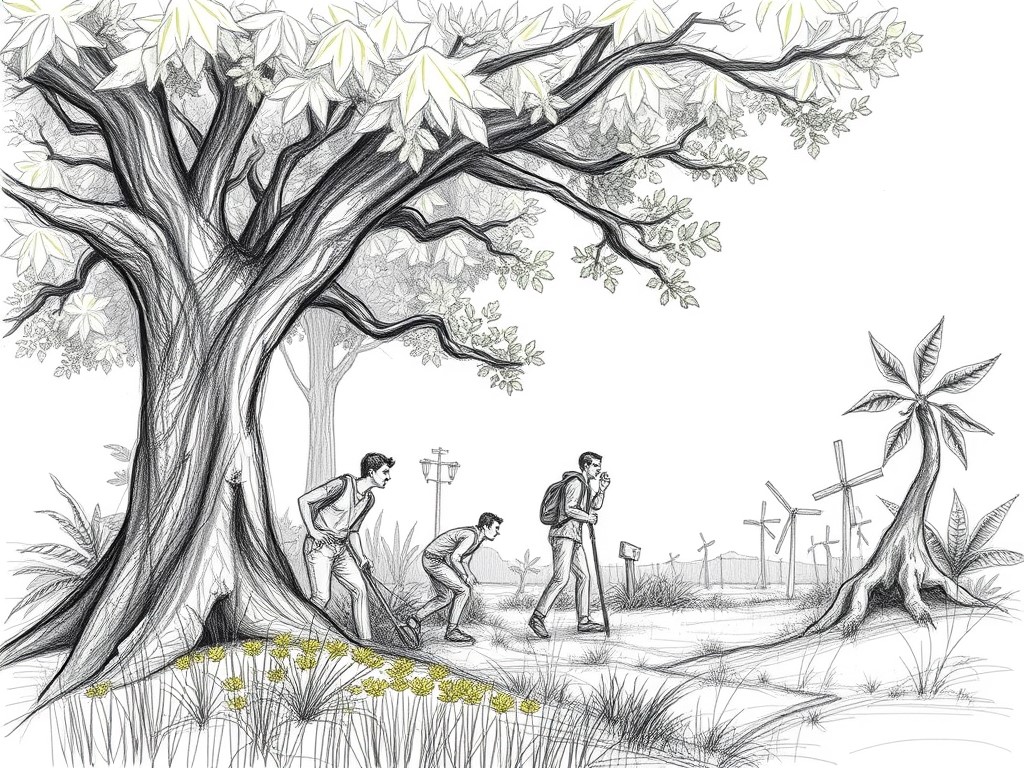
Converting monoculture industrial farms to permaculture systems
The transition from monoculture industrial farming to permaculture systems presents significant challenges, from financial risks, long-term investments, and the loss of scale efficiency, all of which hinder the widespread adoption of permaculture within conventional agricultural markets (Harper 2003).
Monoculture farms are designed to take advantage of economies of scale, which allow large-scale production at relatively low per-unit costs (Altieri 2018). Permaculture systems, which prioritise diversity and ecological balance, typically operate on smaller scales, making them less competitive in conventional markets dominated by industrial agriculture (Ferguson & Lovell 2014). The lack of scale efficiency makes permaculture transitions financially risky for large-scale farmers accustomed to industrial farming returns.
“So if I want to bring in someone into permaculture system, then we have to tell them, “Look, it will take three to five years for it to start working for you.” A lot of them can’t stand that transition. Some of us are from different backgrounds like here. We’re not actually economically-dependent on the farm in the short term” (Interviewee #9a).
“We’ve got all of this metal and all of these machines and all of this stuff and as much as I can look at it and go, well, I don’t think we’re going to be able to do things like that in a sustainable way in the future, they’re still there. And so that can be part of transitional strategies and I suppose I’m interested in that space ‘cause it’s complicated and it essentially involves a lot of compromise where we’re kind of going, well, this might be where we’re heading, but this works now” (Interviewee #22).
Transitioning from industrial farming to permaculture requires significant upfront investments. These include redesigning landscapes for sustainable water management, planting diverse perennial systems, and acquiring appropriate tools and knowledge, while economic returns may take years to materialise (Jacke & Toensmeier 2005). These costs often exceed the financial capacity of farmers, especially without government subsidies or access to affordable credit.
“I see it as being political because I really think – so in the United States for example, where there’s such a divide right now, if we could start having <inaudible> Nebraska and things like that, you’ve got 16,000, 80,000 acres mono crop, but the farmer is really in dire shape. He may have all this land – he’s suicidal, depressed” (Interviewee #10).
Industrial farms have heavily invested in specialised machinery for monoculture production, such as combine harvesters and sprayers (Pretty 2008). These assets represent sunk costs, meaning their value cannot be recovered if the farm transitions to permaculture, where such machinery may be unnecessary or inappropriate. The financial loss associated with these stranded assets serves as a significant disincentive for change.
“But what about our famers? Where are the food producers? Where are the representatives from rural – and maybe there are a few here, but they’re really – it’s really not part of the whole conversation yet. Well, like you listen to Charles Massey speak and it’s like there are very rigid things in rural Australia as well about this is how you do what you do and I guess there’s suspicion about different ideas and there’s probably economic risk and those kind of reasons” (Interviewee #27).
Permaculture farms typically require more manual labour than mechanised monoculture systems due to the diversity of crops and the complexity of management practices (Altieri 2018). This labour-intensive nature increases operational costs, creating a financial barrier for farmers who may already be struggling with narrow profit margins. Furthermore, the availability of skilled labour trained in permaculture techniques is limited, compounding the challenge of scaling these systems (Ferguson & Lovell 2014).
“There are many who are not here who should have been here and we did our best, trying to get scholarships, this, that, but it’s hard. It’s not easy. There’s a young couple in West Bengal, very far away from here, and they’re right in the middle of their harvest, so they can’t come, but they are doing permaculture and they are doing just a homestead style” (Interviewee 9b).
“Part of it is I know that people offer PDCs for free and on scholarship basis, but it is the whole – when I look at very young permaculturalists or whatever, when they are from countries like India or Asia, you don’t even think permaculture. You’re still in such survival mode and I don’t think it’s really penetrated into that. So, there’s definitely an economics aspect at this time. There is a certain amount of a lot of people who have pursued other things including myself and then had a little bit of that luxury, a wiggle room to move in to something else and give myself that kind of time to come into permaculture” (Interviewee #10).
Orthodox environmentalism is often embraced by an urban middle-class audience who do not live and work in nature, in contrast to farmers, loggers or peasants who obtain their living directly from nature (Fox 2013).
While the shift towards permaculture offers long-term ecological and social benefits, the substantial economic barriers, labour requirements, and entrenched farming practices create formidable obstacles that must be navigated for a successful transition.

Making a sustainable living from permaculture
The interview quotes reveal several interconnected challenges faced by permaculture practitioners in making a sustainable living from their work. These issues include economic barriers, structural inadequacies within the movement, and tensions between permaculture’s ethics and market demands.
Poor access to resources
A significant theme is the economic divide within the permaculture community, where younger or less-resourced practitioners struggle to access land, funding, and opportunities, often living nomadic lifestyles with limited financial stability (Grayson 2024).
“I think there’s definitely – not yet in the context of what we’re trying to build, but I was at a convergence on Native American lands in the US and some of the <inaudible> were there were very much younger permaculturalists who can’t afford to have land, are pretty much nomadic and living out of the van. And so, for them, it has to be about – look, where are we going to get work and things like that? So, there is that core group and then, the ones who do have through other means a little bit more finance available and therefore can kind of do the sort of stuff that some of them – so there is a divide. There’s an economic divide even amongst permaculturalists and I don’t know if there is a good solution yet for the younger permaculturalists who can’t own land. I think things like the CoLab and other stuff like that would really support that sort of stuff” (Interviewee #10).
“But let’s even take that. Let’s just take this to like – I’m not economically viable today, but with all the experience somebody has and comes to my farm and spend some time and says, “Okay, ___, let’s do this. We’ll change a few designs here because you’re not getting this out and let’s add in a few commercial crops which are still ecologically –” so then my model is done, then I’m then free to go help create the next model. So the tools and resources could be knowledge, it could be money, it could be information. So let’s just say that we want to go and do a workshop. The burden of explaining them and say, “Look, it’s here. You can see it. This is how we did it,” so it’s done. But I’m spending more time here, even though I wanna be here where I want to actually push it forward but I’m like, “Where’s the money gonna come for the next salary? Where’s this gonna come for the next salary?” so there has to be some support for genuine people doing some work which freeze them to do that” (Interviewee #9b).
The lack of institutional or communal support exacerbates these challenges, leaving individuals to shoulder the burden of creating sustainable livelihoods in an unforgiving economic context. Access to financial resources, tools, and organisational support is often insufficient to enable practitioners to scale up their efforts or pursue large-scale projects.
Limited income potential
Many permaculture practitioners rely on supplemental income from teaching, consulting, or running workshops rather than farming alone (Ferguson & Lovell 2014). While these activities align with permaculture ethics, they reflect the inability of farming activities alone to provide sustainable livelihoods.
“That really struck me in that last class that we had, it’s so true. We always knew our business was like that and it’s becoming more and more like that because the more we need money to survive, the less we’re taking on the jobs where we’re not being united in a way in which it sustains us. So it’s actually making us more specialised and making our client-based more specialised” (Interviewee #26).
“One way that permaculture research could really help is like – okay, what is the financial nitty-gritty of all the people who are working in this world – to reset expectations and go, “Oh, actually, the reason we do this is because we’re trying to spread an idea rather than because it makes sense as a career.” I think that’d be value – it might actually undercut – it might mean that it makes a whole bunch of permaculture design courses less attractive, which is one of the fundamental dilemmas of offering a product that people will always try to market it up. I don’t know. I’m not sure how exactly that would help, but I think it would be at least right” (Interviewee #16).
Permaculture farmers often produce diverse outputs in smaller quantities, which are less competitive in markets favouring standardised, high-volume production (Rosset & Martínez-Torres 2012). Niche markets for organic or locally produced goods offer some opportunities, but these are limited by consumer willingness to pay premium prices and competition from large-scale organic producers (Scott 2010).
Lack of career pathways
A key challenge faced by permaculture practitioners is the limited income potential from farming alone, often forcing them to rely on supplemental income from teaching, consulting, or workshops, highlighting the financial constraints of the model.
The lack of clear pathways to professionalisation is another significant barrier. Practitioners are often funnelled into narrow career paths, such as teaching or design, which are not financially viable for many and can create false expectations about permaculture as a career.
“So, one place that could be really valuable is in the fact that there’s – when people first start in permaculture, they’re often pushed into one or two careers – the designer or the teacher. Both of those are really problematic in terms of – they don’t offer many livelihoods and the livelihoods that they do offer are very, very challenging” (Interviewee #16).
Moreover, the absence of a central registry to track graduates or job opportunities further undermines efforts to professionalise the field and demonstrate its value to governments or potential employers.
“There’s also the fact that a lot of people do – I mean heaps of people do permaculture courses, but then there’s no tracking of where they go so there’s no central register of all the people who’ve done – even accredited training there is a bit better there but there’s no record of all the permaculture courses and all the graduates and there’s no jobs with the word permaculture in them” (Interviewee #49).
This structural gap limits permaculture’s capacity to create and sustain long-term livelihoods for its practitioners. The lack of formal data and recognition for permaculture’s contributions further hinders practitioners. Without clear job roles, statistical tracking, or recognition in government systems, it becomes difficult to demonstrate the movement’s value or secure support for its graduates.
“So what I would like is to have some sort of a means of indicating what where this training goes, and what the jobs are called, that you get at the end of them, and we did do what we called job role statements when we migrated the courses into the training package but they weren’t circulated, they remained as drafts, and so this is yet another, “Oh,” you put all this effort, and then it doesn’t translate into anything” (Interviewee #49).
Addressing this gap would not only help practitioners find employment but also strengthen the credibility and visibility of permaculture in broader economic and policy contexts.
Despite the alignment of these supplemental activities with permaculture ethics, they underscore the difficulty of generating sufficient income from permaculture farming itself, particularly in a market that favours high-volume, standardised production. Practitioners are better served by applying their knowledge in other professional contexts where they can add value.
Lack of institutional and community support
A recurring issue in the permaculture community is the lack of institutional and community support, leaving practitioners without access to vital resources like grants, government partnerships, or communal funding mechanisms. Practitioners frequently highlight the absence of systemic support for their work, such as access to grants, government partnerships, or community funding mechanisms.
“Look, I think it’s problematic. I think people who get into permaculture as a rule are maybe not engaging with those guys, mostly just doing their own thing. I see myself as – and I think most permaculture teachers are like this. We occupy this odd space because what we do is really, really focused on community, on building community, on upskilling the community, but we’re not not-for-profits. So, we don’t get a lot of perks that not-for-profits get. So I come up against that a lot. For example, I’m doing a World Food Day stall on the weekend here, but I’ve had to go off and buy expensive insurance because the Latrobe City Council won’t – I don’t come under their insurance because I’m a business and not a not-for-profit. If I was not-for-profit, I could get free insurance, things like that. So, it’s a bit of a – in a weird way, it kind of straddles kind of not-for-profit and business world, but I don’t think I’ve actually heard anybody else talking about that. I should talk about it. Maybe other people will talk to me about it if I talk about it” (Interviewee #48).
“I think we need money. Most of us we struggle a lot to get our projects running and it’s true that obviously we are in a medium class because we are here. So I mean we struggle but not so much because if not, we won’t be here. But if we had money, we can do more bigger scale. I don’t know, there’s something like that happens in Spain. We have this movement that we create in the last three years and we wanna do – Spain has a really big problem with desertification. So we wanna do big projects and stuff but we have no money and so how can we work with land if you don’t have money, then you have to go into the government and say stuff but, again, you’re getting inside of the thing. So I think we need money and more support from institutions, although I think that institutions are really getting into – here, you can say almost everyone that is giving a talk is like, “In my town,” or “In my government, they already know me and they support my initiative,” so we’re getting in there and I think they are supporting us but I think money and more support” (Interviewee #24b).
This lack of support forces individuals to operate in isolation, straddling the not-for-profit and business worlds without the benefits of either, such as insurance or subsidies.
“You know we all have to live, so what’s happening is that it’s coming back, “Is it financially sustainable? How does a permaculturist make money ethically and morally?” So then the question comes, if you started giving everything free or – so somewhere, there has to be a little bit more support maybe on resources where the permaculture people don’t have to be become commercially minded. So let’s just say we’re doing a PDC or any workshop, we call in 15 people from outside, and if ten is breakeven and you wanna actually push for 15 and somebody else helped with that five and this guy doesn’t have to do all the commercial stuff. Somewhere, you need that support, I think. That’s not happening – so the fair share is not between just you and me. You’re coming for the course and I’m giving you the course. It’s not the transaction with me. Somewhere you guys, as the community, need to help this partnership. So fair share today is becoming – it’s been two people. It’s not. I think somewhere your ten dollars, her ten dollars, his ten dollars, that can actually help this transaction to happen as well. Perhaps we need to think of collective fair share and not put that on the individual and say, “Oh, you’re the permaculturist, it’s your responsibility, go figure that out”” (Interviewee #9b).
Additionally, the unmet need for collective frameworks, such as pooled resources or cooperative funding, leaves practitioners overstretched and focused on financial survival rather than broader movement-building.
The difficulty of making a living from permaculture stems from a combination of economic inequities, structural shortcomings, ethical tensions, and a lack of institutional support. These issues limit the ability of practitioners to scale their efforts, create sustainable livelihoods, or gain wider recognition, highlighting the need for collective action to professionalise the movement, provide resources, and align permaculture principles with practical, scalable solutions.
This absence of support not only hinders practitioners’ ability to grow their projects but also emphasises the need for collective action and institutional backing to align permaculture principles with practical, scalable solutions for long-term sustainability.

Escapist tendencies
While permaculture’s focus on self-reliance and localism offers an attractive vision of sustainable living, it often manifests as escapism, with practitioners withdrawing from broader societal systems rather than engaging with them to instigate larger-scale change.
Permaculture’s focus on self-reliance and localism can sometimes manifest as escapism, where practitioners withdraw from broader societal systems rather than seeking to transform them (Lockyer & Veteto 2008). This tendency to operate on the periphery reflects a belief that small-scale, grassroots initiatives alone can address systemic issues, which limits engagement with mainstream economic and political systems.
“I start to learn permaculture since 2002 when I left the city to live in a countryside. Since then, as a professor I have start to share my pc knowledge with students stimulating people to migrate to countryside” (Interviewee #39).
It is a common trope that self-reliance should be the aim of permaculture design (Bane 2012). The individualistic commitment to personal action and self-reliance in permaculture developed in part from the antipathy of its founders to traditional activism as a political lever in the broader environmental movement.
“But the other thing is a whole lot of permies, once they actually go deep into it, they already have a really good green sustainable connection to themselves and to land anyway. And the obvious answer too is to just go bush and grow veggies, sit out there, and hang out, swap food, and live the good life. So when you get to that stage, you’re not actually teaching anyone anything. You’re a refugee. You’ve totally checked out from the world. Even your communications diminish to your local community who already know everything anyway. So the best ambassadors for permaculture are in the bush, checking out. So that’s kind of a defeatist” (Interviewee #17).
While localised efforts may provide valuable models for resilience, their impact is often confined to specific contexts, failing to address structural inequalities or influence policy on a larger scale (Trainer 2010). I suspect this escapist urge has more to do with running away from the mainstream, rather than an attempt to reform it.
Permaculture has arisen out of a suspicion of centralised government power and the excesses of consumer society (Barns 1995). This suspicion shaped the initial political form of permaculture into a largely individualistic methodology for sustainability predicated on individual action as the catalyst for social transformation.
Permaculture’s emphasis on local, self-sufficient economies raises questions about the accessibility and inclusivity of such models. The movement often champions the idea of “returning to the land,” romanticising rural living and self-sufficiency. However, this perspective may inadvertently privilege those with access to land, resources, and knowledge, leaving marginalised groups behind (Leahy 2021).
“The people who become very well-known I feel have access to land, which is interesting ‘cause in the UK, that’s really hard, but some of the really interesting stuff is what happens when you don’t have land and how you adapt it to that” (Interviewee 21b).
Permaculture often romanticises rural village life, presenting it as a harmonious alternative to urban existence. This perspective overlooks the challenges of rural living, including limited access to healthcare, education, and economic opportunities (Ferguson & Lovell 2014).
Permaculture thinking values diversity, however permaculture practice based on small communities overlooks the reality that these places are not that diverse. My own experiences of growing up and living in regional communities is of labouring under suffocating social conservatism, as experiencing them as places of violence, racism and misogyny that everybody knows about, most condone, and no-one talks about (Ceccato & Abraham 2022; Carrington & Scott 2008). The notion of a universal return to rural living disregards cultural homogeneity and the reality that many people value the opportunities and diversity of urban life. After all, that’s why I, and many others like me, couldn’t wait to leave for the big smoke when we finished high school.
The assumption that urban dwellers will migrate en masse to rural areas in response to urban breakdown is both simplistic and logistically problematic. The capacity of rural areas to accommodate a substantial migration from urban centres hinges on critical factors such as land availability, infrastructure adequacy, ecological limits, and socio-economic implications.
“Yes, I think lots of people have liked the overarching feel of permaculture. The fact that it is more holistic than most of the things that we’ve been presented and so a lot of people have kind of jumped on board with it and done things under the banner of it that haven’t been particularly well thought out or well-conceived. And when you look at – I mean, it is initially written to the back to the land movement, like Permaculture One is essentially, hippies were moving to the countryside, out of the city, they didn’t have skills and essentially, there’s a whole raft of books written in the 70’s that are around trying to skill these people up to how to do this well. There’s a whole lot of stuff, like, if you’re gonna design a movement, you wouldn’t do it like that. You wouldn’t have a whole lot of city-based people suddenly moved to the country with no skills, buying up land and trying to feed themselves. And in the whole exercise of self-sufficiency is flawed in its thinking as in “We’re going to grow and meet all of our needs from one plot.” And yet, it’s laudable too. I understand how it happened, but you basically had a lot of pretty idealistic but pretty uneducated, or unskilled in these areas, people going out and basically trying to set up these things either individually, which is never gonna work, or even communes, or as communities which has its own internal political issues, you know, is it against a society that where that comes, that’s just not happening” (Interviewee #22).
The idea that these areas could absorb millions of displaced urban populations fails to consider the ecological and social carrying capacity of rural regions. Land availability is often restricted by entrenched ownership patterns, including private and corporate holdings, and unsuitable zoning regulations that hinder the development of sustainable settlements (Gkartzios et al 2022). Much of the rural land may already be committed to commercial agriculture, forestry, or conservation, limiting its viability for habitation or small-scale farming (Brown & Schafft 2011).
Rural infrastructure, particularly housing, utilities, and transport networks, is generally underdeveloped; expansion would necessitate significant investment, raising questions of affordability and environmental sustainability (OECD 2016). Economically, rural areas often depend on specialised industries, such as agriculture or resource extraction, which may lack the capacity to absorb new populations without substantial diversification (van Eekelen 2020).
Ecologically, rural regions face finite carrying capacities; an influx of residents could exacerbate water scarcity, increase waste, and lead to habitat degradation, undermining local ecosystems (D’Souza & Gebremedhin 2019). Socially, rapid population shifts risk creating tensions within established rural communities, potentially eroding social cohesion (Brown & Schafft 2011). Migrants from urban settings may also lack the necessary skills for self-sufficient or agricultural livelihoods, requiring extensive retraining and support systems (FAO 2019).
While permaculture’s emphasis on local, self-sufficient communities presents valuable alternatives to urban living, it risks romanticising rural life and overlooks the practical, social, and ecological challenges that arise when attempting to scale this vision. Consequently, the feasibility of such migration depends on comprehensive planning and policy innovations that address these interconnected challenges.

The urban problem in permaculture thought
While permaculture’s ethical framework of Earth Care, People Care, and Fair Share presents powerful principles for sustainability, its application often neglects the complexities of urban life, where the majority of the global population resides.
Permaculture ethics—Earth Care, People Care, and Fair Share—demand proactive engagement with urban populations to build resilience rather than assuming their inevitable demise or displacement. Failing to engage with urban challenges risks alienating the majority of the world’s population and undermines permaculture’s potential as a transformative framework for sustainability. What does the permaculture movement have to say to people living in the high-density mega-cities of the world? “You’re doomed, move back to your ancestral village” is not a valid response.
“We need people with access to a lot of resources, especially funding, access to land, and there is this thought that we can only do so much within the new story, within this new culture that we’re creating, especially in terms of economic prosperity for those within it, and it’s really a matter of taking – during this time of transition, using the resources and the abundance that does exist in present structures, especially in urban, western consumeristic cultures, and using that to foster this transition into something new, if we want it to flourish well” (Interviewee #25).
Permaculture thinking often critiques cities as inherently unsustainable due to their dependence on external resource flows, ecological footprint, and vulnerability to systemic shocks (Mollison 1988). While these critiques are valid to an extent, they tend to overgeneralise, failing to account for variations in urban resilience and the potential for urban areas to adapt through innovations such as green infrastructure, renewable energy systems, and urban agriculture (Gandy 2006). Cities are also centres of political, cultural, and economic power, and their collapse would likely have cascading global consequences, not just for urban populations but for rural areas as well, which depend on urban markets, supply chains, and governance systems.
The world is urban
The predominantly urban population of the modern world poses a fundamental challenge to the implementation of permaculture economic strategies, which often focus on rural or peri-urban settings (Holmgren 2018). Over 55% of the global population resides in urban areas, a figure projected to increase to nearly 70% by 2050 (United Nations 2019). Urbanisation prevents specific challenges such as limited access to land, high land prices, and zoning laws that restrict agricultural activities.
Permaculture principles are inherently land-based, requiring space for practices such as food forests, contour farming, and water management systems (Holmgren 2017). While urban permaculture initiatives like rooftop gardens, community gardens, and vertical farming exist, these often operate on a small scale and struggle to meet the needs of dense urban populations (Rosol 2012).
“So for example, through community gardens in the 1980s, I heard someone else describe the concept of the city as a farm. So, rather than doing a city farm which is where you just got a hold of an acre and did a little farm, some of those city farmers in Britain in the ‘80s were already talking about the city as a farm and that later became – christened by David Holmgren as a garden agriculture. But if we grow food everywhere that we can through the cities, we have a kind of garden agriculture. And that is now only just getting more accepted. People are talking about green walls on buildings and rooftop gardens. So the idea that your city can be a garden – genuinely we were 30 years ahead. But of course there’s a lot of frustrations that go with that about kind of seeing something that really makes sense but not being able to follow through” (Interviewee #13).
“Yeah. ‘Cause it becomes like a presence of gentrification. I’ve been to a few gardens in Sydney and where I saw these cool gardens, permaculture gardens, pop up and then it attracts people with wealth to wanna live in these areas ‘cause it’s a form of culture. And then whereas it may have started to benefit to people living in the area. So you don’t want it to be seen as areas that you perceive that would benefit more like these tools as being like – I know a lot of time, like white saviours or something. So, yeah, it’s kind of – I think in terms of participations, really trying to get that diversity which is really hard ‘cause it’s – I found – and like where we did the urban garden in Totnes, it was just a scrap of land along the railway tracks that connects like white world history with the forestry. Yeah, I mean, we set there. We thought that was undirect presenting of Totnes, all these cool gardens were in the centre and tourists area like people with money whereas areas I think maybe we thought – that’s making assumptions, but it’s hard, isn’t it, if you could benefit and it’s been quite hard to get people involved” (Interviewee #21c).
Permaculture’s privileging of a rural agrarian model reflects both its strengths and limitations as a framework for sustainable living. While its focus on decentralised, land-based economies provides valuable insights into ecological resilience and self-sufficiency, this perspective often overlooks the social, economic, and logistical realities of urban life, which is where the majority of the global population resides. The implicit assumptions regarding urban collapse, rural migration, or even apocalyptic scenarios reveal a lack of nuanced engagement with the complexities of urbanisation, population dynamics, and global inequalities.
Ignoring the potential of urban resilience
By privileging rural life, permaculture undervalues the potential for cities to become more sustainable and regenerative. Urban permaculture initiatives, such as rooftop gardens, food forests, and community composting programmes, demonstrate that cities can integrate ecological principles into dense human environments (Rosol 2012). These projects challenge the binary assumption that urban areas are inherently unsustainable while rural areas are inherently resilient. With the right investments in infrastructure, policy, and education, cities have the potential to house large populations in ways that minimise ecological impact, offering economies of scale and opportunities for innovation not available in rural settings (UN-Habitat 2020).
“Trying to figure out how to do that in an urban environment where there aren’t clearer boundaries or people go between different neighbourhoods and don’t necessarily belong to – that don’t have those structures and the physical thing that demands it. People in Manhattan don’t know their neighbours and that’s perfectly fine, whereas a permaculture way, if you want it to keep increasing, you would absolutely need to have to do it collaboratively. You can’t go at it a loner. So, I think especially for me, that’s why I’m doing integrated or I care about the community-related transformation as opposed to personal, exactly for that reason, because we need to empower from the bottom-up and then it’ll naturally create its space amongst broken systems” (Interviewee #10).
Rather than privileging rural agrarianism as the sole path to sustainability, permaculture must engage critically with urban systems and recognise their potential for transformation. This requires a shift from binary thinking—rural versus urban—to an integrated approach that applies permaculture principles across scales and contexts.
“I mean it seems like permaculture is more of a peri-rural rather than completely rural. I don’t know. I mean there are people doing permaculture ideas in rural – small holding farms and that, but in terms of most people in the city like – ‘cause they can, whatever, pushed off land or land is monopolised by industrial farms or whatever, or people stole the land or whatever. So, it does seem more of effective in the urban area now. I don’t think cities have to be terrible spaces. We often perceive them as being polluted and undesirable to live in the city and everyone wants to escape to the countryside, but I think we can have some smart spaces” (Interviewee #21c).
“I see most parts of Australia as being highly urbanised, highly affluent and in some ways a good testing ground for some aspects of permaculture, but quite limited really because of its relative conservatism. And there are – this goes back to some previous things, there’s a lot of things not called permaculture but, for example, there is good community garden work being done in Melbourne with non-Anglo people with poor non-English speaking people. There has been consistently in Melbourne, for 15 to 20 years through the committee guidance movement, really good work being done” (Interviewee #13).
Strategies such as urban greening, decentralised energy systems, and equitable resource distribution can bring permaculture ethics to urban settings, ensuring that sustainability is inclusive of all populations, regardless of geography.
To fully realise its transformative potential, permaculture must shift from a rural-centric view to one that actively engages with and supports the resilience of urban systems, recognising that cities, too, can be hubs of sustainability and innovation.

Conclusion
In conclusion, while permaculture offers valuable insights into creating regenerative systems, its current limitations—rooted in a narrow focus on rural self-reliance and disengagement from urban realities—restrict its potential for economic regeneration.
The movement’s reluctance to engage with broader societal structures, coupled with an idealised vision of rural life, undermines its capacity to scale and address the urgent needs of an increasingly urbanised world. When it is based on escapist fantasies, permaculture practice is amateur hour. To realise its true potential, permaculture must transcend these self-imposed boundaries, embracing a more holistic approach that integrates both urban and rural solutions.
By expanding its scope and engaging with the complexities of contemporary economic systems, permaculture can evolve into a transformative force capable of driving meaningful, large-scale economic regeneration for diverse communities globally.
References
Alloun, E., & Alexander, S. (2014). The Transition Movement: Questions of Diversity, Power and Affluence. The Simplicity Institute.
Altieri, M. A. (1999). The Ecological Role of Biodiversity in Agroecosystems. Agriculture, Ecosystems & Environment. 74(1–3) 19–31.
Altieri, M. A. (2018). Agroecology: The Science of Sustainable Agriculture (2nd Ed.). Taylor & Francis Group.
Bane, P. (2012). The Permaculture Handbook: Garden Farming for Town and Country. New Society Publishers.
Barns, I. (1995). Environment, democracy and community. Environmental Politics. 4(4), 101-133.
Bell, G. (1992). The Permaculture Way: Practical Steps to Create a Self-Sustaining World. Hammersmith: Thorsons.
Brown, D. L. & Schafft, K. A. (2011). Rural People and Communities in the 21st Century: Resilience and Transformation. Wiley.
Carrington, K., & Scott, J. (2008). MASCULINITY, RURALITY AND VIOLENCE. The British Journal of Criminology, 48(5), 641–666.
Ceccato, V., & Abraham, J. (2022). Crime and Safety in the Rural: Lessons from Research. Springer.
D’Souza, G. E., & Gebremedhin, T. G. (Eds.). (2019). Sustainability in Agricultural and Rural Development. Taylor & Francis.
Ferguson, R., & Lovell, S. T. (2014). Permaculture for Agroecology: Design Principles for the Ecological Landscape. Agronomy for Sustainable Development. 34(2), 251–274.
Food & Agriculture Organization (FAO). (2019). The State of Food and Agriculture 2018: Migration, Agriculture and Rural Development. Food & Agriculture Organization.
Fox, K. (2013). Putting Permaculture Ethics to Work: Commons Thinking, Progress, and Hope. In J. Lockyer & J. R. Veteto (Eds.), Environmental Anthropology Engaging Ecotopia: Bioregionalism, Permaculture, and Ecovillages. Berghahn Books, 164-178.
Gandy, M. (2018). “Urban Nature and the Ecological Imaginary. In Lindner, C., & Meissner, M. (Eds.). (2018). The Routledge Companion to Urban Imaginaries (1st Ed.). Routledge.
Gibson-Graham, J. K. (2006). A Postcapitalist Politics. University of Minnesota Press.
Gkartzios, M., Gallent, N. & Scott, M. (2022). Rural Places and Planning: Stories from the Global Countryside. Policy Press.
Grayson, R. (2015). In the Anthropocene…What Role for Permaculture? Pacific Edge.
Grayson, R. (2024). A critique of permaculture ideas again raises questions about the suburbs. Permaculture Journal.
Harper, P. (2003). A Critique of Permaculture: Cleaning Out the Stables. Centre for Alternative Technology.
Holmgren, D. (2014). Crash on Demand: Welcome to the Brown Tech Future. Holmgren Permaculture Vision and Innovation.
Holmgren, D. (2018). RetroSuburbia: The Downshifter’s Guide to a Resilient Future. Melliodora Publishing.
Holmgren, D. (2017). Permaculture: Principles and Pathways Beyond Sustainability. Melliodora Publishing.
Holmgren, D. (2020). Essence of Permaculture: Revised Edition. Melliodora Publishing.
Jacke, D. & Toensmeier, E. (2005). Edible Forest Gardens: Ecological design and practice for temperate-climate permaculture. Chelsea Green Publishing Company.
Jackson, T. (2009). Prosperity Without Growth: Economics for a Finite Planet. Routledge.
Leahy, T. (2021). The Politics of Permaculture. Pluto Press.
Lockyer, J., & Veteto, J. R. (2013). Environmental Anthropology Engaging Ecotopia: Bioregionalism, Permaculture, and Ecovillages. Berghahn Books.
Loeks, Z. (2016). The Permaculture Market Garden: A Visual Guide to a Profitable Whole-systems Farm Business. New Society Publishers.
Mollison, B. (1988). Permaculture: A Designer’s Manual. Tagari Publications.
Organization for Economic Cooperation & Development (OECD). (2016). A New Rural Development Paradigm for the 21st Century: A Toolkit for Developing Countries. OECD Publishing.
Piketty, T. (2017). Capital in the Twenty-First Century. Belknap Press.
Pretty, J. (2008). Sustainable Agriculture and Food: Four Volume Set. Earthscan.
Raworth, K. (2017). Doughnut Economics: Seven Ways to Think Like a 21st-Century Economist. Chelsea Green Publishing.
Rosol, M. (2012), Community Volunteering as Neoliberal Strategy? Green Space Production in Berlin. Antipode. 44: 239-257.
Rosset, P. M., & Martínez-Torres, M. E. (2012). Rural Social Movements and Agroecology: Context, Theory, and Process. Ecology and Society. 17(3).
Scott, R. (2010). A Critical Review of Permaculture in the United States.
Scott-Cato, M., & Hillier, J. (2010). How could we study climate-related social innovation? Applying Deleuzean philosophy to Transition Towns. Environmental Politics. 19(6), 869-887.
Shiva, V. (2005). Earth Democracy: Justice, Sustainability and Peace. South End Press.
Trainer, T. (2010). Transition to a Sustainable and Just World. Envirobook.
UN-Habitat (2020). World Cities Report 2020: The Value of Sustainable Urbanization. United Nations Publications.
United Nations (UN). (2019). World Urbanization Prospects: The 2018 Revision. United Nations Publications.
van Eekelen, W. (2020). Rural Development in Practice: Evolving Challenges and Opportunities. Taylor & Francis.
Veteto, J. R. & Lockyer, J. (2008). Environmental Anthropology Engaging Permaculture: Moving Theory and Practice Toward Sustainability. Culture & Agriculture. 30(1&2), 47-58.
 Edge Dwellers Café
[…] IX. Self-inflicted wounds of socio-economic permaculture. […]