

This 10-part series summarises the findings from my participatory-action research project examining permaculture as a transnational social movement. My aim in conducting this research was to explore how the movement acts at the interface between local-level projects, government policy, civil society, and international politics, across different national contexts, in the contested space of the sustainability transition.
This project was initiated in 2014 but was interrupted by the COVID pandemic and left unfinished after my departure from La Trobe University. This article series ties up that loose end and fulfils my promise of sharing the research findings with the permaculture movement.
Across these ten articles, I argue for the permaculture movement to get serious about scaling up so permaculture can be the transformative force that its stated core ethics promise it could be.




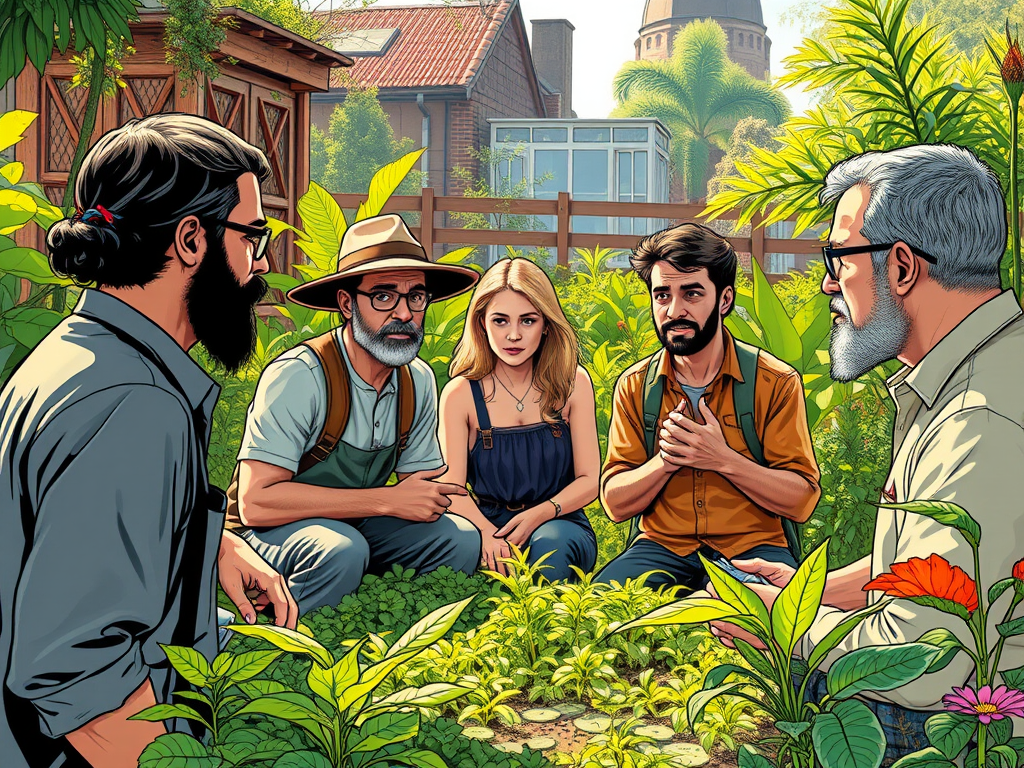




Research design
This study employs a qualitative research design based on semi-structured interviews with permaculture practitioners, framed around the five key facilitating conditions that give rise to and shape social movements (Snow and Soule 2010):
- Mobilising grievances
- Contextual conditions
- Movement participation
- Movement dynamics
- Political consequences of the movement
A social movement analysis of permaculture can build on the body of research cited above. Interpreting the permaculture movement through the lens of social movements can facilitate the integration of insights from the existing literature on permaculture politics, to contextualise the individual experiences of permaculture practitioners to be interpreted in relation to the sustainability transition, the global food movement, the political ecology of the environment, and the politics of place, in the process constructing a map of how the permaculture movement operates and impacts at global scale.
My semi-structured interviews with participating interviewees were based around the following set of questions:
- Why permaculture, why now? à Why do we need permaculture?
- Someone new to permaculture asks you about the permaculture movement, how would you describe it to them?
- Under what conditions is permaculture likely to have its broadest appeal to new audiences?
- In what ways do you see permaculture as political (in terms of the internal politics of movement and permaculture in the context of local/national/global politics)?
- What’s your view of how permaculture practitioners connect with each other across the movement (PDC’s, convergences, networks)?
- How would you describe the identity of the permaculture movement and its participants?
- What is your evaluation of the diversity of the permaculture movement (in terms of gender, ethnicity, class, indigenous representation, LGBTQIA+ etc)?
- What do you see as appropriate goals for the permaculture movement as a collective, both in your local area and globally?
- What’s your view on how effective permaculture has been in spreading itself to new audiences and locations (PDC, convergences, media etc.)?
- How do you view the ability of permaculture practitioners to engage with government and business organisations?
- What do you see as permaculture movement’s most important innovations as a collective?
- What resources does the permaculture movement need to succeed, and are these available?
- What are the major obstacles facing the permaculture movement?
- Any other thoughts/comments? Any important questions about the permaculture movement that we haven’t covered?

Other contributions to the permaculture movement
Publications
Grunewald, P, Habib, B and van der Velden, N. (2020). ‘Collaborative Ecosystem Emergence: Growing coherence and effectiveness in decentralised permaculture networks.’ 12th International Social Innovation Research Conference 2020 (ISIRC). Sheffield, UK. 1-3 September 2020.
Habib, B. and Fadaee, S. (2019). “Responding to the biodiversity crisis: Permaculture and sustainability transition.” Discover Society. 07 August 2019.
Habib, B. (2019). ‘The global permaculture movement as an engine for sustainability transition: A critical appraisal.’ Australian Political Science Association: 2019 Annual Conference. 22-25 September 2019. Flinders University, Adelaide, Australia.
Habib, B. (2018). ‘Discussion: Transition and the Emergence of New “Isms”‘. Living Politics: Self Help and Autonomous Action in East Asia and Beyond. 14-16 March 2018. Australian National University—College of Asia and the Pacific, Canberra.
Habib, B. (2018). ‘Permaculture as an International Social Movement‘. 14th Australasian Permaculture Convergence. 15-19 April 2018. Canberra, Australia.
Habib, B. (2017). ‘Permaculture as a Transnational Social Movement‘. 13th International Permaculture Conference and Convergence. 25 November – 2 December. Hyderabad, India.
Habib, B. (2016). ‘Sustainability is Not Enough: A Call for Regeneration‘. MUNPlanet. 10 June 2016.
Habib, B. (2015). ‘Decoding the Landscape: Finding Meaning in Northeast Asia’s Green Spaces.’ Asian Currents. 9 September 2015.
Habib, B. (2015). ‘Permaculture’s Next Big Step’. Pip Magazine. Issue 4, September 2015, p. 11.
Podcasts
Permaculture Design Course
From 2014-2021 I taught into the Permaculture Design Course at CERES Community Environment Park in Melbourne. I also taught into the PDC for Ballarat Permaculture Guild in 2019 and 2022.
 Edge Dwellers Café
[…] permaculture movement. I interviewed over 60 permaculture practitioners from around the world. This 10-part series summarises the findings from those interviews and caps my contribution to the permaculture […]
[…] permaculture movement. I interviewed over 60 permaculture practitioners from around the world. This 10-part series summarises the findings from those interviews and caps my contribution to the permaculture […]
[…] permaculture movement. I interviewed over 60 permaculture practitioners from around the world. This 10-part series summarises the findings from those interviews and caps my contribution to the permaculture […]
[…] permaculture movement. I interviewed over 60 permaculture practitioners from around the world. This 10-part series summarises the findings from those interviews and caps my contribution to the permaculture […]
[…] permaculture movement. I interviewed over 60 permaculture practitioners from around the world. This 10-part series summarises the findings from those interviews and caps my contribution to the permaculture […]
[…] permaculture movement. I interviewed over 60 permaculture practitioners from around the world. This 10-part series summarises the findings from those interviews and caps my contribution to the permaculture […]
[…] permaculture movement. I interviewed over 60 permaculture practitioners from around the world. This 10-part series summarises the findings from those interviews and caps my contribution to the permaculture […]
[…] permaculture movement. I interviewed over 60 permaculture practitioners from around the world. This 10-part series summarises the findings from those interviews and caps my contribution to the permaculture […]
[…] permaculture movement. I interviewed over 60 permaculture practitioners from around the world. This 10-part series summarises the findings from those interviews and caps my contribution to the permaculture […]
[…] permaculture movement. I interviewed over 60 permaculture practitioners from around the world. This 10-part series summarises the findings from those interviews and caps my contribution to the permaculture […]