
In the study of conflict resolution, data matters. Whether analysing the trajectory of armed violence, assessing early warning signs of mass atrocities, or evaluating peacebuilding outcomes, empirical data provides the scaffolding for informed analysis, policy recommendations, and ethical decision-making. For students, accessing and interpreting this information is a crucial skill that bridges the gap between academic learning and applied analysis.
This article introduces a curated set of conflict data platforms, listed in alphabetical order, that I shared with my students in the 2nd-year undergraduate unit Conflict Resolution [POL20011] at Swinburne Online. I curated this list as a useful resource for students to interrogate a series of conflict case studies in their assignments, class discussions, and independent research. Each of these resources brings a different lens to analysing the origins and drivers of conflict, and all are freely available online.
- Becoming data-literate peacebuilders
- ACLED – Armed Conflict Location and Event Data Project
- Early Warning Project – Risk of Mass Killing
- Global Centre for the Responsibility to Protect (GCR2P)
- Global Peace Index (GPI)
- International Crisis Group – CrisisWatch
- Lowy Institute – Asia Power Index
- PAX – Peace and Conflict Resolution Evidence Platform
- ReliefWeb
- Stockholm International Peace Research Institute (SIPRI)
- United Nations peacekeeping and peacebuilding
- Uppsala Conflict Data Program (UCDP)

Becoming data-literate peacebuilders
Each of these resources offers more than just data points, they are interpretive tools for thinking critically about how we understand, document, and respond to conflict. As future peacebuilders, analysts, or policymakers, developing data literacy is essential to your skillset. Data never speaks for itself; it must be questioned, contextualised, and interpreted. As you explore these resources, use them to develop your analytical rigour, empirical grounding, and theoretical insight.
When using these datasets:
- Be explicit about your source and its limitations.
- Be critical of what is included and what is left out.
- Connect the data to theory, ethics, and real-world decision-making.
- Use data to support, not replace, your argument.
- Cross-check and triangulate information from multiple sources.
- Always relate empirical evidence back to the broader conflict resolution frameworks introduced in class.
With these tools, you are well-equipped to critically examine the causes, dynamics, and resolutions of contemporary conflict. Whether you’re analysing a civil war, assessing early warning systems, or mapping peacebuilding efforts, these tools can ground your work in rigorous empirical evidence.
ACLED – Armed Conflict Location and Event Data Project
Website: https://acleddata.com
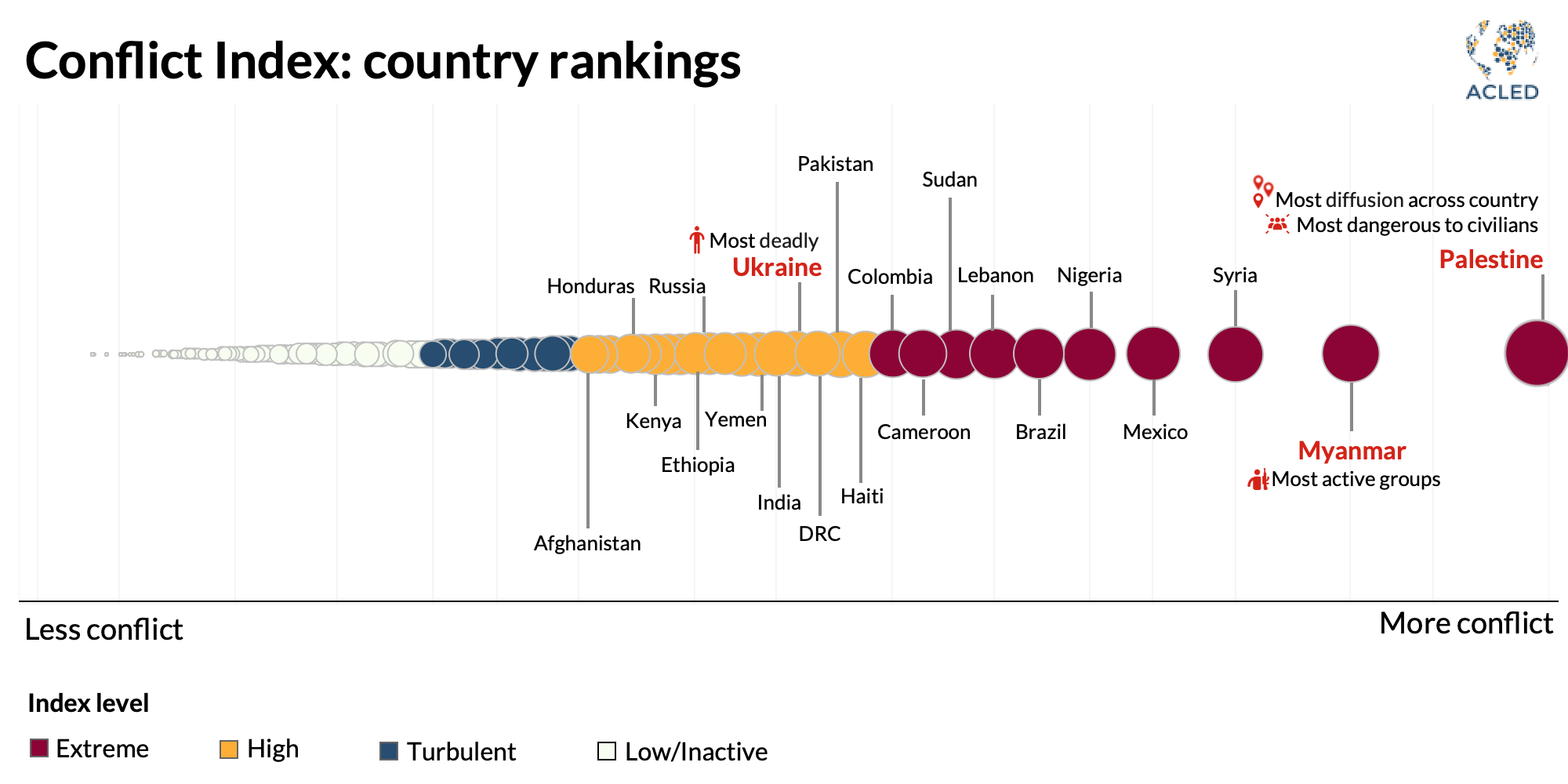
ACLED collects and maps real-time data on political violence and protest events involving both state and non-state actors. It compiles real-time, disaggregated data on political violence and protest events, tracking the actions of both state and non-state actors. Its Conflict Index ranks countries using indicators such as deadliness, civilian targeting, geographic spread, and armed group activity. It is particularly strong in documenting decentralised and irregular forms of violence that are often under-reported, including insurgencies, militias, and protest movements. ACLED is ideal for mapping patterns of instability in your chosen case studies or tracking the dynamics of insurgent, militia, or protest activity.
Questions to think about:
- How does disaggregated conflict data like ACLED’s help us understand local variations within a national conflict?
- What challenges might arise in verifying data in conflict zones, especially where media freedom is limited?
- How might ACLED data inform strategies for early intervention or peacebuilding?
Early Warning Project – Risk of Mass Killing
Website: https://earlywarningproject.ushmm.org
This tool, produced by the US Holocaust Memorial Museum and Dartmouth College, uses statistical modelling to estimate which countries are most at risk of mass atrocities, even before they occur. Drawing on social, political, and conflict-related indicators, the tool offers an early warning system designed to prompt preventive action. Students should use this source not only to analyse potential crisis points, but also to critically assess the challenges of preventive diplomacy.

Questions to think about:
- How effective can an early warning system be in preventing atrocities?
- Who has the responsibility and capacity to act when early warning signs are identified?
- Can you identify any cases where timely intervention could have prevented large-scale violence?
Global Centre for the Responsibility to Protect (GCR2P)
For students examining the normative and legal foundations of international action on atrocity crimes, the Global Centre for the Responsibility to Protect (GCR2P) provides a searchable collection of all United Nations Security Council resolutions and presidential statements referencing the Responsibility to Protect (R2P). This is the definitive dataset for understanding how the UNSC has invoked R2P in response to specific situations involving the threat of genocide, war crimes, ethnic cleansing, or crimes against humanity.
Questions to think about:
- What are the core ethics underpinning the Responsibility to Protect (R2P)?
- Has R2P been applied (or misapplied, or not applied) appropriately across cases of humanitarian catastrophe and systemic human rights abuse?
- How do political dynamics within the Security Council affect whether R2P is referenced or acted upon?
Global Peace Index (GPI)
Website: https://www.visionofhumanity.org/maps/#/
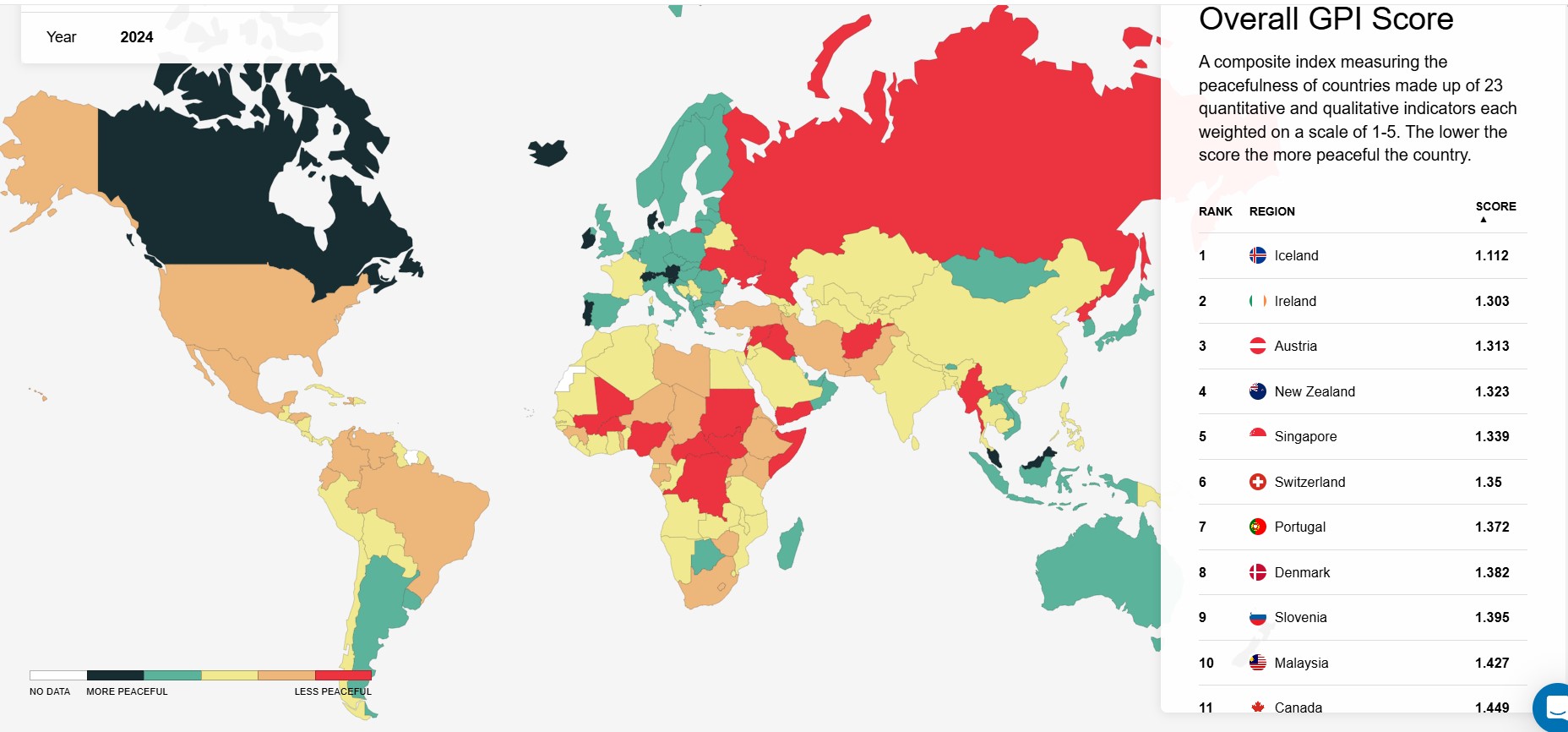
Published by Vision for Humanity, the GPI ranks countries by levels of peace using three pillars: societal safety and security, the level of ongoing conflict, and militarisation. Its user-friendly map interface allows students to compare scores across countries and timeframes. This dataset is particularly useful when evaluating the structural causes of violence and peace, key themes in conflict transformation.
Questions to think about:
- Which indicators used in the GPI do you think are the most meaningful in measuring peace?
- How does the GPI differentiate between the absence of conflict and the presence of positive peace?
- What might a sudden change in a country’s GPI ranking suggest about internal or external dynamics?
International Crisis Group – CrisisWatch
Website: https://www.crisisgroup.org/crisiswatch
CrisisWatch is an interactive map and monthly digest monitoring more than 70 global crises. It tracks risk factors, conflict trends, and opportunities for de-escalation, making it a powerful tool for both real-time analysis and case study research. The interactive map allows you to filter by region, time, and type of conflict, and includes summaries, actor analysis, and risk assessments. CrisisWatch helps students visualise trends over time and understand the agency of key actors, both state and non-state, in driving conflict dynamics.
Questions to think about:
- How does the framing of a conflict on CrisisWatch shape our perception of its urgency and scale?
- What role do regional and non-state actors play in the escalation or resolution of the conflicts tracked?
- How might you use this platform to identify a viable case study for your assessment tasks?
Lowy Institute – Asia Power Index
Website: https://power.lowyinstitute.org
While not a conflict tracker per se, the Lowy Asia Power Index offers detailed data on the distribution of power across the Asia-Pacific. This dataset offers a comprehensive ranking of countries’ power in the Asia-Pacific across domains such as military capability, economic relationships, and diplomatic influence. It’s especially relevant for understanding the strategic context and causes of conflicts in the region, and is a great tool for students linking strategic power dynamics with regional instability.

Questions to think about:
- How does power asymmetry between states contribute to conflict risk?
- Which of the Index’s eight power indicators best explains current tensions in Asia?
- How might different IR theories interpret the significance of regional power shifts reflected in the Index?
PAX – Peace and Conflict Resolution Evidence Platform
Website: https://pax.peaceagreements.org
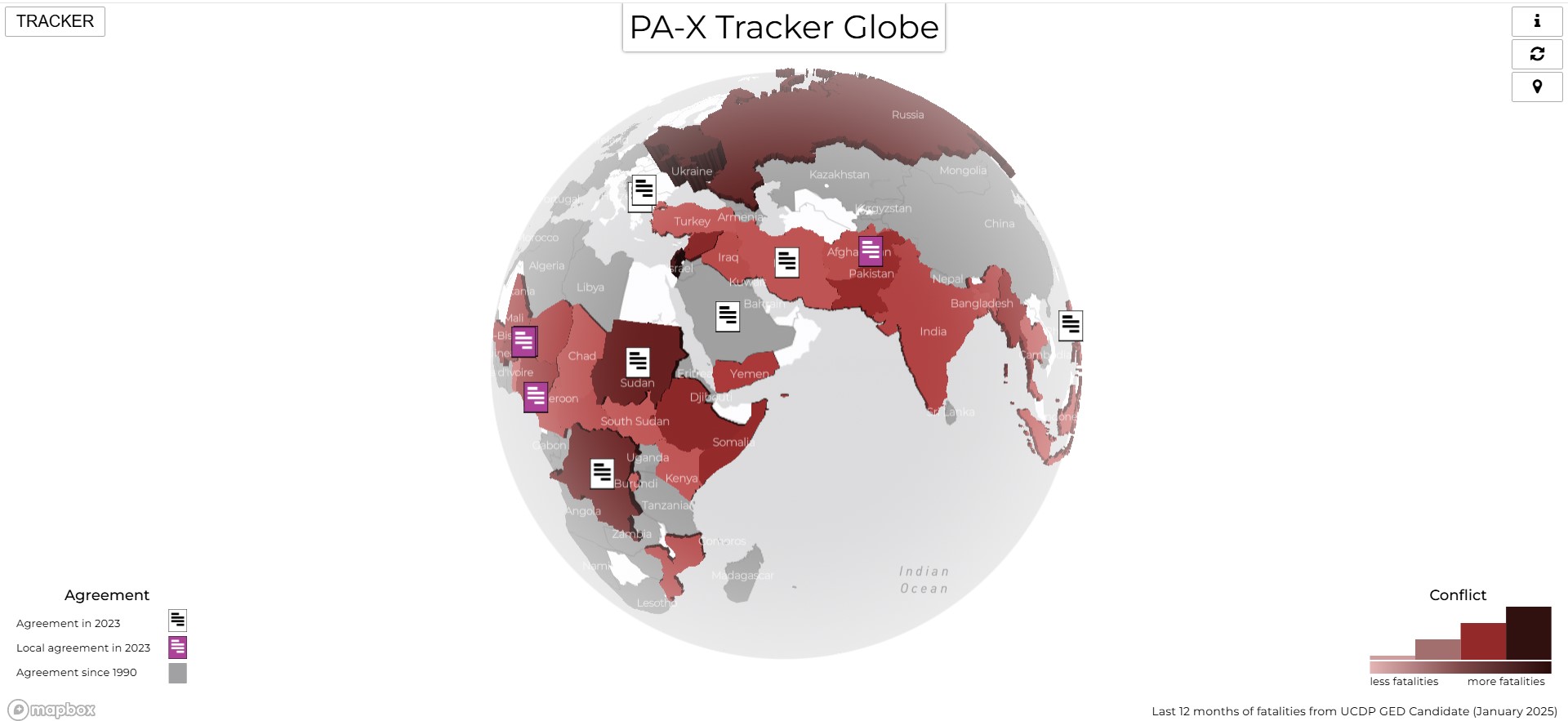
Hosted by the University of Edinburgh, this platform maps and archives recent peace agreements, providing full-text documents and detailed documentation on their signatories, terms, and implementation status. It’s ideal for exploring the architecture of negotiated settlements and for examining the effectiveness of different mediation strategies.
Questions to think about:
- What patterns do you notice in the types of actors involved in peace agreements?
- How does the inclusion or exclusion of certain groups (e.g. women, civil society) affect implementation outcomes?
- How can peace agreements be used as data to evaluate long-term peacebuilding?
ReliefWeb
Website: https://reliefweb.int
ReliefWeb, a specialised digital platform administered by the UN Office for the Coordination of Humanitarian Affairs (OCHA), is a comprehensive and up-to-date portal for information on global humanitarian emergencies and disaster response. It curates a vast range of materials, including situation reports, policy briefs, infographics, maps, datasets, and job postings from UN agencies, NGOs, governments, and research institutions. Particularly useful for students working on real-time conflict-affected zones or humanitarian aspects of peacebuilding, ReliefWeb allows you to filter reports by country, disaster type, theme, and publishing organisation.

Questions to think about:
- How does humanitarian reporting shape international responses to conflict and displacement?
- What are the advantages and limitations of using real-time data and grey literature for academic research?
- How can ReliefWeb be used to track the escalation or de-escalation of a specific conflict zone over time?
Stockholm International Peace Research Institute (SIPRI)
Website: https://www.sipri.org/databases
SIPRI offers several key datasets relevant to conflict and peace:
- Arms Transfers Database: Tracking arms exports/imports since 1950.
- Military Expenditure Database: Analysing state military spending.
- Multilateral Peace Operations Database: Mapping personnel, missions, and funding.
- Arms Industry Database: Profiling the top 100 military firms.
- ATT-Relevant Activities Database: Documenting cooperation on small arms and arms trade treaty implementation.
These resources allow students to explore the global arms economy, state military capabilities, and international cooperation on arms control, and are useful for understanding the economics and geopolitics of militarisation, and the role of arms flows in fuelling or resolving conflict.

Questions to think about:
- How do arms flows influence the outbreak, duration, or resolution of conflicts?
- What insights can be drawn from trends in military spending?
- How might SIPRI’s data be used to assess compliance with international treaties?
United Nations peacekeeping and peacebuilding
UN Security Council: https://main.un.org/securitycouncil/en
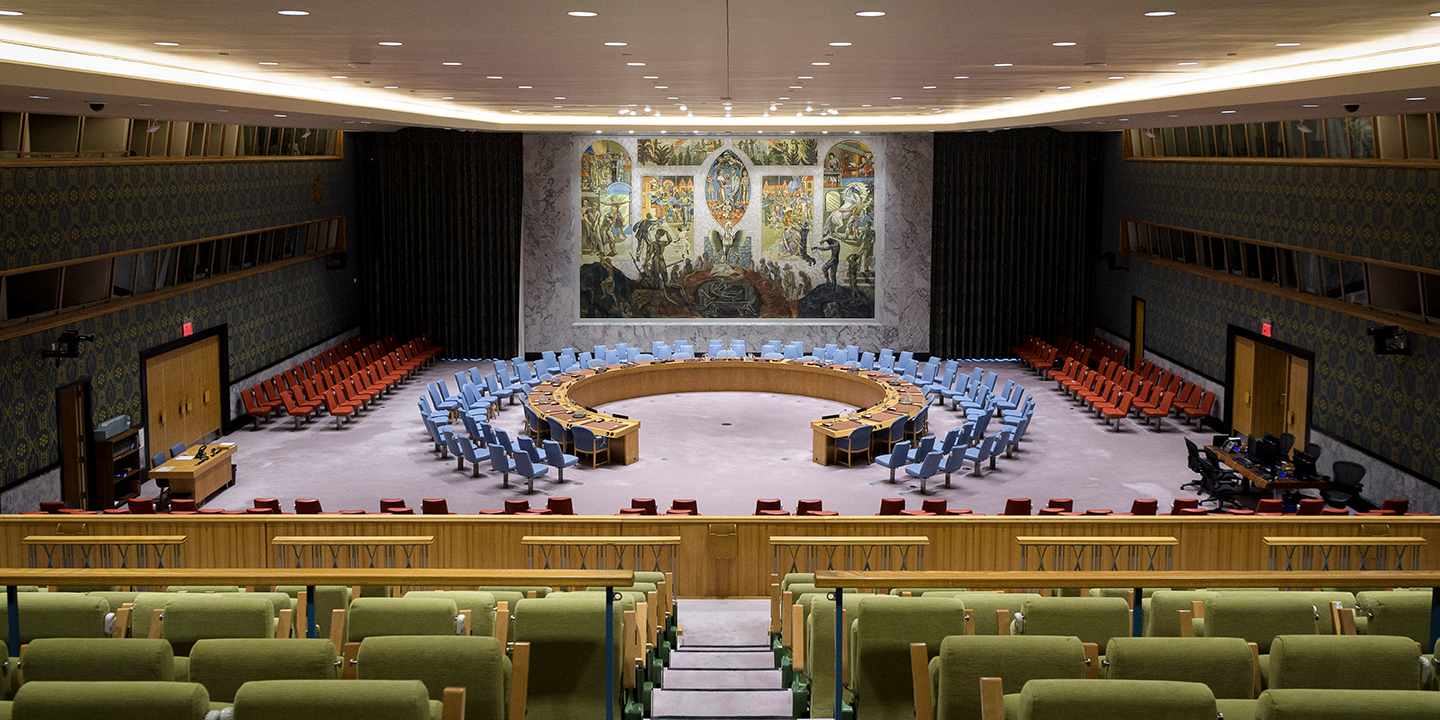
One of the most important international bodies in global conflict resolution is the United Nations Security Council (UNSC). The UNSC has primary responsibility for the maintenance of international peace and security, as articulated under Chapter VII of the UN Charter. The Council has 15 Members, and each Member has one vote. The UNSC takes the lead in determining the existence of a threat to the peace or act of aggression and calls upon the parties to disputes to settle it by peaceful means and/or recommends terms of settlement. In some cases, the Security Council can resort to imposing sanctions or authorise the use of force to maintain or restore international peace and security.
Peacekeeping missions: https://peacekeeping.un.org/en
The UN’s peacekeeping website provides detailed information on current missions, including mandate scope, troop contributors, and operational challenges. As of this year, Australia has joined the Peacebuilding Commission and contributes to the UN Peacebuilding Fund.
Peacebuilding Commission: https://www.un.org/peacebuilding/content/home
The Peacebuilding Commission focuses on addressing structural root causes of conflict and supporting institutions for lasting peace.
Use these resources to explore institutional peacebuilding frameworks and multilateral conflict management in practice.

Questions to think about:
- What distinguishes peacekeeping from peacebuilding, and how are the two linked?
- How might the presence of UN missions affect local ownership of peace processes?
- What metrics should we use to assess the success of a peacekeeping mission?
Uppsala Conflict Data Program (UCDP)
Website: https://ucdp.uu.se
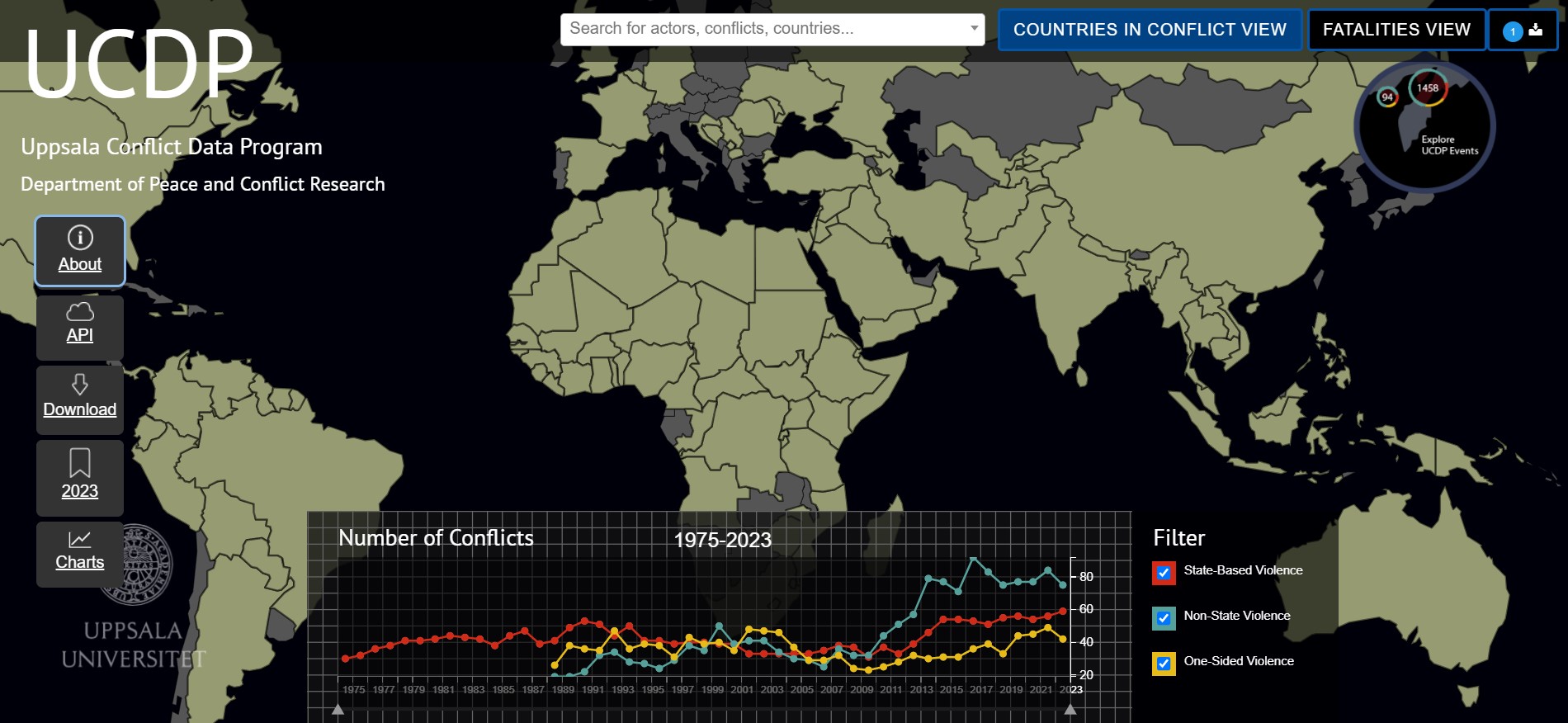
Based at Uppsala University, the UCDP is the world’s longest-running academic conflict dataset. It maintains rigorous definitions of armed conflict, non-state violence, and one-sided violence with detailed time-series data and offers downloadable datasets for detailed analysis. Students can use UCDP to identify longitudinal trends in organised violence and evaluate competing definitions of conflict.
Questions to think about:
- How does UCDP’s definition of conflict shape the scope of its data collection?
- Why is it important to distinguish between different types of organised violence?
- How could UCDP data be used to analyse conflict trends over time in a chosen region?
 Edge Dwellers Café
You must be logged in to post a comment.