
The Karenia mikimotoi algal bloom hovering off the coast of South Australia is an ecological disaster.
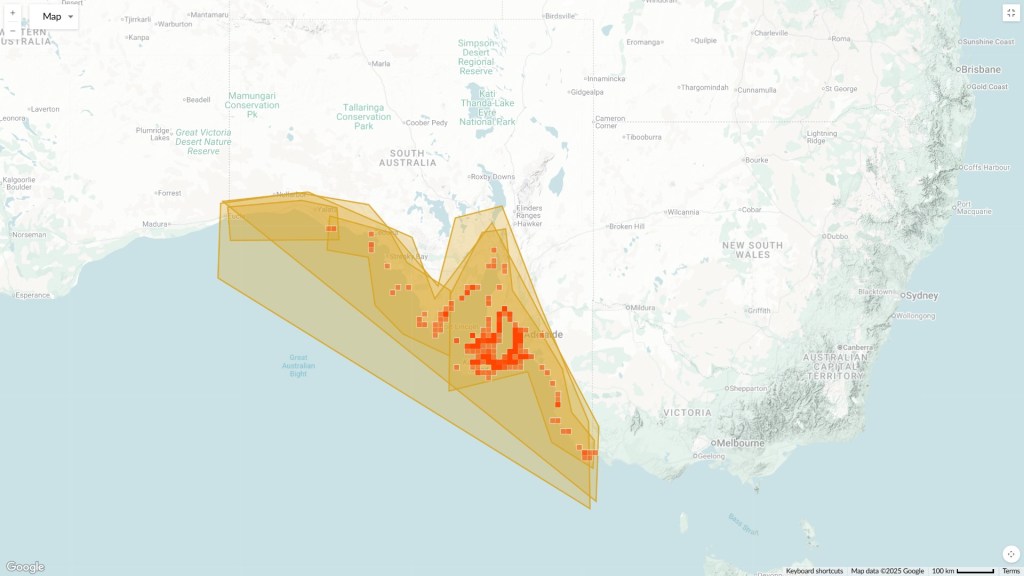
As an expat Adelaidean I have been following this story from afar since it was first reported during the past summer along the coastal areas adjacent to the mouth of the Murray River. More recent weather patterns have pushed the algal bloom further up the Gulf of St Vincent, impacting the marine ecosystems along Adelaide’s wonderful metropolitan beaches.
On a recent trip to Adelaide, I went for a walk along the beach between Brighton and Seacliff to see the impacts of the bloom for myself. I love this beach. I’ve swum here every summer for decades. It’s a place of pilgrimage when I come back to SA during the summertime. What I saw was deeply distressing.
I walked along the beach at low tide, around 9:00 AM on Thursday 17th July, to see what detritus might have been left at the high tide mark. The sand dune along the beach had been eroded by about a metre by a severe storm that hit Adelaide the weekend prior.

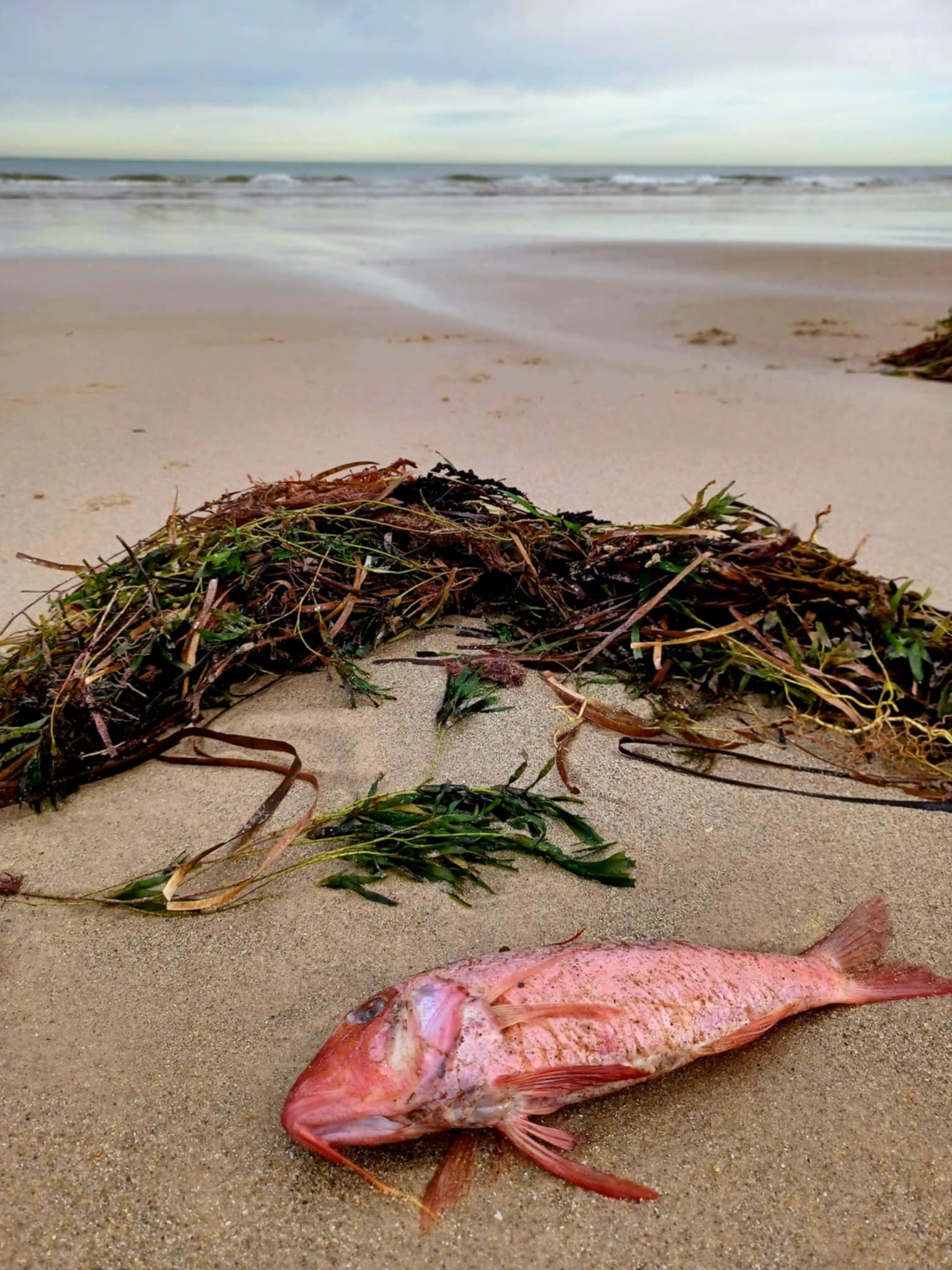
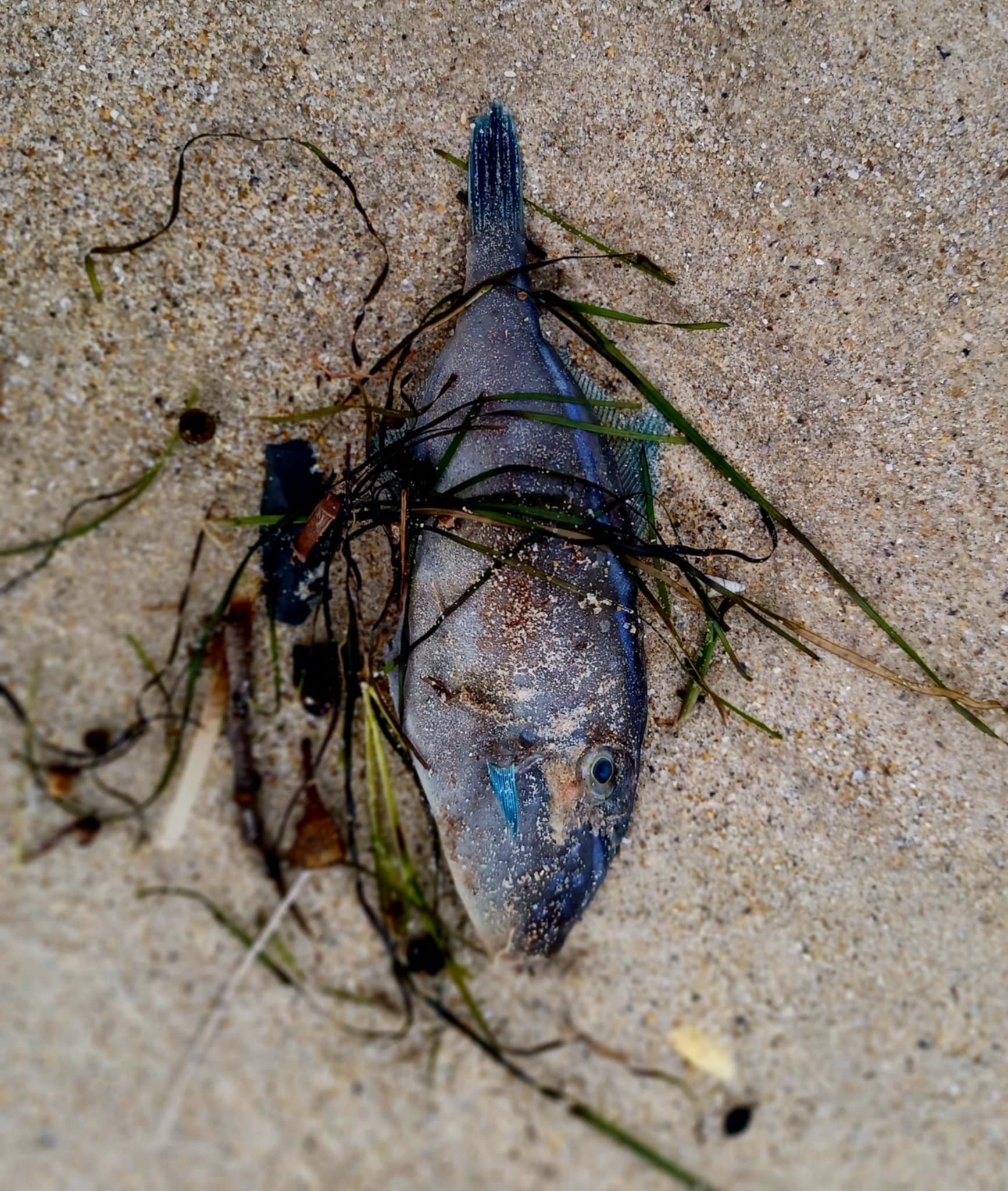
Every couple of metres I found many different species of dead fish among the stranded seaweed. While the odd fish carcass is common along the shoreline, the number of dead fish I saw was well beyond the norm. Over 350 marine species have been identified as impacted by the algal bloom.

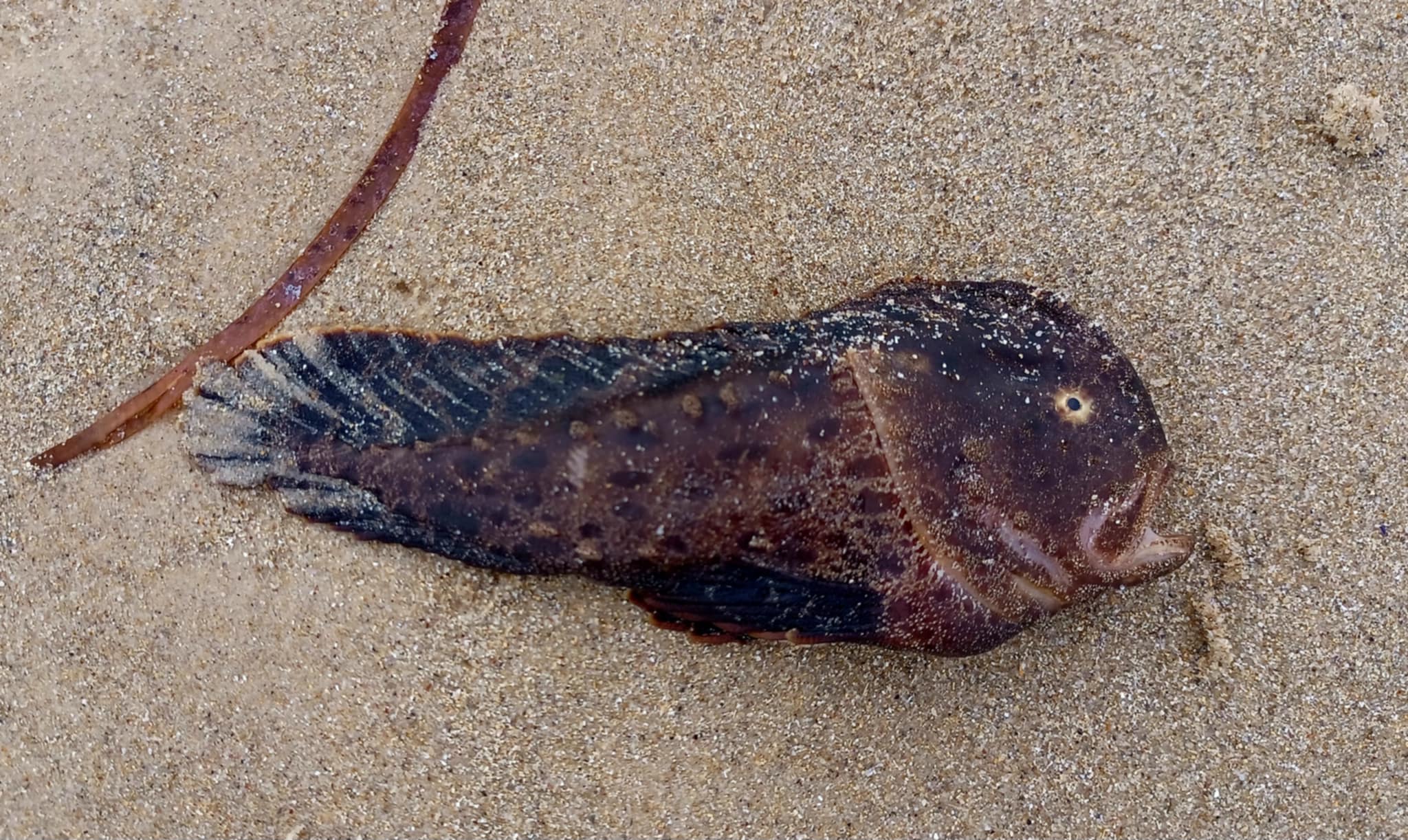


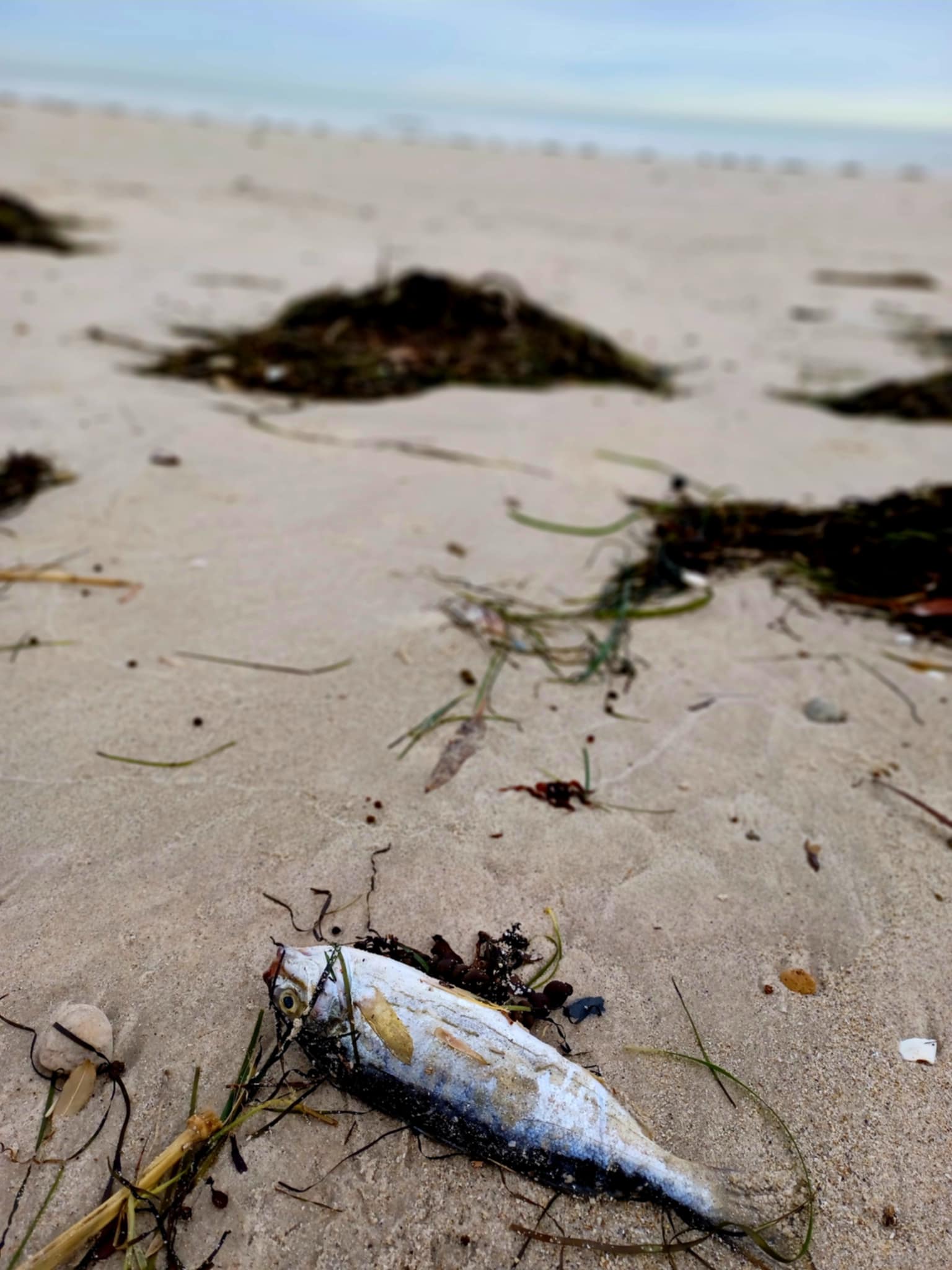

I also experienced some low-level respiratory irritation, similar to the symptoms commonly reported, though not as severe as those described by residents at Port Elliot and Middleton on the Fleurieu Peninsula south coast. It felt a tickle in the back of my throat, like I’d inhaled some fine ground pepper, which dissipated about 30 minutes after I left the beach.
I didn’t see any of the well-documented toxic foam that the algae produces, though that had been reported along metropolitan beaches in recent times.
It is distressing to hear stories of fish and sharks beaching themselves because they can’t breathe in the anoxic water, and to see footage taken by divers documenting the underwater graveyards of decimated marine ecosystems.


Causes of the algal bloom
Experts have cited the cause of the algal bloom as the confluence of forces. According to Environment SA, three key factors combined to create ideal conditions for the Karenia mikimotoi algae to flourish:
- A marine heatwave, with ocean temperatures around 2.5°C above average since September 2024.
- Nutrient-rich water from the 2022–23 River Murray flood entering the sea.
- A rare cold-water upwelling last summer, which brought even more nutrients to the surface.
Human environmental degradation is a big part of the story. In commentary for the Biodiversity Council, Professor of Marine Ecology Ivan Nagelkerken from the University of Adelaide Environment Institute argued:
“Harmful algal blooms have been a recurring phenomenon in freshwater, estuarine and ocean environments around the world…They are often associated with human-caused stressors, of which elevated nutrient concentrations are amongst the most important, and changing environmental conditions, such as ocean warming, marine heatwaves, and reduced seawater mixing.”
The marine heatwave is a consequence of human-induced climate change, creating the warmer ocean conditions that favour algal blooms. The algal bloom in South Australia is yet another example from across the world of an ecosystem collapse precipitated by global warming. How many ecosystem indicators need to be flashing red before government prioritise climate change mitigation as a first-order priority?
Just as complex are the causative elements stemming from the Murray flood, related to land and water management, and urban development patterns.
For example, agricultural runoff and urban pollutants from communities across the Murray-Darling catchment, along with contaminants from bushfires, fuel algal growth when floodwaters reach the sea during large-scale flooding events.
Urban development coupled with poor stormwater management allows toxic runoff to enter the marine environment off the Adelaide coast, creating fertile conditions for the spread of the algae into the Gulf of St Vincent.
What can be done?
Reducing the environmental risks associated with these activities is complicated because mitigation cuts across multiple government policy domains at state and federal levels, as well as four separate state jurisdictions across the Murray-Darling Basin.
The most notable call to action has come from the Biodiversity Council, which has proposed seven priority actions for Australian and state governments to respond to the bloom:
- Investigate and fast-track emergency interventions for species at high risk of extinction or major population declines.
- Immediately invest a minimum of $10 million to start research to understand the impact of this bloom and inform plans for what to do when the next bloom hits.
- Accelerate Australia’s decarbonisation efforts and become a global leader in climate action.
- Reduce nutrient and dissolved carbon pollution.
- Restore and protect marine ecosystems.
- Establish a long-term monitoring program for the Great Southern Reef.
- Establish mechanisms to plan for and respond to catastrophic natural disasters.
While these action points make perfect sense from a scientific perspective, these are not insignificant asks from a governance point of view, requiring whole-of-government coordination across multiple policy domains, along with cooperation across all three levels of government. This degree of cooperation and coordination is not impossible, but it can be cumbersome and unwieldy in Australia’s federal system, especially for environmental issues that are generally seen as subordinate to economic imperatives by policymakers and other stakeholders.
Nonetheless, the algal bloom is a catastrophe for marine ecosystems, along with the communities who rely on the sea for income, from the fishing industry to tourism. With both risk and impact are increasing with time, South Australians are justified in calling on the Federal government to declare the algal bloom a national disaster.
Further information
iNaturalist: SA marine mortality events 2025. Data gathering for South Australia 2025 ‘fish’ mortality events, including photos and reports.
South Australian Harmful Algal Bloom – Water Sampling Dashboard. Geospatial information on water sampling results from coastal and estuarine sites across South Australia.
Senate Standing Committee on Environment and Communications: Algal blooms in South Australia. An inquiry into the causes, frequency, scale and duration of recent algal blooms in South Australian marine and coastal environments.
South Australia Department of Primary Industries and Regions: Harmful algal bloom (HAB) situation update. Includes latest updates on the extent of the algal bloom, impacted wildlife, health advice, and food safety.
 Edge Dwellers Café
You must be logged in to post a comment.