Baba’s dinner table stories of growing up as a peasant in Ukraine, the hardships of the Soviet occupation, surviving a forced labor camp in Nazi Germany, and building a new life in post-war Australia.
This article was originally published at Benny Got Burnout, which itself was an update on my earlier article Surviving Stalin, Hitler and White Australia.
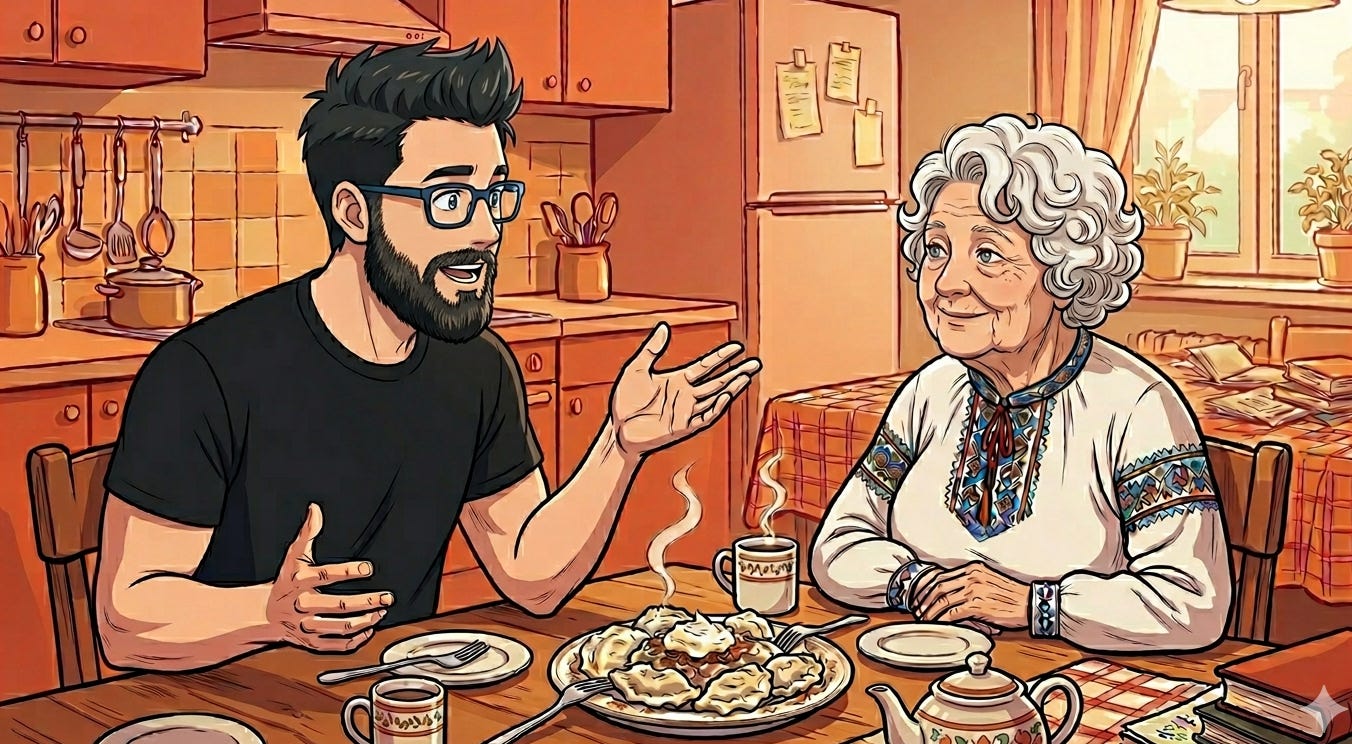
This is a story about my Baba, Maria Sereda. A Ukrainian peasant girl, she endured the hardships of Soviet occupation, survived forced labour in Nazi Germany, and ultimately built a new life in post-war Australia. Her journey is one of displacement and rebuilding, but also of preserving culture through the simple, profound act of cooking.
During my university undergrad years, I went round to Baba’s house once a week for meal and to mow the lawns, tending the garden and help with any other work that needed doing around the house.
It was during these visits that Baba shared stories from her life, over meals of delicious home-cooked traditional Ukrainian dishes. She would tell me the same stories many times, but every retelling yielded some new detail which added richness to the mosaic of her life. The narrative I share here is the culmination of those accumulated conversations and my homage to her life.
My Baba, Maria, was born in 1924 and grew up in a small rural village outside of Lviv, a city in the ethnically Ukrainian region on Galicia. Today, Lviv lies within the state of Ukraine but during the 1920’s Galicia was part of Poland, having been seized from the crumbling Czarist Russian empire and defended from the Bolsheviks during the Russian civil war of 1917-21. During the civil war, nearly 1.5 million Ukrainians died from the fighting and the subsequent famine of 1921. It was in the ruins of Polish Ukraine that my grandmother was born and grew up.
Maria grew up in a peasant family, which, like most in the region, made a meagre living as subsistence farmers. Her mother died when she was ten years old and her father re-married to a spiteful woman who showed Maria little love or favour.
While her upbringing was difficult, Maria’s favourite childhood memory was of the family’s cow, “Sophie”, which she used to tend and milk daily. The family also had an old army horse, which would start marching whenever it heard music.
Baba’s house was a three-bedroom yellow brick villa-style home that my dearly departed Gido (grandfather) Alex built himself. Beautifully tended roses and manicured lawn out the front and fruit trees, veggie garden and chicken coop out the back, with a garage and porch. Every post-WWII migrant family in the suburbs had a similar kitchen and backyard garden economy going on, inspired by a self-sufficiency with its roots in pre-migration suffering and deprivation.
When I was a kid, I would climb up onto the roof of the chicken coup via the branches of a large walnut tree. Gido kept boxes of harvested walnuts in the garage, which I cracked open with a hammer and ate. There were grapes and peaches in the garden to eat during the summertime and mandarins picked straight off the tree in late autumn. Rows of potatoes, cabbage, carrots and onions lined the vegetable patch, interspersed with tall stalks of dill. Dozens of potted ferns and fuchsias lined the back porch.
The locus of activity in the house was always Baba’s kitchen table. It’s here where she would make varenyky by the thousand and chop up vegetables for her chicken noodle soup or prepare her famous chicken schnitzels when the family came round for dinner. We sat at the table on bright orange leather chairs of 1960s vintage Along the side wall sat a cupboard and hanging glass-doored cabinet, with the sink and bench space sitting underneath a sunny north-facing window. A built-in pantry was accessible between the bench space and the cupboard, from which I could always find a stash of Baba’s home-made honey biscuits and biscotti from the continental deli.
In her later years, there wasn’t as much activity around the kitchen table. Baba lived alone for a quarter of a century after Gido passed away. But every week, when I came round for dinner, there would be varenyky on the table and chicken noodle soup boiling on the stovetop. Baba would always tempt me with a plate of hot Hungarian salami from the continental deli, even though she knew I was vegetarian. I used to love that salami as a kid. I turned down the salami but never had the heart to say no to the soup!
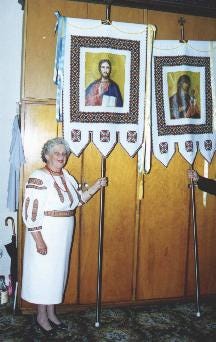
Baba had a glory box full of traditional Ukrainian embroidery that she’d worked on over many years. Before dinner, she would unpack the whole box and show off her handiwork, explaining how this embroidered napkin and that embroidered tablecloth won first prizes at the Royal Adelaide Show. She even had photos of one of her embroidered murals on display in the Saint Francis Xavier cathedral in the city. I’d seen her embroidery many times of course, but I had to honour the pride she took in her art as an expression of her Ukrainian heritage.
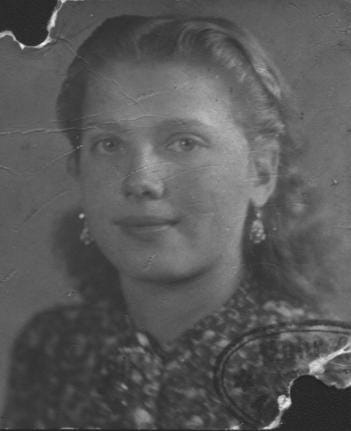
If Maria’s childhood was difficult, her teenage years were to be a nightmare. In September 1939 the German army invaded Poland, leading to the infamous non-aggression pact between Hitler and Stalin in which Germany and the USSR divided Poland between themselves. As a consequence of the treaty, Galicia was annexed by the Soviet Union and Maria became a subject of Joseph Stalin’s totalitarian regime.
In the decade leading up to 1939, the Soviet portion of Ukraine had been devastated by the Holodomor, the Ukrainian Famine of 1932-33 and Stalin’s Great Terror. The Holodomor resulted directly from the Soviet policy of forcefully expropriating farmland from the peasantry to form vast collective farms, began in 1929. The labourers on the collective farms, the peasants who formerly subsisted off that land were not allowed any farm produce until the state quotas were met. Anyone caught taking grain from a collective farm was either imprisoned in a gulag or executed. Collectivisation had a disastrous effect on agricultural productivity, which, combined with impossibly high state quotas, drove up to seven million people to starvation.
The Great Terror of 1936-38 was fuelled by Stalin’s political paranoia, in which he orchestrated a wholesale purge of the Communist Party, government officials and the Red Army officer core, along with violent persecution of the intelligentsia, the peasantry and any other unaffiliated persons identified as “saboteurs” against the Soviet state. Scholars estimate that between 600,000 and 1.5 million people died at the hands of Stalin’s regime during this period.
Baba remembered vividly the day in 1939 when the Soviet troops came to her village and seized their farm. All their produce, animals and equipment were taken away, forcing them to become proletarian slaves on a vast open-air agricultural factory of a Soviet collective farm.
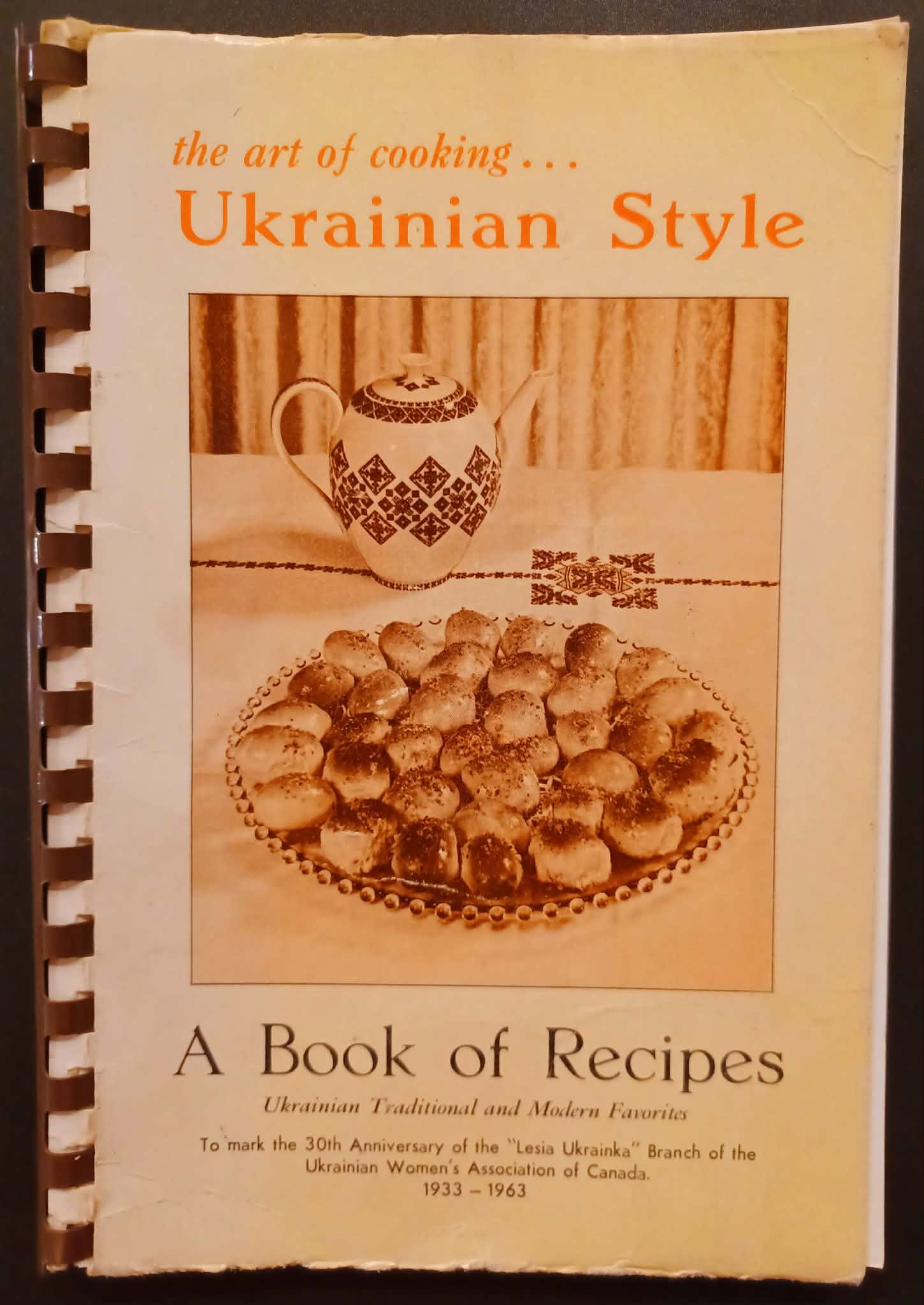
Baba’s chicken noodle soup is the ultimate soul food. She would slow-boil some chicken in stock for hours to get the soup base right, then add celery, carrot, onion and dill to further simmer. When I walked through the front door, I could always tell there was soup on the stove because of the subtle anise-like aroma wafting from the kitchen. Once cooked, she ladled the soup into a bowl to egg noodles to serve.
This was the first course in our weekly meal. After ladling a bowl of soup and noodles for us both, she would sit down at the head of the table and continue on with her story.
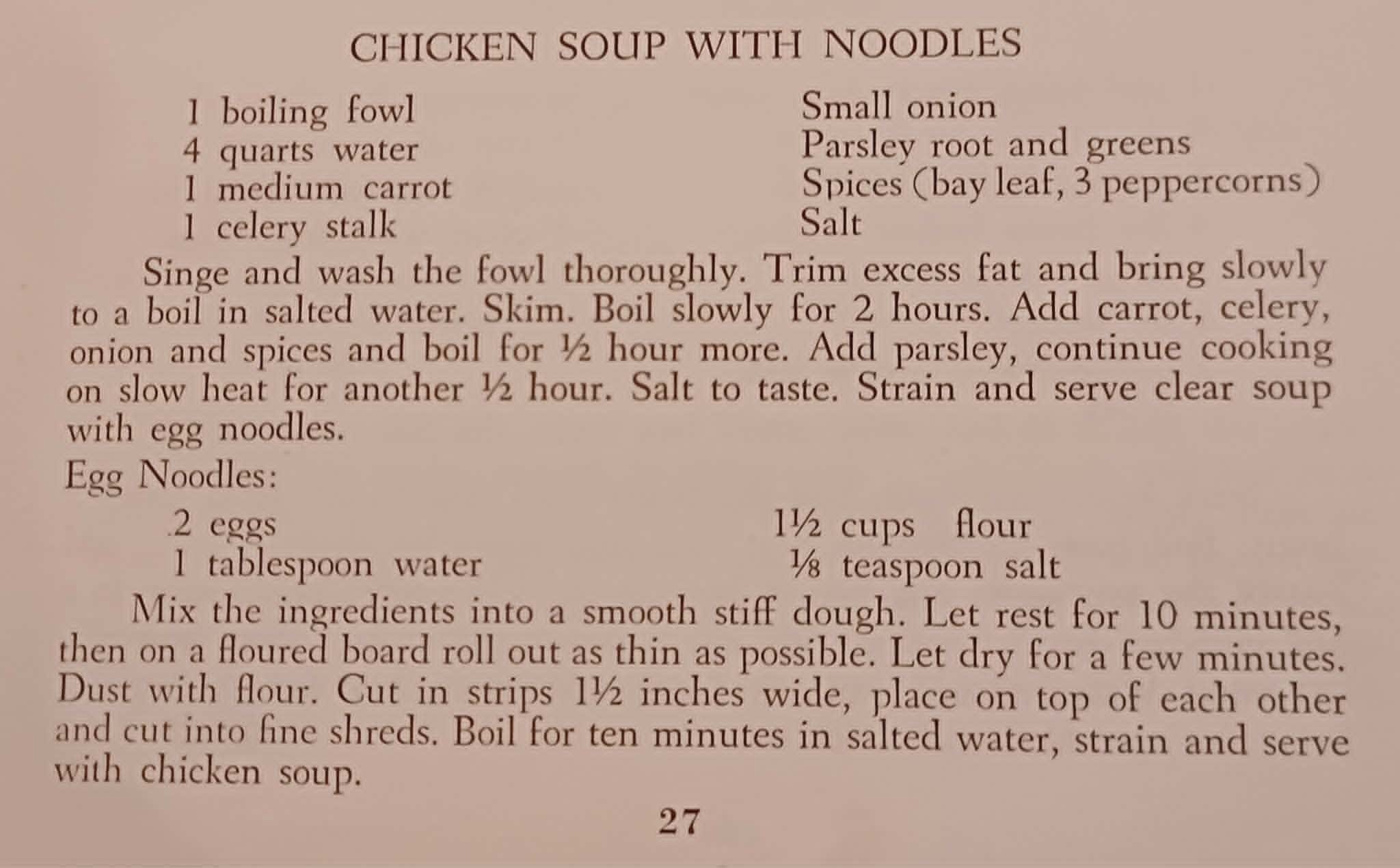
It wasn’t long before Maria was to suffer a new hell. In June 1941 Hitler broke his non-aggression treaty with Stalin and sent his army to invade the Soviet Union. With so many young men fighting in the army, Germany needed labourers to man their industrial and agricultural machine. The Nazi regime gathered up to 5.5 million Ostarbeiters (German: “eastern workers“) from across eastern Europe to work as slaves in German factories and farms. Like many Ukrainians from Galicia, Maria was one of them.
The Nazi army conscripted one person from each local family to labour back in Germany. Maria chose to go in place of her aging father and her younger brother, who was only ten years old. She was 16 years old at the time.
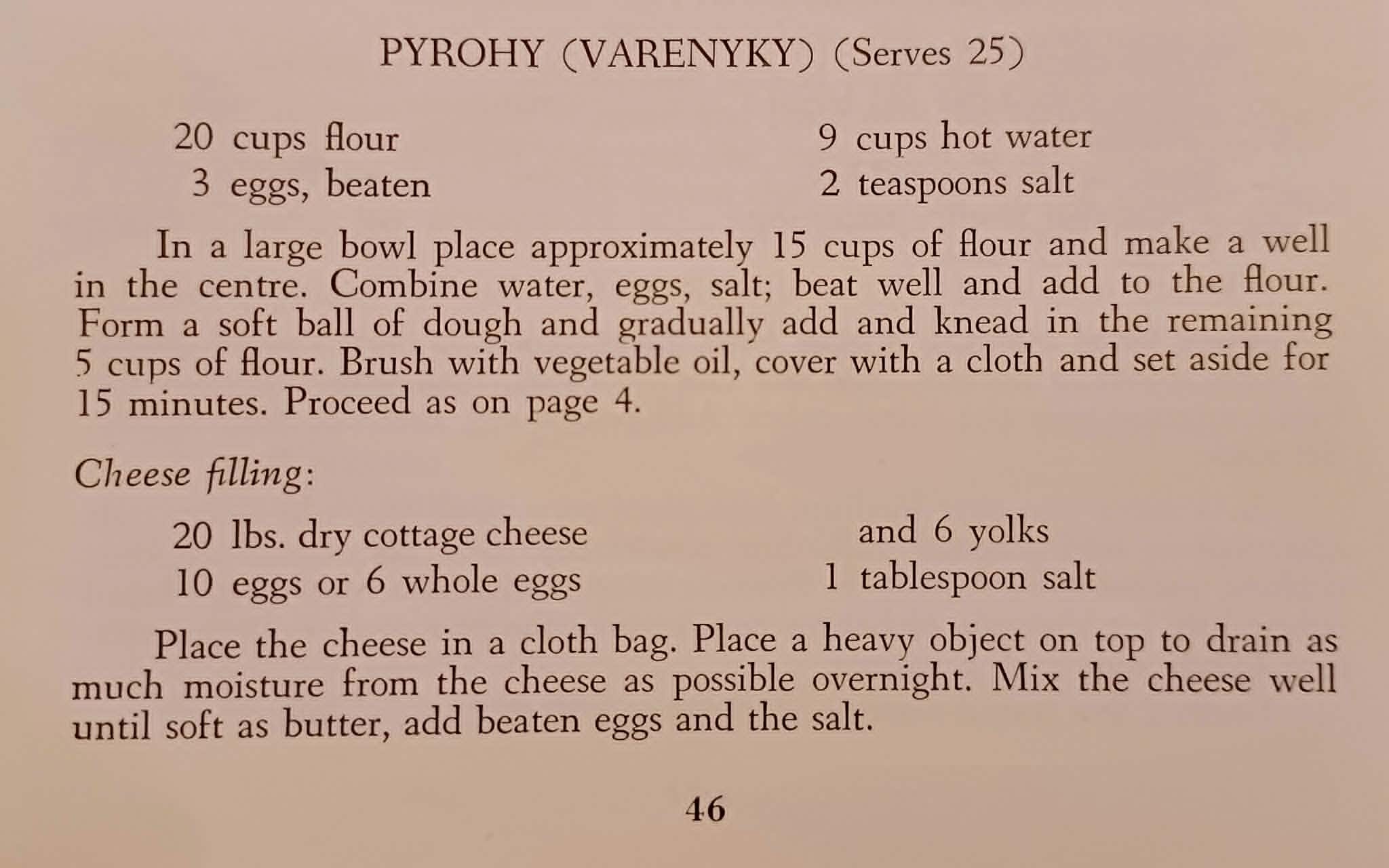
Maria was taken to a forced labour camp in a town called Siegen, approximately 50 km east of Cologne, where she was forced to manufacture bullets. She was required to make 22,000 bullets per day and she was not allowed to return to her boarding house until this daily quota was fulfilled. Till the day she died, Maria suffered arthritis in her knee from pushing the pedal that powered the lathe on which she machined ammunition. Like all the Ostarbeiter workers, she was forced to wear a dark blue badge with the word “OST” printed in white to signify her status. The German overseers would call here a “schmutzigen hund” — a dirty dog.
She did, however, strike up a covert friendship with the manager of her factory, who occasionally seconded her to help his wife with house chores at his home. The manager, “Heir Claude” (Mr Claude) and his wife were struggling with the loss of their only son, killed on the eastern front fighting the Soviets. Heir Claude told Maria that he had to abuse the Ostarbeiter workers on the factory floor or the SS (German secret police) would have him incarcerated. Heir Claude and his wife were kind to Maria, smuggling her food and old clothes.
The munitions factories staffed by Ostarbeiter workers were prime targets for allied bombing runs. Baba recounted how the dreaded hum of the fleets of allied bombers could be heard for hours before the bombs would start raining down. That expectant drone of impending doom was terrifying for the people on the ground and many Ostarbeiters lost their lives in those bombing raids. Maria was lucky.
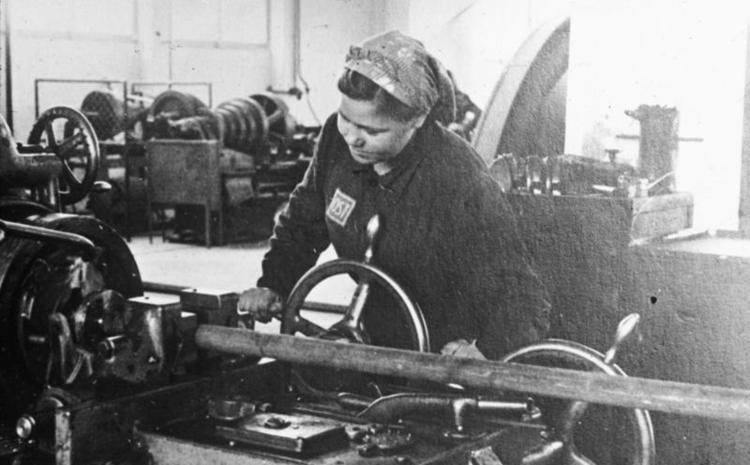
After our entrée of chicken noodle soup, Baba would return to the stovetop to cook some varenyky in boiling water. The potato and cheese-filled dumplings that are varenyky were my other Sereda family soul food. At home I’d fry them in a pan, but in Baba’s kitchen they were always boiled. She’d pull out a bag of ten frozen varenyky from the hundreds of hand-made-varenyky in her colossal top-loading freezer. She knew they were ready when they rose to the surface of the boiling water. She’d then caramelise finely chopped onions in butter in a frypan, then drizzle the onion and melted butter over the varenyky on a plate.
Ten varenyky were never enough and she’d always cook up a second batch, continuing her yarns while tending to the stovetop.
As the war neared its end, Maria had a chance encounter with two strange men who spoke an unusual, accented German. It turned out they were American paratroopers on a reconnaissance mission behind the German lines. Not long afterward the US army arrived in Cologne and Maria’s ordeal as a slave labourer was over.
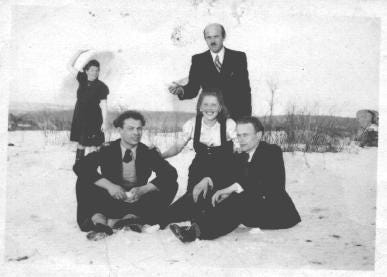
After the liberation of Cologne, Ostarbeiter men from a nearby factory were moved into Maria’s all-female camp. It was here that Maria met my Gido, Alexander, and after a brief courtship of a month they were married in the camp by a US army chaplain in May 1945. My uncle Michael was born a year later, one of a cohort of Ukrainian children conceived and born in resettlement camps in the aftermath of the war.
All of Europe lay in ruins at the conclusion of the war, with governments collapsed, infrastructure destroyed, no social services, and millions of displaced people living in the shadow of the millions of people who died. The survivors of this calamity were left with limited, difficult and uncertain choices about how to pick up the pieces of their lives.
As displaced persons, Maria and Alex were processed for either resettlement to a third country or repatriation to their country of origin. The likely fate of Ostarbeiters upon repatriation to the USSR was incarceration in one of many Siberian gulags. Stalin harboured a great distrust of Ukrainians after some had fought with the German army against the Soviets during the war. Alex had been part of an anti-Soviet resistance group in his home region of the Donbass oblast prior to his capture by the Germans. He feared for his life if he were forced to return to the USSR Even as late as 1974, Gido chose not to accompany Baba on a trip back to Ukraine out of fear that he would be imprisoned for his anti-Soviet activities during the 1930s.
Maria and Alex hid from special Soviet brigades who were instructed to search the resettlement camps and forcibly repatriate Ostarbeiters to the USSR. The American staffer who processed their resettlement application instructed them to register as Poles rather than Ukrainians, and offered them the option of immigrating to Canada, the United States or Australia. Alex wanted to go to America, but Maria chose Australia. Not surprisingly, she won the argument.
Once their application had been processed, Maria and Alex were housed in an abandoned building, formerly a meeting hall for the local Hitler Yungend (Hitler Youth). The Hitler Yungend were a warped equivalent of the boy scout movement in which German teenagers were indoctrinated into the Nazi myths of Aryan supremacy and anti-Semitism. Yet Maria and Alex were able to turn this shrine of hate into a home. Alex was a skilled craftsman. He built furniture for the dwelling and as a qualified shoemaker, made shoes which he bartered for food and other consumables.
At one point Maria and Alex offered a room to Heir Claude and his wife, Maria‘s former overseer in the forced labour camp. Heir Claude had lost his job in the factory and all the privileges that came with membership in the now defunct Nazi Party. Maria repaid the kindness of Heir Claude and his wife by taking them in. When it came time for Maria and Alex to leave, they gave Heir Claude the home they had rehabilitated from a bastion of Nazi hatred and indoctrination.
The accompaniment to varenyky was Baba’s cream salad, consisting of chopped prickly cucumbers and white onions from the garden with lettuce, thickened cream, vinegar, sugar and salt. The mix of flavours was a perfect balance of sweet and sour but difficult for any of us but Baba to replicate. I’d ask her in what proportions she mixed dressing and she’d say, motioning her fingers with a pinch, “a little bit of him and a little bit of him”, as only grandmothers can.
With a plate full of varenyky and a big bowl of cream salad on the table, I’d eat voraciously as Baba concluded her stories, the hard truth of her life experience etched in her big blue eyes. There was a quiet urgency in her storytelling, an anger even, though never any other outward emotion.
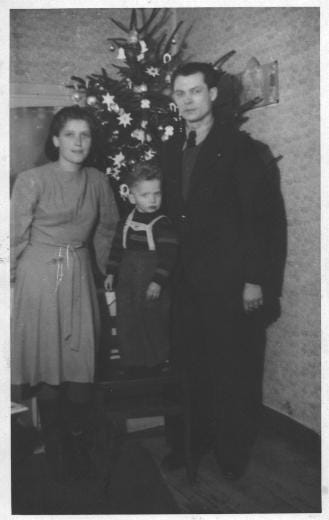
Maria and Alex’s long journey to a new life in Australia began in Naples, Italy, where they stayed for two years. European refugees being resettled overseas were to be ferried to their new home countries on allied military ships, which in the meantime were otherwise busy repatriating allied troops.
Baba’s fond memories of Italy included her amusement at the local custom of drying washing on ropes suspended between buildings, buying sandals for Michael at a local market and laughing about the shock of eating pasta for three meals a day!
Alex came out to Australia first in November 1948, arriving in Adelaide where he was employed by Energy and Water Supply (E&WS) digging trenches around the new Adelaide airport site. He was indentured to work for the state government for two years in exchange for his passage to Australia. It was hard manual labour, working in what back then was an unforgiving snake-infested swamp. Even though he was a skilled tradesman, manual labour was the only work available for new immigrants from Europe who spoke no English.
Maria came by boat to Australia the following year. She vividly remembers sailing through the Suez Canal and being shocked to find that the Red Sea was actually blue. As a peasant girl from land-locked Ukraine who had only recently seen the ocean for the first time, she honestly thought the Red Sea would be coloured red! She also remembers befriending the ship captain, who occasionally let Michael sit with him in the bridge.
Having survived the wrath of Hitler and Stalin, Alex and Maria faced new challenges in white Australia. Of immediate concern was the language barrier; as anyone who has lived abroad will know, it is extremely difficult to integrate into another society if one is not fluent in the native tongue. They also had to grapple with how to support themselves and their young family (my mother was born in Adelaide in 1951). When the family was reunited in Adelaide in 1949, they boarded with an Italian family in Bridgewater, near Port Adelaide. No Anglo-Australian family would offer them a room.
Alex bought a block of land with his resettlement grant and managed to save enough money from his labouring work to build a house. Eventually, both Alex and Maria found employment at the General Motors plant in Woodville, opened to make Australia’s new Holden cars. Alex worked at the Holden plant for the remainder of his working life and was promoted to factory foreman.
Most disheartening of all for Alex and Maria was the venomous reception they received from many Anglo-Australians. Sometimes people would spit at Maria when she was shopping at the Port Adelaide markets. Later when she was working at the General Motors factory, a female co-worker told her to “go back to where you came from, new Australian”. Maria replied back in her thick eastern European accent, “you are new Australian too, everyone is new Australian apart from Aborigines”. Touché Baba, touché.
Local socialists and communists affiliated with the labour movement heaped further indignation on Alex and Maria. These men, including the local doctor, called the Ukrainian émigrés thieves and bandits, under instruction from the COMINTERN (Communist International) in Moscow. During the 1950’s the Australian socialist movement was still enthusiastic about the prospects of communism as an alternative economic paradigm and were not yet aware of the monstrous crimes of Stalin’s Soviet regime.
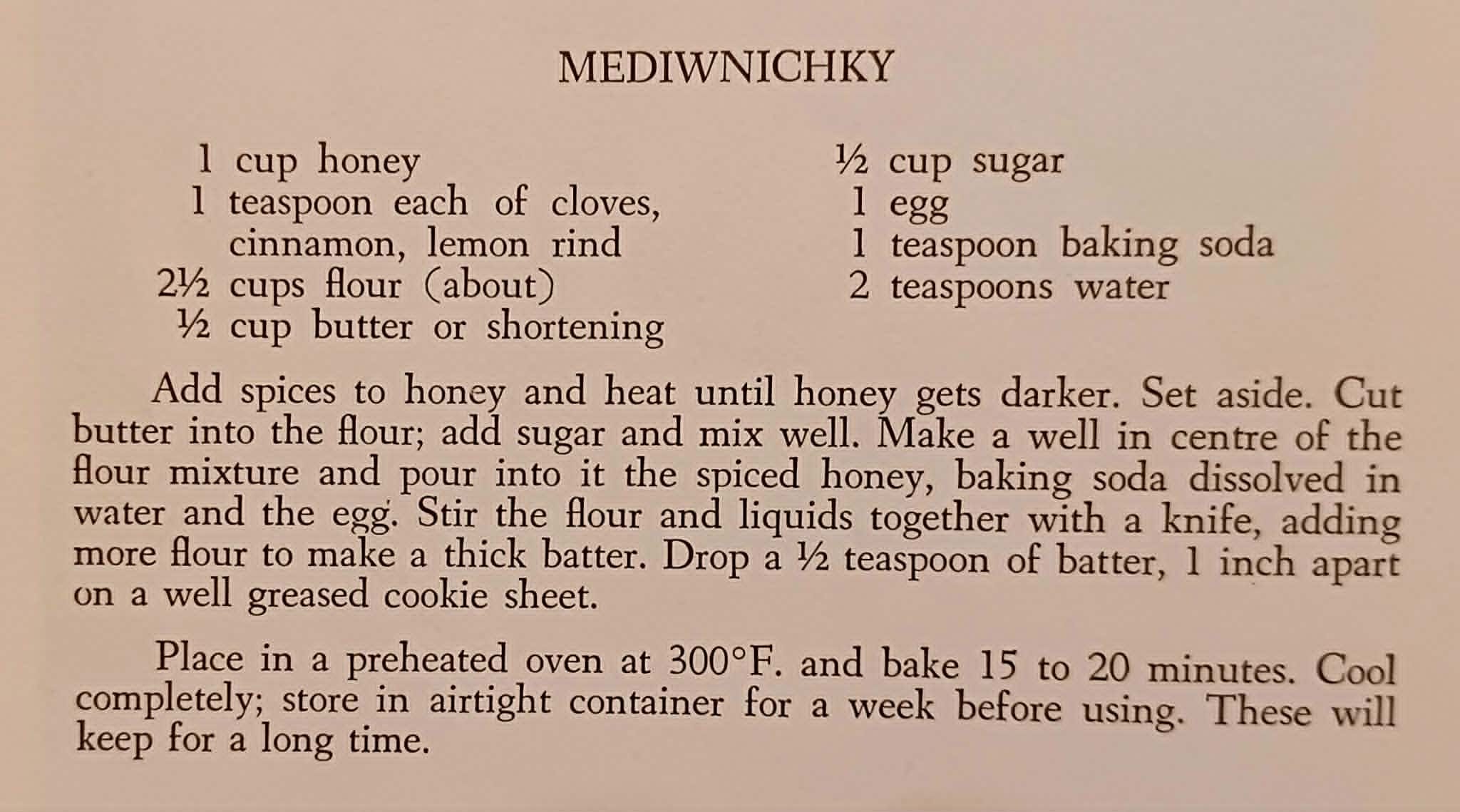
After dinner, Baba would load me up with food to take home. As a low-income uni student, I gladly accepted bags of frozen varenyky and tubs of frozen chicken noodle soup (sans chicken), along with bags of her home-made donuts and mediwnichky, which my sister and I called “honey biscuits”. Occasionally I took home some mandarins or walnuts from the back garden, or even a pot plant from the back porch for my own garden.
I got a shock one evening after frying up a batch of Baba’s varenyky for dinner at home. I bit into the first varenyky and promptly spat out my mouthful… it was filled with peach, not potato! Only later did I learn that there are many different types of varenyky, including desert versions filled with peach or cherry, and you certainly don’t fry desert varenyky in a pan.
So went my weekly dinners with Baba, a first-person history lesson with fantastic home-made food.
Baba passed away in 2014 after battle with dementia. Her yellow-brick house that Gido built was sold and has since been demolished, replaced by a pair of tacky units. I am grateful that she passed away before the Russian annexation of Crimea in 2014 and then the Russian invasion of Ukraine in 2022. I cannot imagine how traumatising it would have been for her to see history repeat.
I do wonder though how that inherited trauma manifests in me and has shaped my life. I wonder if, like me, Baba was what we now call neurodivergent and whether this may have played a role in the rejection she felt from her stepmother. Baba was strong and resilient, but she was also prickly and brutally direct. What was trauma and what was neurology in her way of being, at the time when I knew her?
I was only 11 years old when Gido passed away. I wish he was sitting with Baba and I at the kitchen table eating chicken noodle soup and varenyky. I wish I had a chance to know him as a man as well as knowing him as my grandfather. I have so many questions about his life that will never be answered.
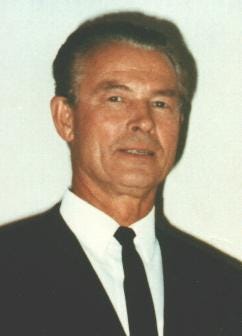
The intimidating task of integrating into a new society, combined with the hostility of that society to foreigners acted to keep the small community of Ukrainian émigrés in a cocoon. Not only did it slow their integration into wider Australian society, but also kept them in a cultural time warp, trapped in the customs and ways of the 1930s Ukraine that they grew up in. It was left to the brave and pioneering children of these original migrants, like my mother, to take the first tentative steps of integration into mainstream Australian society.
It strikes me as idiotic that some members of Australian society vilify immigrants for not assimilating into our culture while they abuse those same people. My grandparents were subjected to racist abuse here in Australia by Australians who knew nothing about them, who understood nothing of the suffering they had escaped from, and whose sole basis for hatred was a fear of difference and an antiquated white superiority inherited from colonial Britain. That Australia is still dealing with this trashy “go back to where you came from” white supremacist bullshit in 2026 is deeply upsetting, as is witnessing the resurgence of fascism around the world, though First Nations mob remind us that good old Aussie racism has been a permanent feature of the Australian settler-colonial project.
Writing this article is as far as I go in claiming identity as a Ukrainian-Australian. While I took first communion in the Ukrainian Catholic church that Gido helped to build, I am not a practicing Christian nor am I involved in the local Ukrainian community. I don’t speak or read Ukrainian, and I have no idea of the whereabouts of any extended family in Ukraine. Even so, Ukrainian heritage is deep within me, even if it only manifests through food. I’ve learned to make Baba’s cream salad and chicken noodle soup, though as a vegetarian I leave the chicken out. Mum and I make varenyky occasionally, when we have the stamina for rolling hundreds of little potato dumplings and covering ourselves in flour.
And in my darkest moments, I reflect on everything that Baba and Gido endured that has made my life possible and I’m reminded that it’s in my DNA to persevere and keep going.
AI disclosure statement: Gemini image generator was used to create the thumbnail image for this article.

